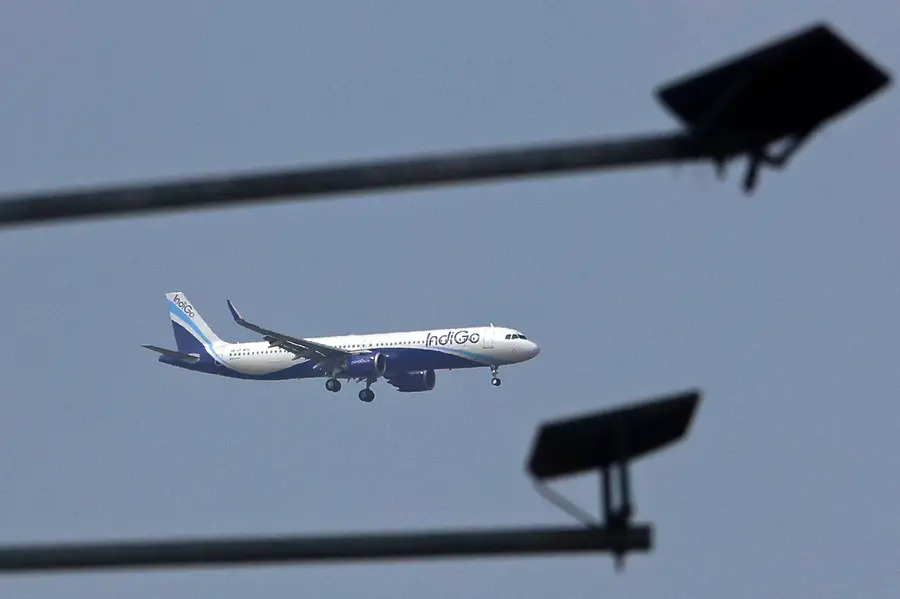
Chennai is witnessing significant disruptions in air connectivity as 36 flights to and from Middle East destinations were cancelled on Monday, marking the third consecutive day of operational setbacks at the city’s international airport. The cancellations have left travellers stranded and raised questions about the resilience of urban transport links amid regional geopolitical tensions.
Industry observers note that the suspended services, including departures to Dubai, Abu Dhabi, Sharjah, Bahrain, Kuwait, and Muscat, highlight the vulnerability of Chennai’s air corridors to disruptions originating far beyond city boundaries. With Iran and neighbouring countries temporarily closing airspace following military escalations involving the United States and Israel, flights that typically transit these zones have been rerouted or cancelled, impacting both arrivals and departures. Senior airport officials indicate that disruption patterns may continue, with additional delays expected for flights connecting Chennai to Europe, the US, and parts of East Asia. Airlines are managing the situation by rerouting some services along longer trajectories, but extended flight durations are affecting subsequent connections and overall airport throughput. Passengers report long waiting times and heightened uncertainty, illustrating how international conflicts can directly influence urban mobility and regional commerce.
From an economic perspective, these interruptions carry broader implications. Chennai serves as a major hub for business and expatriate travel to Gulf nations, and prolonged cancellations risk delaying corporate travel, cargo movements, and related service sector activity. Urban planners highlight that resilient airport operations are essential for maintaining the flow of labour, investment, and trade that underpin Chennai’s emerging knowledge and industrial economy. Experts in sustainable urban development observe that these events also underscore the importance of adaptive transport infrastructure. Integrating contingency planning, including secondary hubs, enhanced digital communication for travellers, and emergency airspace routing protocols, can mitigate the socioeconomic impact of such disruptions. They also point to the potential for collaborative regional air traffic management solutions to improve reliability and safety while reducing carbon-intensive rerouting.
Passengers continue to face uncertainty, especially those travelling to Gulf destinations where cancellations remain comprehensive. Meanwhile, flights to other key international nodes, including Singapore, Malaysia, Sri Lanka, London, Germany, Thailand, and Hong Kong, remain largely unaffected, suggesting selective vulnerability based on regional airspace closures. As Chennai navigates the ongoing disruption, officials and urban mobility experts stress the need for robust contingency frameworks that strengthen city connectivity while preserving economic continuity. Enhancing airport resilience, coupled with proactive communication strategies, will be critical in safeguarding Chennai’s role as a major South Asian aviation and business hub.