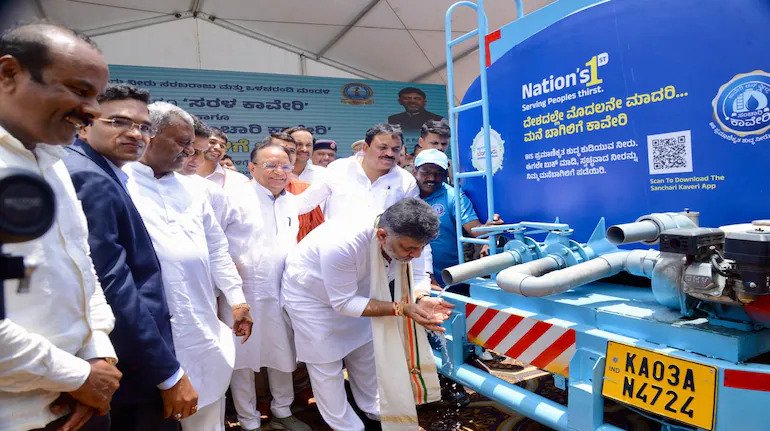
Bengaluru Urban Water Supply Upgraded With Technology
Bengaluru is taking proactive measures to avert a repeat of the 2024 water shortage that exposed vulnerabilities in its urban water supply system. Following a season of below-average monsoon rainfall, the city experienced severe groundwater depletion, affecting households across socio-economic strata. Authorities now indicate that a combination of technology, infrastructure upgrades, and targeted water policies are central to mitigating future crises.
A senior water official explained that nearly 40 per cent of the city’s water consumption relies on groundwater, which fell sharply during the 2024 drought. In response, the municipal water board has augmented the city’s surface water supply by sourcing additional volumes from the Kaveri River. This shift has reduced dependence on groundwater, particularly in areas where wells had run dry, and now provides reliable supply to previously underserved villages.
Technological interventions have been pivotal in this transformation. The board partnered with research institutions to implement an AI-driven monitoring system across thousands of borewells, enabling real-time tracking of groundwater levels. These insights guide allocation of surface water, borewell recharge during monsoons, and emergency distribution via tankers. Officials highlighted that early adoption of predictive analytics allowed the city to anticipate water stress even when rainfall fell below projections last year. In parallel, water affordability and social equity have been integrated into supply policies. Subsidised connection schemes enable low-income households to access municipal water with manageable instalments, while tiered pricing discourages excessive consumption among higher-income users. These measures aim to balance fiscal sustainability with equitable access.
Infrastructure modernisation is also underway. Ageing pipelines and pumping stations, which previously contributed to high water loss and energy costs, are being retrofitted with smart meters and AI-based monitoring tools. Energy efficiency improvements at pumping stations have reduced operational costs significantly, while phased replacement of old pipelines aims to cut non-revenue water from 42 per cent to 28 per cent. Officials note that green energy procurement and treated water reuse for non-potable purposes are key elements of a long-term sustainability strategy. Looking ahead, urban planners emphasise that Bengaluru’s water management approach will need to adapt to demographic growth and climate variability. Expanding the use of recycled water, improving groundwater recharge, and integrating high-tech monitoring across the supply network are expected to form the backbone of the city’s 2040 water master plan. Experts say the model demonstrates how medium-sized cities can leverage technology, equitable policy, and infrastructure investment to build resilient, sustainable urban water systems.