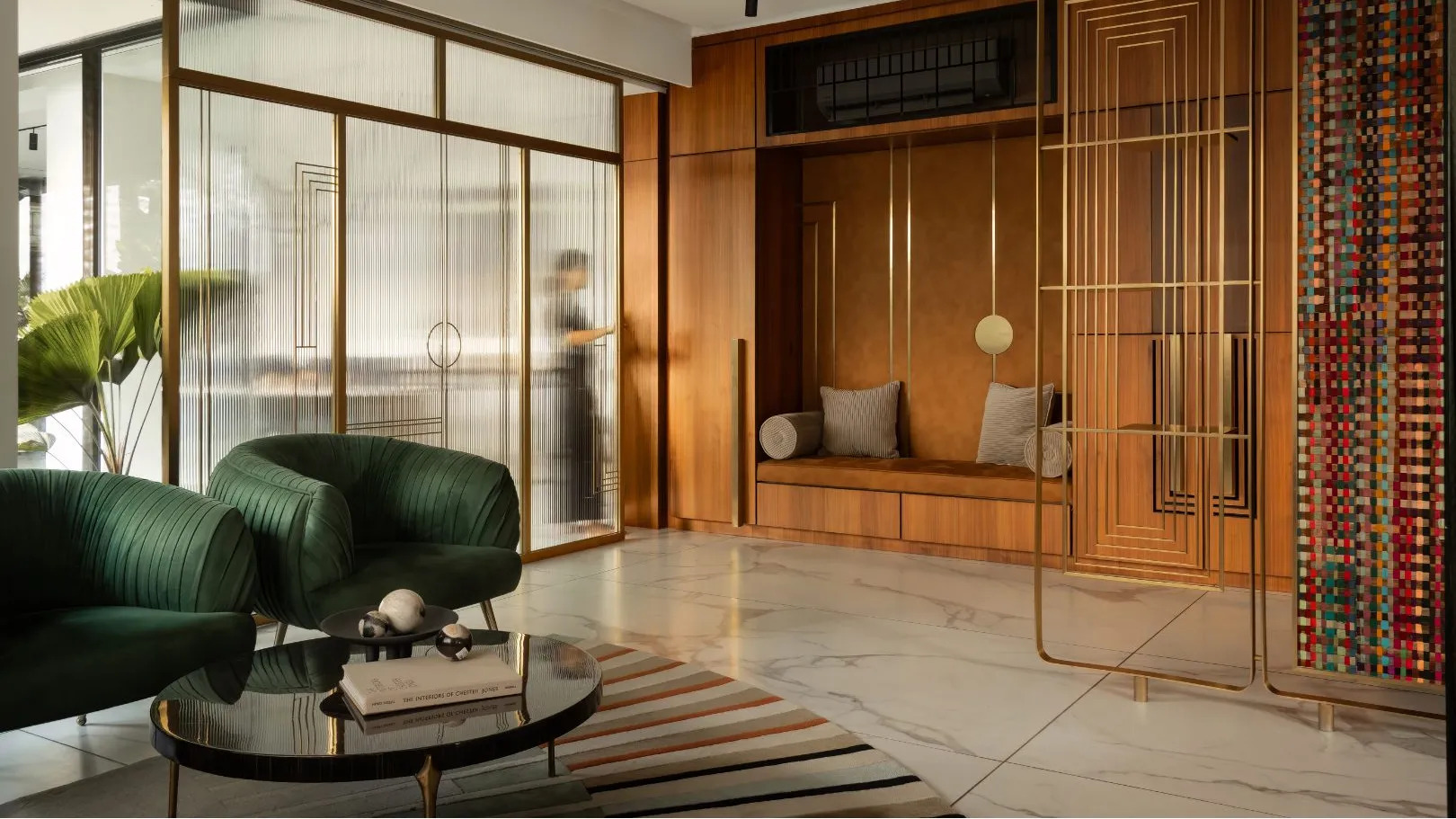
Chennai Residence Prioritises Materiality Over Decoration
Chennai – in a city where rapid urbanisation often favours high-impact design, a newly completed 4,500-square-foot home in Chennai underscores the potential of minimalism as a tool for refined urban living rather than mere reduction. The residence, designed for a family of four, employs spatial clarity, material integrity, and deliberate detailing to craft an environment that prioritises human experience over visual spectacle.
Urban planners and design analysts highlight that such approaches are increasingly relevant in high-density Indian cities, where residents seek homes that balance openness, natural light, and sustainable material use. In this project, oak cladding, marble flooring, and bespoke furnishings form the structural and aesthetic backbone, demonstrating how considered materiality can establish a sense of permanence while reducing the need for frequent upgrades or decorative interventions.
The home’s spatial strategy emphasises continuity and gradual discovery, with living, dining, and private areas flowing seamlessly. Experts note that this approach reflects a broader trend in Indian residential architecture: designing interiors that respect existing architectural proportions, maximise daylighting, and maintain uncluttered circulation paths. Custom furnishings and artisanal elements are selectively integrated, contributing to tactile richness without overwhelming the space, a practice that aligns with sustainable design principles by limiting mass-produced or disposable decor. Lighting plays an integral role in sustaining the home’s ambience. Rather than serving only functional needs, bespoke fixtures create dynamic shadows and soft illumination, complementing natural daylight. Urban designers argue that such nuanced lighting enhances mental well-being, reduces reliance on artificial illumination, and promotes energy efficiency an increasingly important consideration in climate-conscious urban development.
The project also highlights the economic implications of material-led design. High-quality, durable finishes such as oak, stone, and brass can reduce long-term maintenance costs while creating spaces that age gracefully. Planners suggest that this combination of durability and aesthetic restraint could inform future residential developments seeking to merge investment value with environmental and social considerations. This Chennai home demonstrates that minimalism, when approached through craft and materiality, can offer enduring urban living solutions. As Indian cities expand, such design philosophies present opportunities for developers and homeowners to create interiors that are not only visually coherent but also socially and environmentally responsible. By foregrounding proportion, tactility, and thoughtful layering, the residence serves as a model for measured, human-centred urban design that is both sustainable and economically prudent.