Indore Hospital Fire Risk Highlights Emergency Preparedness Gaps
Nagpur — A pre-dawn fire at a paper laminating unit in Nagpur’s Uppalwadi industrial fringe has laid bare glaring lapses in fire safety compliance and regulatory oversight, prompting questions about how high-risk facilities are permitted to operate without fundamental safeguards.
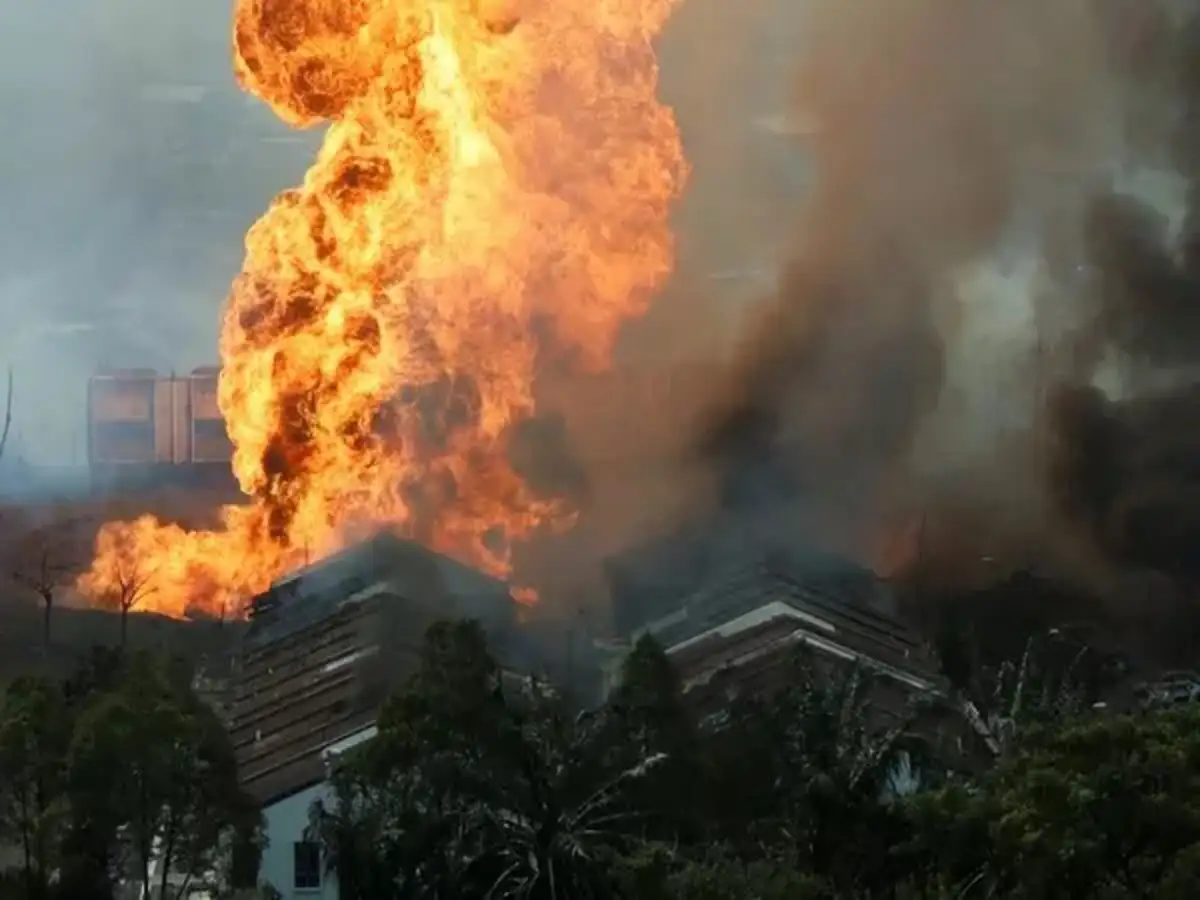
The early-morning blaze, which engulfed a unit housing flammable materials and multiple liquefied petroleum gas (LPG) cylinders, underscores the urgency of tightening industrial safety frameworks beyond core city limits. The incident erupted around 1 am at an industrial facility on Kamptee Road that engaged in paper lamination — a process involving volatile adhesives and combustible stock. With 25 LPG cylinders stored on site, sequential explosions transformed the inferno into a prolonged battle for firefighters, who struggled to contain the blaze due to the absence of any on-site water storage or firefighting system — equipment that is considered mandatory for operations involving hazardous materials. Fire officials said the lack of a dedicated water reserve forced crews to make repeated trips to distant sources to refill tenders, slowing down response times as flames intensified.
“[The unit] had absolutely no water provision, which made firefighting extremely difficult and dangerous,” a senior fire officer told reporters, describing the explosions as akin to “war-like conditions.” Despite the severity of the blaze, which required reinforcements from multiple fire stations, no casualties were reported because the facility was closed at the time. Cooling operations continued into the morning to prevent reignition as thick smoke and towering flame fronts posed risks to surrounding structures. Initial estimates place material losses around ₹5 crore. The unit operates in an area outside the jurisdiction of the Nagpur Municipal Corporation, falling instead under a Gram Panchayat and the Nagpur Metropolitan Region Development Authority (NMRDA). Fire officials and urban safety analysts observe that such fringe-area industrial zones often suffer from enforcement blind spots, where municipal regulations and inspection regimes are weaker or less consistent
than within core city boundaries. The Uppalwadi fire is occurring against a backdrop of broader systematic weaknesses in Nagpur’s industrial fire safety regime. Independent reporting and municipal fire department data show that hundreds of industrial buildings operate with only temporary clearances or without final compliance verification, even though they house hazardous processes and combustible inventory. Enforcement powers under the Maharashtra Fire Prevention and Life Safety Measures Act, 2006 — including sealing unsafe premises or pursuing criminal penalties — remain under-utilised. Safety experts warn that incidents like the Nu paper unit blaze are symptomatic of deeper governance challenges: fragmented jurisdictional authority, limited infrastructure for emergency preparedness (such as hydrants and dedicated water networks), and minimal deterrence against non-compliance. They argue that strengthening fire safety protocols must be integral to industrial policy, particularly in rapidly expanding urban and peri-urban regions.
For burgeoning industrial hubs like Nagpur, where economic growth and manufacturing expansion are strategic priorities, linking fire safety enforcement with sustainable zoning, infrastructure provisioning and regular compliance audits will be essential to prevent small lapses from turning into major disasters. Ongoing inquiries into the Uppalwadi fire will likely examine land-use permissions, safety clearances and enforcement records — a necessary step toward closing regulatory gaps and protecting workers, communities and investment alike.