


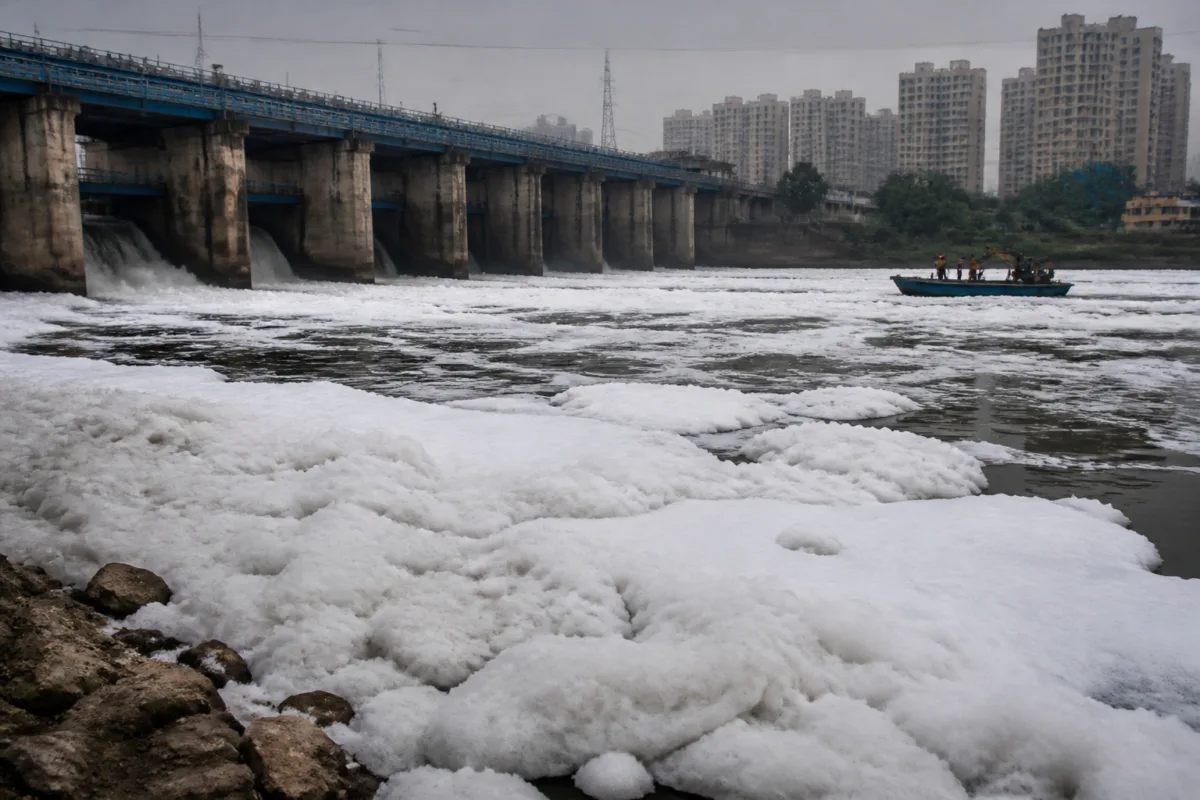
Yamuna foam has returned near Kalindi Kunj in southeast Delhi, where a thick layer of white froth was seen covering the river on Monday and prompted cleaning operations by officials. The recurrence has renewed attention to sewage and industrial pollution in the river ahead of the winter period, when the phenomenon commonly becomes more visible.
Visuals from the affected stretch showed the river surface covered with foam. Officials said cleaning work was being carried out in the area, while the Delhi Jal Board (DJB) has continued its seasonal efforts to control froth accumulation at the Kalindi Kunj barrage.
The foam is primarily associated with untreated sewage and industrial effluents containing detergents and other chemical pollutants. Surfactants, or soap-like substances present in detergents and other pollutants, mix with the river water and trap air bubbles. Churning near barrages, especially where water falls from a height, intensifies the formation of froth.
Lower temperatures during winter can make the bubbles more stable, allowing the foam to remain on the river surface for longer periods. Domestic sewage, industrial waste and discharges linked to washing activities along the river also contribute to the pollution load, according to experts cited in the report.
The latest occurrence comes days after a similar layer of foam was reported at the Kalindi Kunj barrage on October 23. The repeated appearance at the same stretch highlights the operational challenge faced by agencies that must manage a visible pollution symptom while the sources of untreated discharge continue to affect the river.
The DJB deploys chemical de-foaming agents during winter to control the accumulation of froth, particularly ahead of Chhath Puja, when devotees gather along the Yamuna for religious rituals, typically in November. The treatment is intended to manage the surface foam in the affected area during a period when public activity along the river increases.
The DJB said it has been carrying out cleaning operations at Kalindi Kunj since 2022. It has also established two camps to store material remaining from the previous year’s drive. The current cleaning exercise is continuing in the affected stretch, according to officials.

