


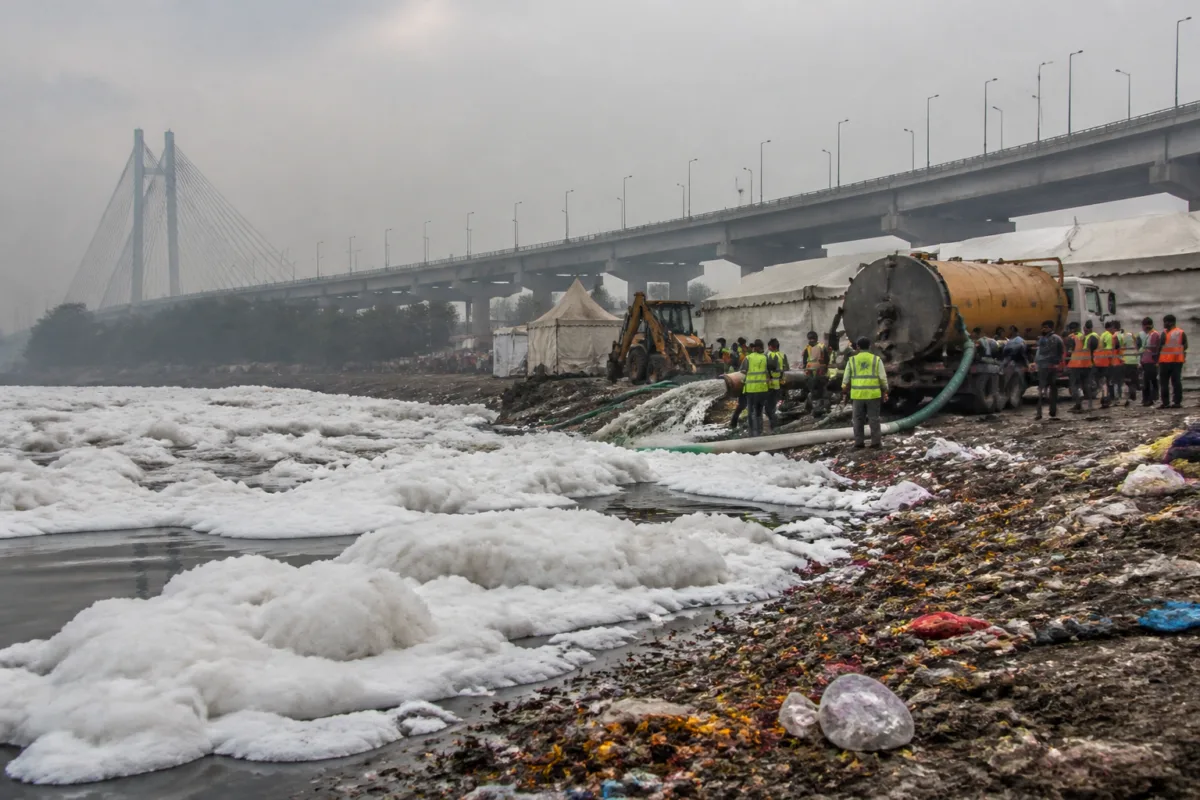
The Yamuna foam operation near Delhi’s Kalindi Kunj has begun amid questions from the Aam Aadmi Party about how the work was allotted and whether equipment was installed before tenders were opened. The Delhi Jal Board has said the infrastructure at the site belongs to it and that the annual defoaming campaign is being conducted as part of its existing practice.
A tanker, machinery, safety jackets and other equipment had been positioned at the site, where a tent divided into three sections was also set up. The operation is intended to treat the white foam accumulating on the river, a visible indicator of high pollutant concentrations. The defoaming chemicals had not arrived at the site at the time of the inspection, according to the report.
The AAP alleged at a news conference that the tender process was structured to favour a “pre-determined contractor”. It also alleged that equipment installation began three days before bids for the work were opened. The allegations relate to four tenders floated for the defoaming exercise, which were scheduled to be opened on October 21 and 22.
Workers at the site told The Times of India that the camp had been set up five days earlier. The contractor identified in the report, ICON Instruments Company, declined to comment on the controversy and directed questions to Delhi Jal Board officials, saying the work was being handled by the civic utility.
DJB assistant chemist Sandeep Verma said the board had been carrying out the defoaming process since 2022 and had conducted the campaign successfully in 2023. He said the Kalindi Kunj ghat had not previously been included in the list of designated ghats, but that a defoaming campaign had also been conducted there the previous year.
“All the infrastructure you currently see here belongs to DJB,” Verma said. According to him, the firm that carried out the work last year had left the equipment available, and it was part of the board’s stock. He said the DJB had issued a tender worth Rs 80 lakh, plus applicable taxes, for the current work.
The site conditions also showed that the foam is only one part of the river’s pollution problem. Plastic, polythene and other waste were scattered along the riverbank, while discarded puja material, idols, clothes and other garbage had accumulated near the water. These materials add to the visible burden on the river even as the board prepares to apply the defoaming treatment.
The immediate dispute is therefore centred on both the tender timeline and the limits of a short-term response to a recurring pollution event. The DJB’s stated next step is to continue the defoaming campaign after the chemicals and operational arrangements are in place, while the allegations over the tender process remain contested.

