


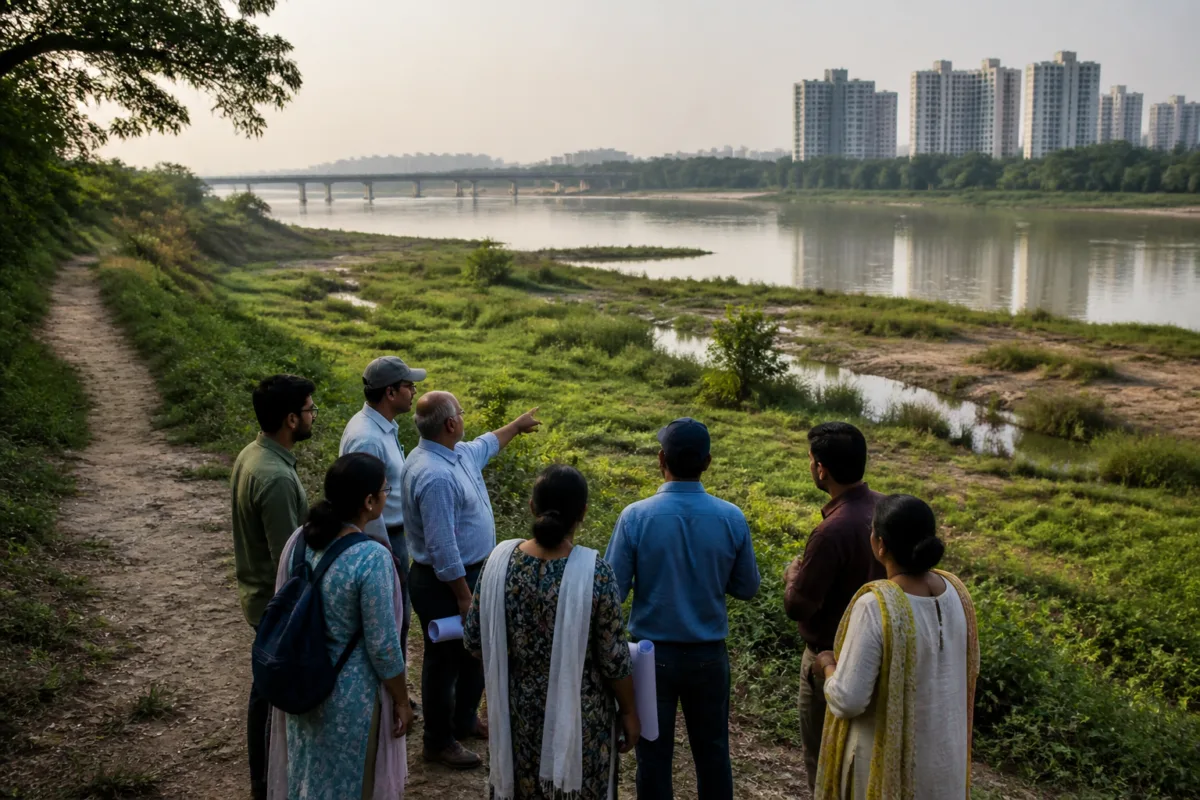
New Delhi: Lieutenant governor TS Sandhu has called for coordinated, long-term management of the Yamuna and its floodplain, warning that fragmented efforts would not be enough to restore the river system.
Sandhu was speaking at the inaugural ceremony of the two-day Yamuna Dialogues conference organised by the Delhi Development Authority at Baansera. He said government agencies, experts, researchers and citizens needed to work on a common platform to support the river’s sustainable development.
More than 300 panellists, speakers, delegates and students from India and abroad attended the conference, according to the report. Participants included representatives of the United Nations, Asian Development Bank, WWF, KfW Development Bank, IIT Delhi, TERI, the Council on Energy, Environment and Water and the World Resources Institute, along with central and Delhi government agencies.
The discussions covered six broad themes: governance mechanisms; floodplain planning and ecological restoration; urban water and drainage management; the relationship between the river and residents; ghat development; and emerging technologies and sustainable financing models.
Case studies from Japan, Switzerland, the United States, the Netherlands, Denmark, Sri Lanka, Indonesia and Germany were discussed, alongside the example of the Ganga ghats in Varanasi. The range of subjects indicates that the conference was framed not only around river cleaning, but also around land-use planning, flood management, public interfaces and institutional coordination.
D Thara, secretary in the Department of Capital Development under the Ministry of Housing and Urban Affairs, said the Yamuna needed to be cleaned and restored to its original pristine beauty. She said this could happen only through concerted efforts, dialogue and action.
An official said a key expected outcome of the conference was the preparation of a “Yamuna Report”. The report is intended to help government agencies and other partners coordinate future restoration efforts.
The proposed report could provide a common reference for agencies working on connected issues such as floodplain use, drainage, ecological restoration and riverfront development. However, the conference report does not specify the document’s publication date, the agencies that will be responsible for implementing its recommendations, or any funding and monitoring framework.
For residents, the significance of the initiative will depend on whether coordination produces measurable improvements beyond individual projects. The unresolved questions include how floodplain planning will be enforced, how ecological objectives will be balanced with public access and development pressures, and how progress will be assessed across the agencies involved.

