


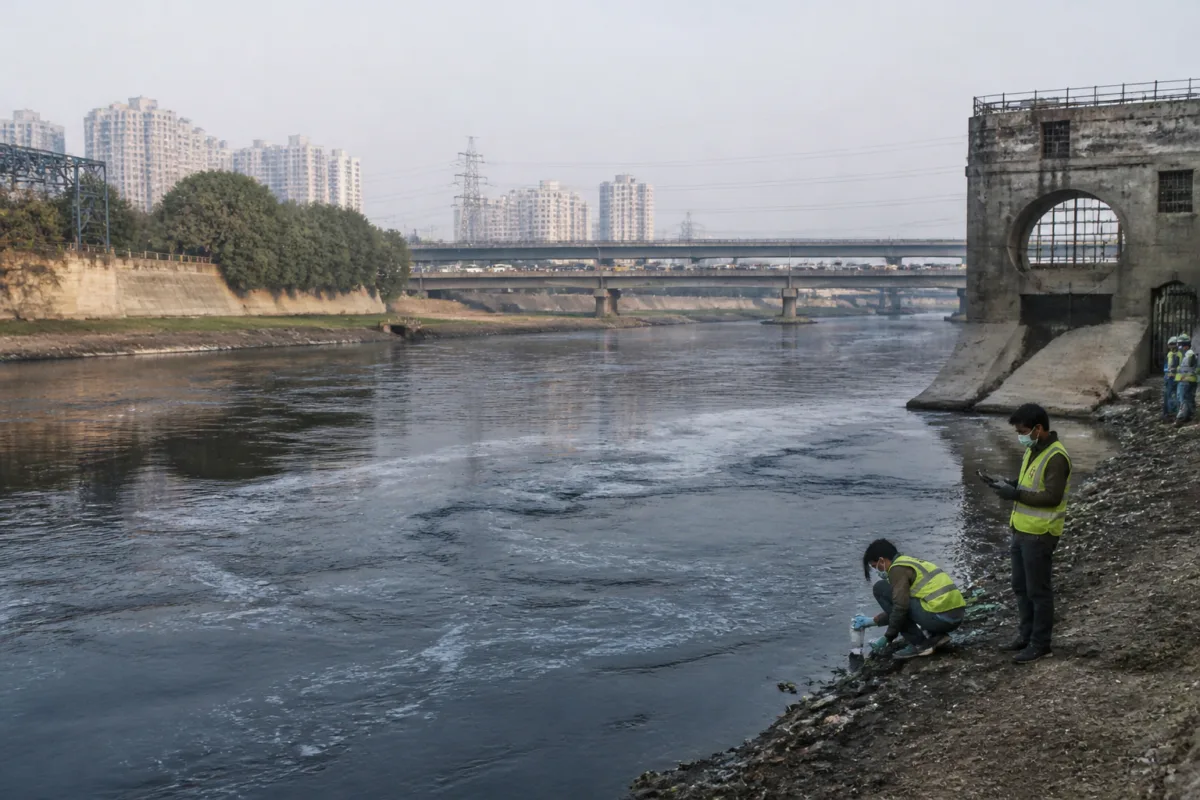
Delhi Environment Minister Manjinder Singh Sirsa has claimed that 60 per cent of the Yamuna has been cleaned and that the water is now safe to drink, while setting a target of cleaning the entire river by 2029 or 2030. The claim requires scrutiny against official water-quality data, particularly after the Supreme Court said earlier this month that pollution in the river had increased despite substantial spending on cleanup efforts.
Speaking at the launch of Uber’s “One Less Car” report in New Delhi on November 23, Sirsa credited Delhi Chief Minister Rekha Gupta and the Union government with supporting cleanup work over the past two years. He said the work had begun at one end of the river and would continue along the remaining stretch, which he said explained why the entire river had not yet been cleaned.
“Sixty per cent of Yamuna ji is totally clean… Clean means so clean that you can (even) drink that water,” Sirsa said, according to PTI. He urged people to visit the river and see the results for themselves.
The minister also acknowledged that sewage from Delhi flows through drains into the Yamuna and said the government was using sewage treatment plants (STPs) to address the problem. The statement places sewage interception and treatment at the centre of the cleanup strategy, but does not provide water-testing results, monitoring locations, pollutant levels or the technical basis for describing the water as potable.
The Supreme Court, in an order dated November 4, directed the Central Pollution Control Board to monitor water quality at points where the Yamuna and its major drains enter and leave states, Union territories and districts. The court said industrial pollutants and untreated sewage must be stopped at source, and that merely constructing more STPs would not be sufficient to clean the river.
The bench also referred to 520 drains discharging wastewater into the Yamuna and said the river’s poor condition reflected wider failures in civic administration across towns, cities and villages along its banks. It observed that pollution had increased despite large sums being spent on cleaning the river.
Sirsa separately claimed that 60 per cent of Delhi’s legacy waste accumulated over 25 years had been cleared in less than two years, with Union government support. On air pollution, he said clean air required public participation and claimed that Delhi had recorded improvement this year, including more clean days in October and the first half of November than in earlier years.
He also said vehicles below Bharat Stage VI emission standards, including heavy vehicles and buses, were no longer allowed to enter Delhi from neighbouring areas of the National Capital Region. The minister added that electric vehicles could still contribute to pollution through tyre-generated dust and said cloud-kitchen deliveries added pollution because of the number of workers and vehicles involved.
The Yamuna cleanup claim now needs to be assessed alongside the Supreme Court’s monitoring directions and independently published water-quality measurements before the river can be described as potable.

