


India’s wholesale price inflation has reached a series high of 12.29 per cent under the revised 2022-23 index, creating a new cost challenge for cities already managing expensive construction, transport and essential services. The October increase was driven chiefly by fuel and power, non-food articles, minerals and several manufactured product groups, according to data released by the commerce and industry ministry and reported by PTI.
The number is not a direct measure of what households pay at shops or what every urban project will cost. WPI tracks price movements at the wholesale level, while the Consumer Price Index measures retail inflation. But the two indices are connected through supply chains. When energy, metals, chemicals, food inputs and transport become more expensive, the pressure can eventually move through contractors, manufacturers, logistics operators, landlords and consumers.
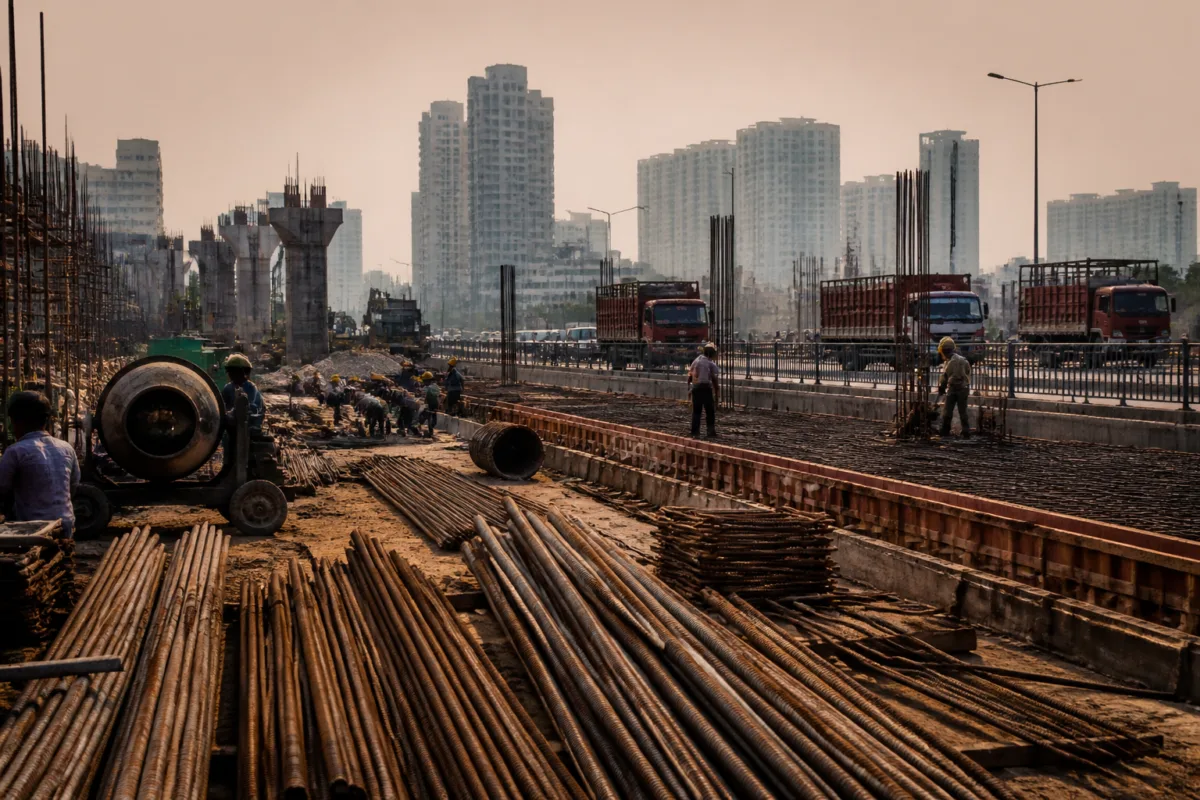
That transmission is particularly important for the built environment. Construction depends on a wide range of industrial and primary inputs, including metals, cement-related materials, fuel, chemicals, rubber and plastics. The PTI report identifies higher prices across manufactured basic metals, chemicals and chemical products, food products, textiles, rubber and plastic products, as well as mineral oils, crude petroleum and natural gas. These are not isolated commodity movements; they sit inside the procurement chains used to build and operate urban infrastructure.
The October data show that the pressure was broad-based. Food articles recorded inflation of 8.26 per cent, compared with 8.14 per cent in September. Non-food articles rose 11.69 per cent from 10.28 per cent, while minerals increased to 12.64 per cent from 9.51 per cent. The primary articles basket recorded 9.24 per cent inflation, up from 8.67 per cent in the previous month.
The sharpest movement came from fuel and power, where inflation rose to 32.84 per cent in October from 25.85 per cent in September. This matters to cities beyond petrol and diesel prices. Fuel is embedded in the movement of construction materials, the operation of buses and municipal vehicles, the manufacture of industrial goods, the pumping of water and the functioning of commercial and residential buildings. The supplied report does not quantify the impact on individual urban services, but the transmission mechanism is clear: energy costs affect both the delivery of infrastructure and the cost of using it.
Manufactured product inflation, meanwhile, moderated marginally to 9.54 per cent from 9.76 per cent. That small decline does not remove the wider pressure on project budgets. A city authority, public agency or private developer typically works with estimates prepared before procurement and construction are complete. When input prices rise during that period, the gap can appear through revised bids, requests for escalation payments, delayed tenders or pressure to alter specifications. The PTI report does not establish that any particular project has been delayed or repriced, but the broader cost exposure is relevant to the way urban projects are planned.
This is where wholesale inflation becomes a governance issue. Urban infrastructure is not delivered only through engineering designs; it is delivered through contracts, estimates, payment schedules and procurement rules. A prolonged rise in key inputs can test whether project agreements allocate price risk to contractors, agencies or the public. It can also affect the ability of local bodies and development authorities to maintain planned capital spending when the same budget buys fewer materials and services.
The October figure also has a strong external dimension. The report attributes the upward trajectory in part to the West Asia war and the resultant blockade of the Strait of Hormuz, through which the majority of crude oil is imported into India. Higher global crude and fertiliser costs have spilled over into food and commodity prices. For urban India, that link shows how a geopolitical disruption can reach construction sites, freight routes, household budgets and public-service operations through energy and input markets.
India Ratings and Research Chief Economist Devendra Pant said the October reading was the highest in the new series because of a base effect and a broad-based increase in primary articles and fuel and power. He said the prolonged West Asia crisis was continuing to drive fuel and power inflation higher and that the pressure could remain elevated until the crisis was resolved. Pant also said currency appreciation and weaker crude prices, if sustained during November, could bring WPI inflation down to around 11.5 per cent.
Other economists cited in the report pointed to a possible easing in the immediate price momentum. Barclays said the pass-through from wholesale prices to retail prices had remained moderate, particularly for core items, even as WPI inflation moved into double digits. Brickwork Ratings economist Pranjal Ghate said Brent crude had declined by around USD 20 per barrel by mid-November and that, if sustained, this could reduce WPI pressures after the festive period and later moderate consumer inflation through lower input and transportation costs.
Those comments underline an important distinction for urban decision-makers: a fall in the rate of inflation would not mean that prices return to earlier levels. It would mean that prices are rising more slowly. The October data therefore represent a higher cost base for projects and services, while any subsequent relief would depend on whether energy prices remain lower and how quickly the change passes through supply chains.
The retail signal is already significant. Data released the previous week showed October CPI inflation at 6.09 per cent, above the Reserve Bank of India’s upper tolerance limit for the first time in two years. The report says this has increased expectations of a policy rate hike at the RBI’s monetary policy review meeting scheduled for December 2-4. Brickwork Ratings expects another 25-basis-point repo rate increase to 5.75 per cent, followed by a pause, while also projecting that CPI inflation could peak at around 6 per cent in the third quarter of financial year 2026-27 before moderating. These are economists’ assessments, not confirmed policy decisions.
For housing and real estate, the combination of elevated input prices and possible monetary tightening creates two separate pressures. Higher material, energy and transport costs can raise the cost of construction. Higher interest rates can increase the cost of borrowing for developers, buyers and infrastructure agencies. The supplied evidence does not establish how much either factor has changed the price of a particular home or project, but together they show why inflation is not merely a macroeconomic indicator. It can influence project feasibility, construction schedules and household purchasing capacity.
The government released the revised WPI series with 2022-23 as its base year on June 15. October’s 12.29 per cent reading is therefore the highest in the new series, but comparisons must be read alongside the reported base effect. The data also show that the pressure is not confined to one category. Fuel and power rose most sharply, while primary articles, non-food articles, minerals and selected manufactured goods all recorded substantial inflation.
The larger urban question is whether India’s infrastructure and housing systems can absorb volatile input costs without transferring the full burden to delayed projects, higher user charges or more expensive homes. The October figures do not answer that question by themselves. They do, however, identify the pressure points: energy-intensive supply chains, imported crude exposure, material procurement, transport costs and the financing environment.
The next evidence to watch is the November WPI reading, the movement of crude prices, the extent to which wholesale pressures pass into retail inflation and the RBI’s December policy decision. Until those signals become clearer, the October data establish one fact firmly: India’s cities are entering a period in which the cost of building, moving and maintaining urban systems is under renewed pressure.

