


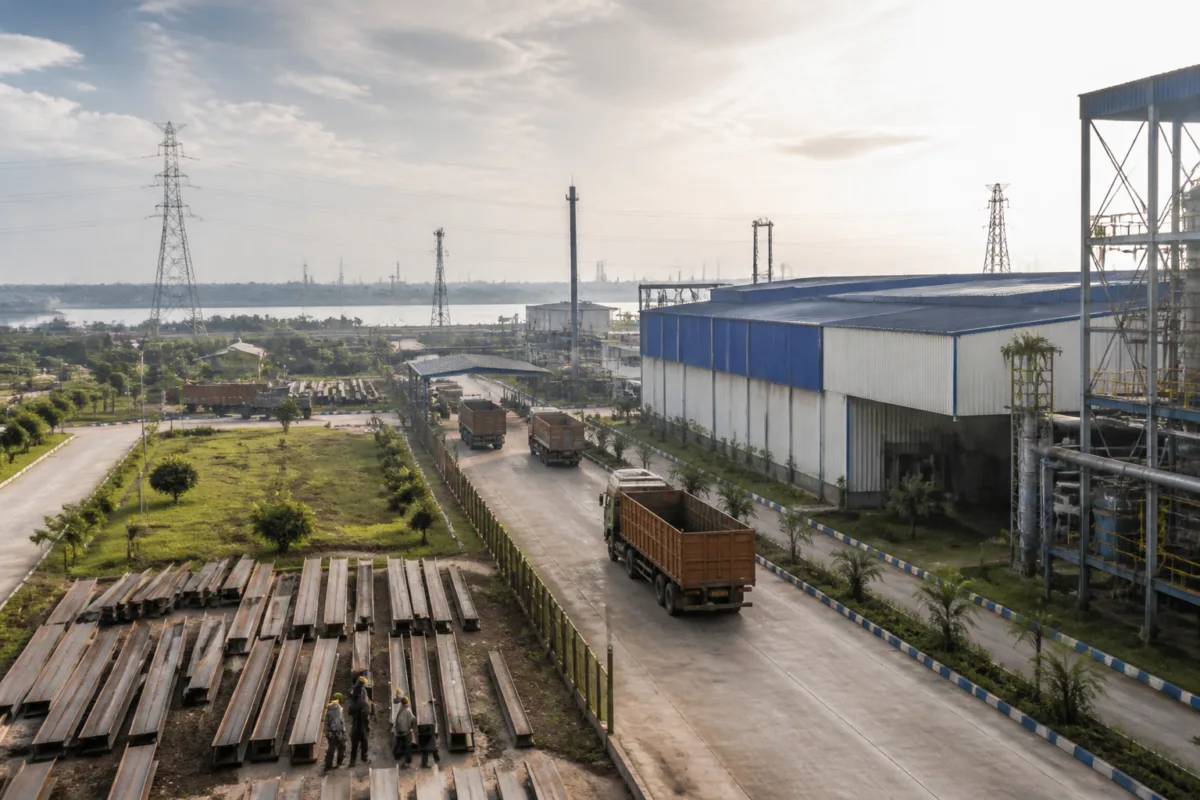
West Bengal’s manufacturing expansion will depend on whether the state can improve industrial infrastructure, modernise clusters and make investment approvals more predictable, according to a report by Primus Partners and the Associated Chambers of Commerce and Industry of India (ASSOCHAM).
The report, titled Beyond the Factory Floor: Turning Industrial Potential into Global Competitiveness, says West Bengal can emerge as a manufacturing and export hub in eastern India if it moves beyond attracting individual investments and strengthens the wider industrial ecosystem.
Its recommendations cover industrial land, private industrial parks, plug-and-play facilities, shared testing infrastructure, digital approvals, workforce development and stronger links between manufacturers and local suppliers. The report also calls for greater value addition, technological advancement, improved productivity and closer integration with global manufacturing networks.
The case for a coordinated eastern manufacturing strategy is based partly on the region’s existing industrial base. West Bengal, Odisha and Jharkhand recorded combined manufacturing gross state value added of approximately Rs 4.50 lakh crore in FY2024-25, compared with Rs 5.42 lakh crore in Maharashtra, according to the report. Odisha and Jharkhand have established strengths in metals and minerals, while West Bengal has a more diversified industrial base, manufacturing clusters and strategic connectivity, it says.
For West Bengal, the report identifies existing and potential opportunities across metals, refining, chemicals, engineering, foundries, textiles, leather, jute and food processing. It also points to emerging possibilities in defence manufacturing, shipbuilding, ship repair, advanced engineering, downstream chemicals and other labour-intensive industries.
The report links these opportunities to the state’s proximity to resource-rich regions, ports and inland waterways. It also cites West Bengal’s MSME network, engineering and research institutions and existing defence manufacturing capabilities as assets that could support industrial expansion. Developments in Haldia, gas infrastructure, waterways and industrial corridors are identified as potential enablers for new clusters and downstream industries.
A central recommendation is to make industrial locations more investment-ready. The report proposes strengthening industrial land banks, encouraging private industrial parks and developing plug-and-play facilities that can reduce the time and complexity involved in setting up factories. It also recommends sector-specific parks for defence, shipbuilding, advanced engineering, electronics, chemicals, pharmaceuticals, food processing and textiles.
The report says cluster modernisation should involve more than adding factory space. It recommends integrated industrial ecosystems with shared design, technology, testing, certification, calibration and metrology facilities. Such common infrastructure could help smaller firms improve quality and meet international standards, while also strengthening supply-chain links between large manufacturers and MSMEs.
Digital systems are another part of the proposed framework. The report recommends strengthening Silpa Sathi, the state’s investment facilitation platform, through geographic information system-enabled land information, artificial intelligence-powered investor assistance and end-to-end digital processing. It also calls for simplified compliance, faster approvals and improved coordination between departments.
The recommendations respond to what the report describes as a long-term decline in West Bengal’s economic position. It says the state’s share of India’s gross domestic product fell from 10.5% in 1960-61 to approximately 5.5% in 2024-25. West Bengal accounted for 2.9% of India’s merchandise exports in FY26, while its ten leading products made up 61.3% of its export basket, according to the report.
The report also emphasises workforce capability. It proposes stronger partnerships between industry and industrial training institutes, expanded apprenticeships, work-based learning and continuous skill development. For MSMEs, it recommends better access to global markets, technology partnerships, supplier-development programmes and quality certification.
Devroop Dhar, Co-Founder and Managing Director of Primus Partners, said the measure of industrial progress should not be limited to attracting investments, but should include the ability of enterprises to succeed, industries to grow and economic opportunities to multiply. He highlighted investment-ready infrastructure, regulatory efficiency, cluster modernisation, enterprise development, workforce capabilities and investment facilitation as parts of the broader manufacturing ecosystem.
The report’s proposed positioning for the state is “Make in Bengal. Build for the World.” Its central argument is that industrial policy, infrastructure delivery and enterprise productivity must be planned together. For West Bengal, that places the implementation of land systems, industrial parks, logistics links, common facilities and approval reforms alongside investment promotion as the key test of its manufacturing ambitions.

