


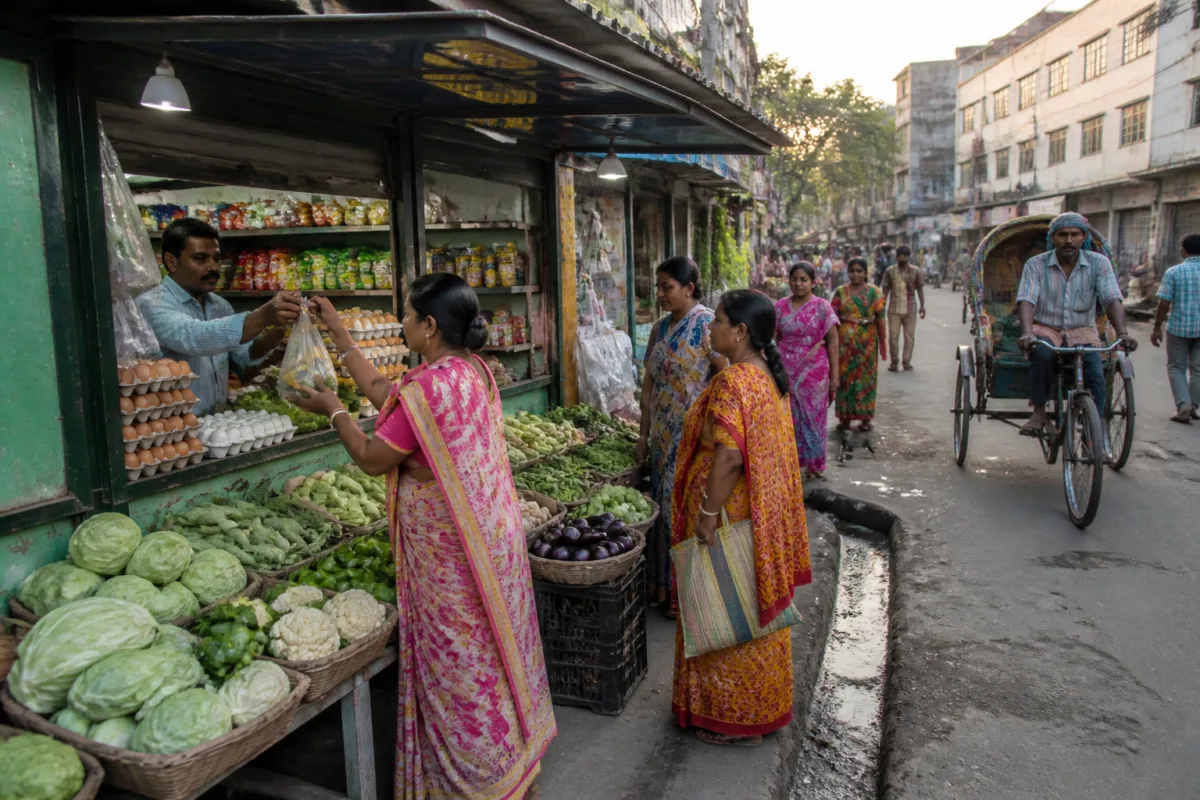
West Bengal is planning to expand its Sufal Bangla network beyond Kolkata and its suburbs as the state government seeks to improve access to essential food items and reduce the influence of intermediaries in retail markets, according to an Anandabazar report published on November 26.
The report, citing the state Agriculture Marketing Department, said West Bengal currently has 456 Sufal Bangla stalls, most of them concentrated in Kolkata and adjoining areas. It said the government aims to take the total to 1,500 within the current financial year and open another 1,000 stalls in the following year.
The report also refers to a plan for 2,500 additional stalls. It does not clearly explain how this figure relates to the target of 1,500 stalls this financial year and the further 1,000 proposed for the next year. The scale and phasing of the expansion therefore require clarification from the state government.
The proposed network expansion is intended to take the state-supported retail model to districts across West Bengal. The government is also reported to have decided to procure produce directly from farmers and sell it through Sufal Bangla outlets, with the stated aim of reducing intermediary mark-ups while ensuring better returns for cultivators.
The decision followed an emergency meeting at Nabanna on controlling rising prices, the report said. It comes alongside market inspections by the police and enforcement authorities. According to the report, officials believe such inspections can bring prices down temporarily, but that prices rise again when monitoring eases.
The report cited retail prices of around ₹100 a kilogram for brinjal, ₹80 for pointed gourd and about ₹200 for capsicum. It said chicken eggs were selling at ₹8 to ₹8.50 each by mid-November, while several varieties of fish, including catla, prawn, bhetki and pabda, were priced at more than ₹500 a kilogram. These prices are reported figures and were not independently verified in the source material.
The state administration reportedly identified dependence on supplies from other states, weather-related crop damage and alleged artificial shortages as factors behind the price rise. Mustard and mustard oil are said to arrive largely from Rajasthan, Uttar Pradesh and Haryana, while sugar is sourced from Maharashtra, Karnataka and Uttar Pradesh. The report said the chief minister directed the Agriculture Secretary to speak directly with administrations in those states about wholesale prices.
It also attributed shortages of vegetables such as cauliflower, cabbage, brinjal, pointed gourd, bitter gourd and early potatoes to waterlogging after recent heavy rain and the cyclone identified in the report as Akvan. The administration reportedly suspects that some intermediaries are creating artificial shortages of potatoes despite stocks in cold storage, although this allegation was not supported by independently cited records in the report.
The proposed Sufal Bangla expansion would make the network a more important part of the state’s food-retail and market-intervention system if implemented. Its effectiveness will depend on the final number of outlets, their district-level locations, procurement arrangements, price-setting mechanisms and the government’s ability to maintain supplies beyond short-term enforcement drives. These implementation details were not provided in the report.

