


Kolkata’s leather and seafood exporters are facing container shortages, longer shipping routes and sharply higher freight costs as vessels avoid the Strait of Hormuz, according to a report by The Telegraph. The disruption is also reshaping the city’s air-cargo mix, with steel and personal-care products moving by air in larger volumes.
The impact is particularly visible in the leather industry, where consignments are reportedly lying at factories because containers are unavailable. Zia Nafis, chairman of the Council for Leather Exports’ eastern region, said exports of leather and leather goods from eastern India had declined by 3 to 5 per cent year on year across various categories in recent months.
Eastern India exports leather and leather goods worth about ₹5,000 crore annually on average, with Europe, the UK and the US among the main markets. Nafis attributed the fall to delays caused by longer shipping routes and higher freight charges. He said shipments were being held up for around 15 days and that air-freight charges had risen by 30 to 35 per cent because of higher fuel costs.
An exporter at the Kolkata Leather Complex in Bantala said the business had previously hired about 30 containers a month, with each shipment carrying 25 tonnes of industrial gloves. In the past couple of months, the exporter said, only 25 containers a month had been dispatched. The reported cost of a container rose from $2,000 to $3,500.
Air cargo has not provided a straightforward alternative. Leather reportedly accounted for around 60 per cent of export goods handled at Kolkata airport earlier, but now represents about 20 per cent. An exporter said the air-freight rate for consignments to Europe had risen from ₹300 a kilogram last year to more than ₹400 a kilogram, discouraging some businesses from sending goods by air.
The disruption is affecting demand as well as transport. Exporters told The Telegraph that the conflict and the resulting economic slowdown had reduced demand for luxury leather products such as wallets, bags and portfolios in Europe.
Seafood exporters are also rerouting cargo. Rajarshi Banerji of the Seafood Exporters’ Association of India said consignments bound for West Asia were avoiding the Strait of Hormuz and travelling to Khorfakkan, a deep-water commercial port on the UAE’s east coast. From there, the products are transported by truck to destinations including Dubai, Qatar and Kuwait. Banerji said the revised route had increased transport costs threefold.
The report links the shipping disruption to the conflict in West Asia and heightened risks in the Strait of Hormuz. It cites statements by Iran’s Revolutionary Guards Navy and an Iranian army spokesperson after reports that two oil tankers had struck naval mines. These developments have made the maritime route more uncertain for exporters using it to reach West Asian markets and onward destinations.
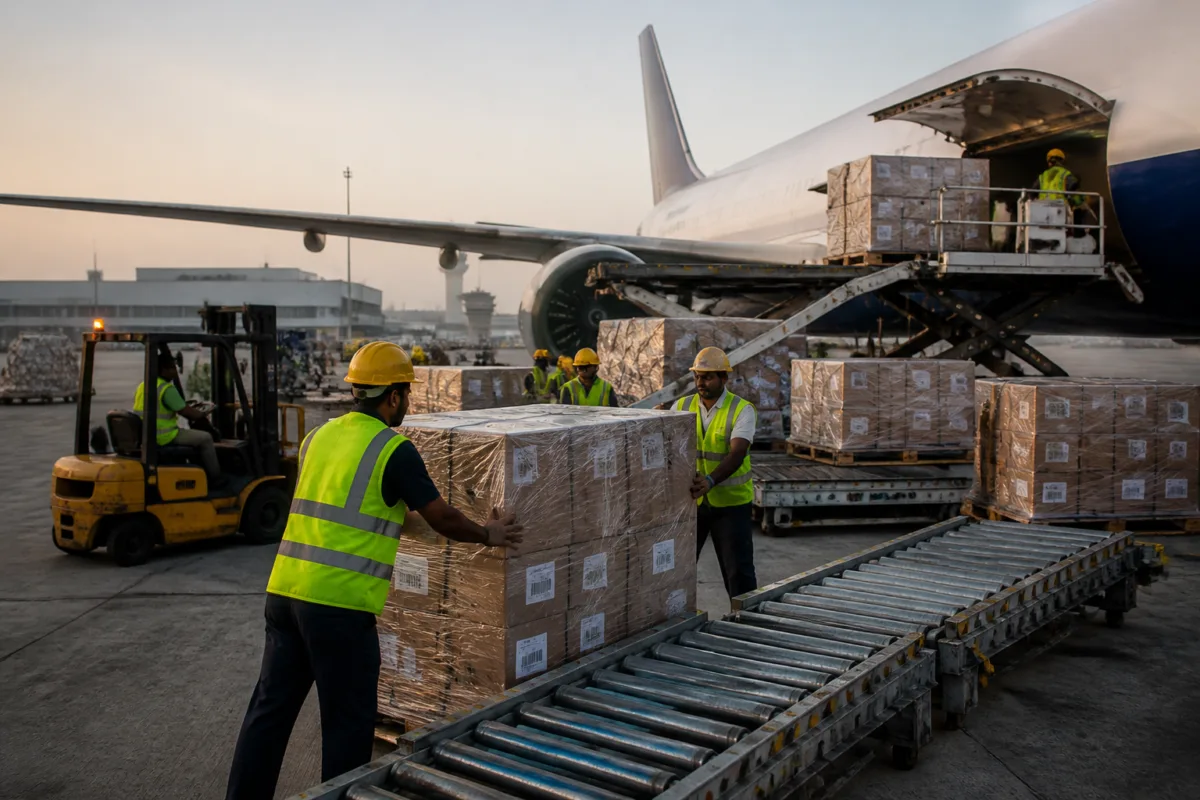
The pressure on sea freight is producing an unusual change at Kolkata airport. The airport handles about 3,000 tonnes of export cargo a month, but the volume is now being sustained by other commodities even as the share of leather falls. An airport official said steel bars were being flown to West Asia in large quantities, despite typically being transported by sea. Beauty products are also reportedly being airlifted, including consignments of about 100 tonnes sent by a multinational consumer-goods company through Emirates airline.
The shift shows how a disruption far beyond Kolkata can affect the city’s manufacturing and logistics system. Bantala’s leather cluster, airport cargo operations, trucking links and exporters’ access to containers are all exposed to changes in maritime route availability and fuel costs. For smaller enterprises, the reported combination of delayed shipments, higher freight and weaker overseas demand can reduce the ability to fulfil orders even when production capacity remains available.
The Centre has started the Niryat Protsahan and Niryat Disha schemes under the Export Promotion Mission. The two integrated sub-schemes are intended to support micro, small and medium enterprises, with the mission carrying an outlay of ₹25,060 crore for 2025-26 to 2030-31. The report does not specify how much assistance affected Kolkata exporters have received or whether it has offset the additional logistics costs.
For the city’s exporters, the immediate challenge is therefore not only finding alternative routes. It is maintaining reliable access to containers and affordable air cargo while overseas demand remains uncertain. The reported movement of steel and consumer products into air freight also indicates that Kolkata’s cargo infrastructure is being used as a pressure valve, but at significantly higher reported costs.

