


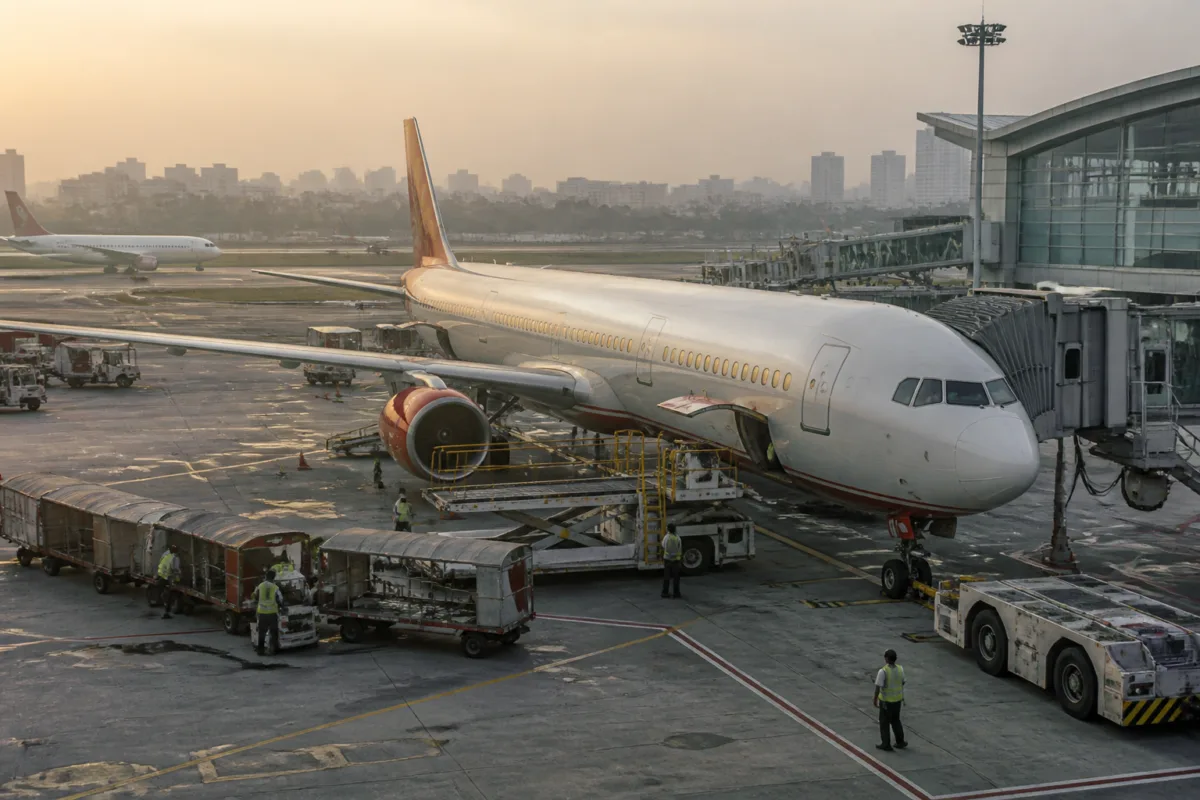
Air India is targeting ₹6,000 crore in cost savings and plans to integrate finance, human resources and information technology functions with Air India Express, while keeping operational and customer-facing activities separate, Group Managing Director and Chief Executive Officer Tewolde Gebremariam told employees at a town hall, according to Business Standard.
The proposed changes are intended to reduce duplicated work, overlapping responsibilities and internal competition between the two airlines. Functions that must remain independent under their respective airline operating certificates, including regulatory, operational and customer-facing activities, will continue to be managed separately.
Gebremariam said the group had identified cost-reduction opportunities worth about ₹3,500 crore and had already achieved savings of nearly ₹1,500 crore. Air India is targeting 20 per cent savings in non-fuel costs and 5 per cent in fuel costs, although no overall deadline was specified. An 11-member senior management team has been formed to focus exclusively on cost reduction, while an internal employee programme has generated about 1,500 suggestions.
The airline is also reconstituting its Air India Management Committee as the Air India Management Team. Air India Express Chief Executive Officer Deepak Rajawat will join the group management team, and a new Group Strategy Officer role will oversee long-term strategy, network development, alliance partnerships and diversification.
The restructuring comes as the group responds to higher costs and operating disruption. Air India’s consolidated net loss more than doubled to ₹22,238 crore in 2025-26 from ₹10,859 crore in the previous financial year, according to the report. Gebremariam said fuel expenses had nearly doubled from the previous year and that the broader objective was to reduce cost per available seat kilometre below revenue per available seat kilometre.
The airline is planning to rebalance parts of its international network because of airspace restrictions affecting Pakistan and parts of West Asia. At least some westbound connecting traffic could be shifted from Delhi to Mumbai, which the CEO said was less affected by the restrictions. Delhi would handle more eastbound connections to Japan, South Korea, Australia and Southeast Asia, while Bengaluru is being considered as an additional hub.
Airport operations are another focus. Gebremariam criticised what he described as insufficient urgency among airport staff in dispatching flights, saying delays could cause passengers to miss connecting services and increase dissatisfaction and compensation costs. Business Standard reported that domestic short-haul on-time performance for Air India and Air India Express had crossed 80 per cent, while long-haul international performance was around 70 per cent. The CEO wants the latter to reach the 80 per cent range within the next few weeks.
The group is also examining businesses beyond passenger flying, including packaged holidays and dedicated freighter operations. A possible Air India Holidays or Air India Vacations business could offer packaged tours in partnership with the tourism ministry and hotels, including the Taj group. Air India is also exploring dedicated cargo services and says it is not fully using its existing cargo capacity.
Training operations are planned to be consolidated under an Air India Aviation Academy, bringing together pilot training in Amravati, aircraft type-rating and recurrent training in Gurugram, maintenance, repair and overhaul training in Bengaluru, and simulator training. The academy could eventually operate as a profit centre and provide training to third parties.
The group’s immediate operating environment remains difficult, with airspace closures, the West Asia crisis and high fuel prices affecting performance. Gebremariam said recent revenue trends had been encouraging, with improved passenger occupancy on some routes and higher yields on others. Air India did not respond to Business Standard’s queries before publication.

