


The reported death of Ratan Sheikh in a police firing in Nanur, Birbhum, has become more than an account of an armed confrontation. It is the fifth encounter reported in West Bengal during the first six months of the BJP government, and the political reactions have exposed a deeper question: how should the state respond to serious crimes while preserving the judicial process that determines guilt and punishment?
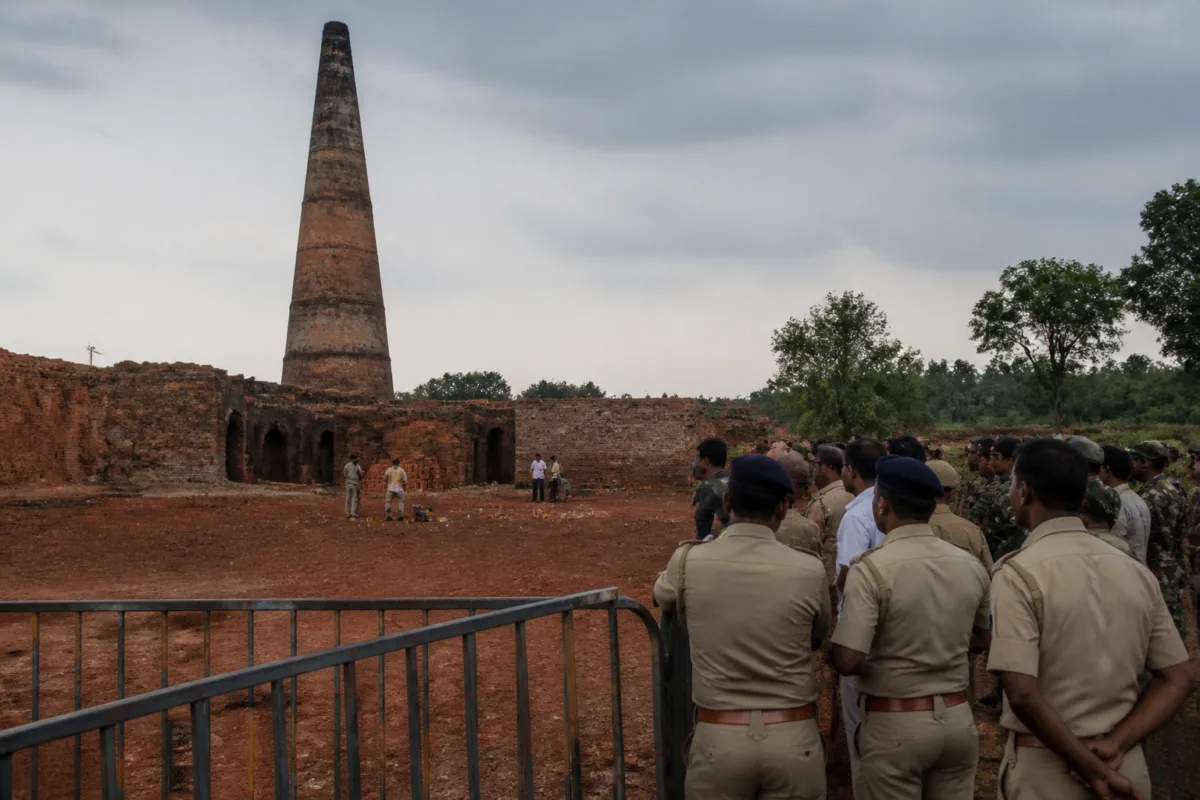
According to the report by Anandabazar, police sources said Sheikh was taken to an abandoned brick kiln on Sunday to recover the firearm allegedly used in an attack on a police constable on Friday. The sources claimed that Sheikh suddenly raised a firearm and fired at the police team, hitting its vehicle. Police allegedly returned fire in self-defence. Sheikh was injured, taken first to Nanur health centre and then to a hospital in Bolpur, where he was declared dead. A post-mortem examination was to be conducted at the Bolpur hospital.
The account remains a police-source version of the incident. The report said the police had not formally announced Sheikh’s arrest, although police sources claimed that he had been detained from the Nawabhat area of East Burdwan on Sunday. The same sources said he had confessed during questioning and had identified the location of the firearm used in the shooting. The supplied report does not include an independent account of the firing, a formal police statement, or details of the post-mortem findings.
That distinction is central to the public debate. An encounter claim is not the same as a judicial finding. Even where a person is accused of grave offences or is alleged to have attacked the police, the circumstances of the death require an accountable investigation. The reported sequence—arrest or detention, questioning, a recovery operation and fatal police firing—creates precisely the kind of institutional chain that must be documented clearly if public confidence is to be maintained.
The report said Sheikh was a resident of Saonta village in Nanur and had several cases registered against him, including allegations related to illegal possession of firearms and drug trafficking. It also said he had been arrested in a case several months earlier and received bail on Friday. Police had then gone to apprehend him in connection with another case, according to the report. These details establish the allegations and the police version of the sequence, but they do not by themselves establish criminal responsibility for every offence attributed to him.
The political responses reflected this tension. Trinamool Congress legislator Kunal Ghosh said the accused should receive severe punishment, including the strictest punishment for particularly serious crimes. But he also asked who should impose that punishment and by what process. His position, as reported, was that the judiciary must punish and that an efficient administration must investigate quickly and secure a conviction through due process.
Ghosh also questioned the repeated police explanations that an accused person tried to escape, attacked the police or attempted to seize a weapon during a reconstruction of the crime. He said that the limited availability of video evidence made it difficult for the public to accept such explanations. His concern was not that serious crimes should go unpunished, but that repeated reliance on similar encounter narratives could weaken confidence in policing and create opportunities for misuse.
Communist Party of India (Marxist) leader Sujan Chakraborty made a similar distinction. He condemned crimes including murder, assault, rape and attacks on the police, but argued that the criminal justice system exists to decide punishment. He warned that treating punishment outside the courts as acceptable could create a danger that later affects those who support such a practice.
Congress spokesperson Suman Raychaudhury also called for strict punishment but said the police should bring accused persons before the law, complete a transparent investigation and submit its report to the court. He urged the police and administration to prevent such incidents from recurring and said enforcement should be strong enough to compel accused persons to surrender rather than produce repeated armed confrontations.
The reported response from Chief Minister Shuvendu Adhikari took a harder line. He said West Bengal would have no place for rapists and killers and that the police would respond if fired upon. He also warned criminals to leave for Bangladesh or face action if they remained in the state. The report recalled an earlier statement attributed to him before the BJP came to power: that criminals would not be spared and would be arrested and punished quickly.
The language of deterrence is politically powerful because it promises an immediate answer to public anger over violent crime. But deterrence and due process serve different institutional purposes. A government can direct the police to pursue dangerous suspects firmly while still requiring arrests, evidence collection, independent scrutiny and prosecution wherever possible. The challenge for the administration is to demonstrate that an encounter was unavoidable, rather than allowing a fatal police action to become a substitute for the criminal trial that would otherwise establish the facts.
Nanur is therefore significant not only because of the identity of the deceased or the alleged shooting of a constable. The report places the incident within a pattern: earlier encounter deaths were reported in Baruipur, Gaighata, Samserganj and Raiganj, making Nanur the fifth such case during the government’s first six months. The supplied material does not provide a consolidated official dataset, details of the earlier incidents, or comparable information on the number of arrests and prosecutions. It does, however, show that the frequency of reported encounters has become a political and governance issue.
The institutional responsibilities in such a case are spread across several stages. The police must establish what happened at the brick kiln, preserve the scene, document the weapons and firing, record the injuries and secure forensic evidence. The medical authorities must conduct the post-mortem examination. The administration must ensure that the investigation is not reduced to the account of the officers involved. The prosecution and courts must then assess the available evidence under the applicable law. The report does not state which independent agency, if any, will examine the firing, nor does it provide the results of any such inquiry.
This gap in publicly available information explains why video evidence and formal documentation matter. When the only widely circulated account is supplied by the police, citizens are asked to accept a sequence in which the accused allegedly initiates violence and the police respond defensively. That sequence may be accurate, but its credibility depends on evidence that can be independently examined. Weapon recovery records, forensic findings, medical reports, ballistic examination and witness accounts are not administrative details; they are the basis on which a public institution can establish that its use of force was lawful and necessary.
The issue also affects policing itself. Police officers face genuine risks when confronting armed suspects, and the state has a responsibility to protect them. But a system that appears to reward fatal confrontations can create a damaging incentive structure, even if no individual officer is shown to have acted improperly. Conversely, a system that insists on transparent investigation protects both civilians and police personnel by separating verified evidence from claims made after a death.
The Nanur case also illustrates the difference between political accountability and judicial accountability. Political leaders may announce a strong law-and-order policy and defend the police response. Courts, investigators and medical authorities perform a different function: they test whether the evidence supports the official account. Neither function can replace the other. Public safety requires effective policing, while the legitimacy of punishment depends on an adjudicative process that is independent of political messaging.
What the available evidence confirms is that Ratan Sheikh died after police firing during an alleged firearm recovery operation in Nanur, and that opposition leaders have questioned the wider pattern of reported encounters while still calling for punishment of serious offenders. What remains unestablished in the supplied material is the independent evidentiary account of the firing, the formal status of Sheikh’s arrest, the post-mortem findings and the outcome of any investigation into the police action.
Those facts will determine whether Nanur is treated as a documented armed confrontation or becomes another case in which a police narrative carries the burden of proof without sufficient public scrutiny. The next significant developments are the post-mortem findings, formal police or administrative statements, forensic evidence from the brick kiln and vehicle, and any independent inquiry into the circumstances of the death.

