


West Bengal’s dengue caseload has crossed 5,000, with Kolkata recording more than 500 infections as health authorities intensify surveillance and mosquito-control measures across affected areas. The figures, cited from state Health Department data, show that 5,002 cases had been reported by September 11, up from 2,410 at the beginning of August.
The increase means that more than 2,500 cases were recorded in roughly one month. Kolkata is the second-worst affected district in the figures cited by Sanmarg, after Murshidabad, which has reported 1,072 patients. North 24 Parganas has recorded about 450 cases, while Nadia and Malda have each reported more than 400 infections. South 24 Parganas has reported 367 cases.
Within Kolkata, municipal and health department reports indicate that 12 wards are seeing comparatively higher levels of transmission. Ward 6 recorded 56 new patients in the previous week, according to the report. The figures highlight the importance of ward-level monitoring in a city where localised water accumulation and gaps in neighbourhood sanitation can influence mosquito breeding conditions.
Health officials and doctors cited in the report have linked the recent increase to changing weather and intermittent rainfall. Water collecting in small depressions, open plots and other exposed locations can create breeding conditions for Aedes aegypti, the mosquito associated with dengue transmission. Higher humidity can also affect the mosquito’s development cycle, according to the report.
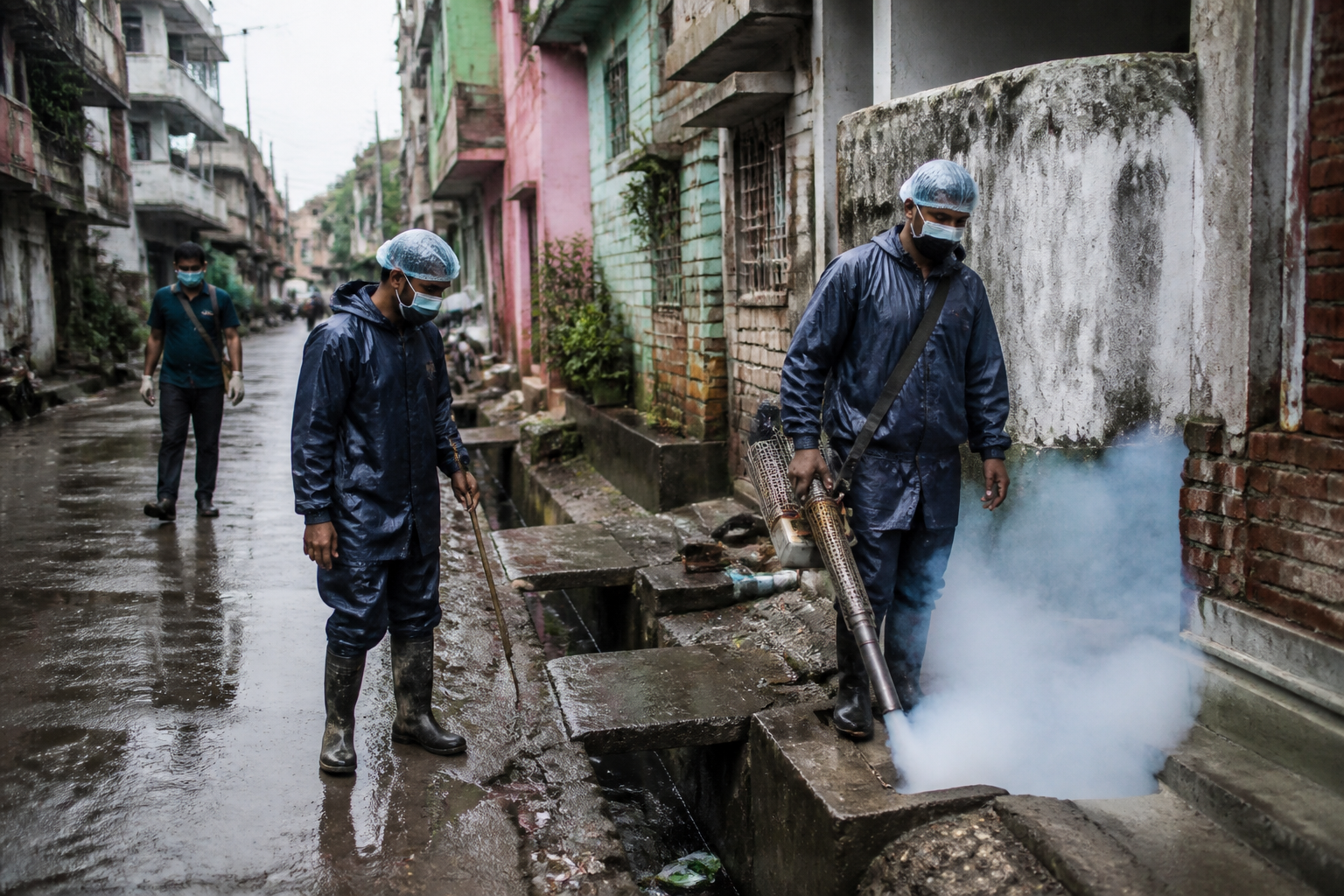
The state Health Department has increased surveillance in affected locations and arranged fever clinics and additional monitoring. Government health centres are being used for testing, while expanded diagnostic facilities are being prioritised in areas where demand is rising. Local bodies and panchayat-level vector-control teams have been instructed to intensify anti-mosquito operations.
The response also includes door-to-door information gathering through Accredited Social Health Activists, or ASHA workers. They are being asked to identify people with fever and refer suspected patients to health facilities for timely testing and treatment. Cleaning operations are also being undertaken at railway yards, vacant plots and other locations where water may collect.
The Health Department has appealed to residents to prevent water from accumulating in and around their homes and to seek testing promptly if they develop a fever. The next phase of the response will depend on continued surveillance, ward-level mosquito control and the availability of testing and treatment services in areas reporting rising cases.

