


Vodafone Idea’s reported plan to raise a ₹35,000-crore, 10-year loan is more than a financing development for a mobile operator. It is a test of whether a heavily indebted telecom company can secure the long-term capital needed to upgrade its network while convincing banks, shareholders and the government that its financial structure can support that investment.
According to an Economic Times report, State Bank of India has approved a proposal to take about 20% of the proposed exposure, or roughly ₹7,000 crore. The balance would be divided among eight to 10 lenders, with each creditor expected to contribute at least ₹1,500 crore. The proposed consortium is expected to include public-sector banks, private lenders and the National Bank for Financing Infrastructure and Development, or NaBFID.
The company is reported to need around ₹60,000 crore for service upgrades over the next decade. The proposed loan would therefore cover only part of the requirement. The balance would have to come from internal accruals or a future equity infusion, according to people cited in the report. That gap is central to understanding the proposal: the loan is not a complete capital expenditure solution, but the first major financing layer in a longer investment plan.
The arrangement also shows how lenders are attempting to reduce the risks of funding a telecom operator whose ownership and financial history have been unsettled. The reported conditions include oversight by SBI over Vodafone Idea’s cash flows, with funds routed through accounts monitored by the bank. Any shortfall in investment above the loan amount would have to be managed by the company.
The proposed financing is also linked to the continuing involvement of the Aditya Birla Group. Kumar Mangalam Birla, who returned as Vodafone Idea’s chairman in May 2026, would reportedly have to remain in that position for the tenure of the loan. Another condition is that the Aditya Birla Group maintain its equity stake after converting its warrants and rights. A comfort guarantee from a group company is also reported to form part of the conditions.
These clauses are significant because they connect network investment to corporate continuity. Banks are not simply lending against a conventional expansion plan. They are seeking assurance that the promoter group will remain engaged and that the company will not be left to manage a large debt-funded investment programme without continuing shareholder support.
Vodafone Idea’s ownership already reflects the unusual relationship between public finance and private telecom operations. The Government of India currently owns 49% of the company after converting some dues into equity. The Aditya Birla Group and associated companies hold about 6.64%, while UK-based Vodafone owns 19%. The proposed loan would therefore be raised by a company in which the government is the largest shareholder, even though day-to-day operations remain with a private-sector telecom operator.
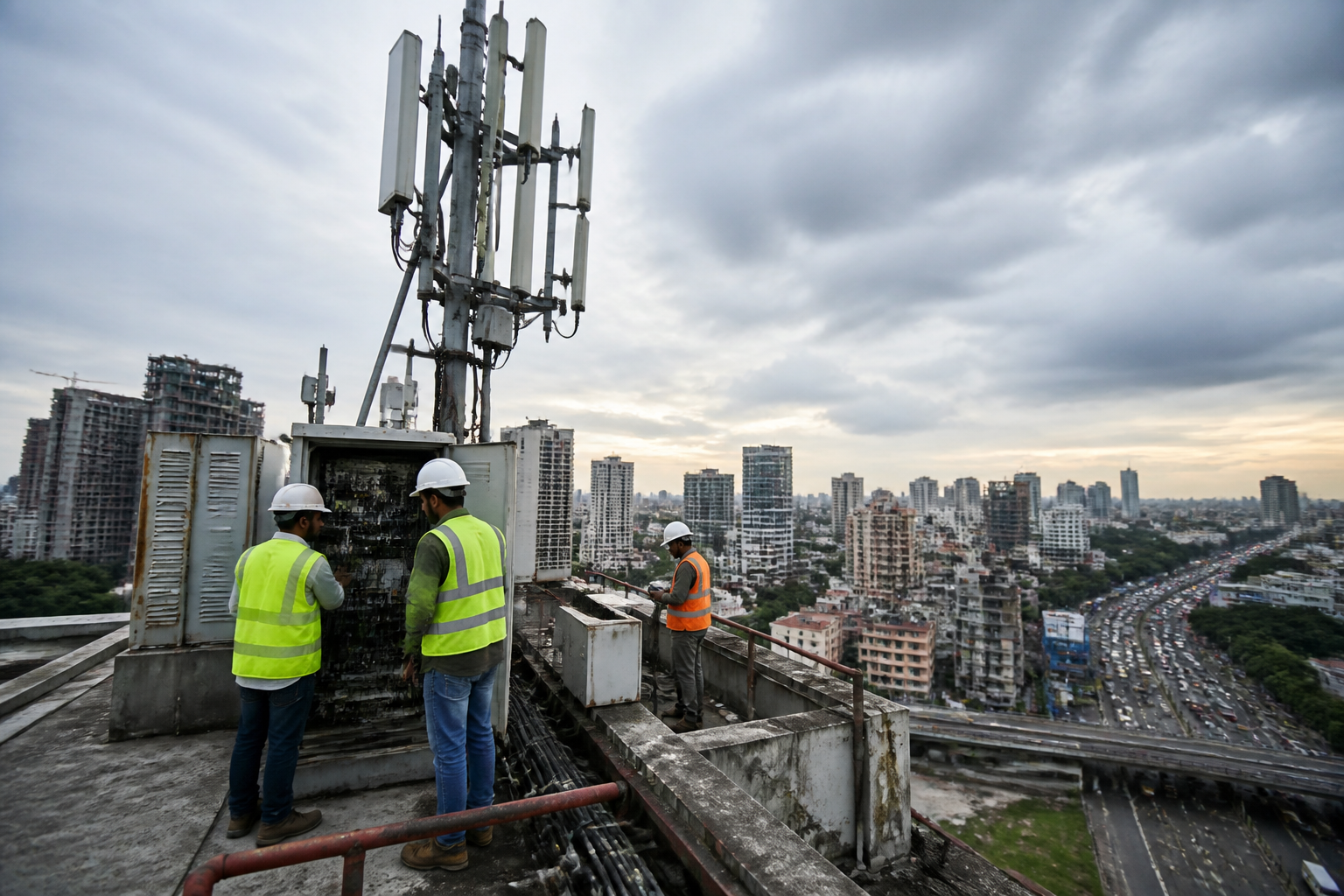
That structure matters for infrastructure planning. Mobile networks are now basic urban and regional utilities, supporting payments, transport applications, remote work, public services, logistics and emergency communication. Yet the capital required to maintain those networks is carried by commercial operators whose revenues depend on subscriber payments, pricing power and access to debt. When one of the major operators struggles to fund upgrades, the issue extends beyond corporate balance sheets to the resilience and competitiveness of the communications system.
The reported ₹60,000-crore requirement also indicates the scale of the investment challenge. Network upgrades are not a one-time construction project. They require continuing spending on radio equipment, transmission capacity, data systems, power, maintenance and coverage improvements. A 10-year term loan may provide a longer repayment horizon than ordinary corporate borrowing, but it also places the company under sustained pressure to generate cash while investing in services that may take time to produce stronger returns.
The financing structure reveals why lenders are being cautious. SBI’s internal assessment reportedly arrived at a loan requirement of about ₹35,000 crore, but the bank is not expected to fund the entire amount. Instead, the proposal depends on a consortium. NaBFID is likely to be the second-largest lender, with an exposure of about ₹4,000 crore, while Punjab National Bank, Canara Bank, Bank of Baroda and Union Bank of India are reported to be in discussions. ICICI Bank and HDFC Bank are also reported to be in touch with the company.
A consortium spreads the exposure across institutions, but it also requires agreement on monitoring, disbursement and repayment conditions. The reported minimum contribution of ₹1,500 crore per creditor suggests that the loan is large enough to require a broad lending group rather than a bilateral arrangement. The wider the consortium, the more important common oversight becomes, particularly when the borrowing is intended to fund capital expenditure over a decade.
The public-sector role is especially relevant. SBI’s proposed exposure of about ₹7,000 crore and NaBFID’s expected contribution of around ₹4,000 crore would place a substantial portion of the financing with institutions connected to the public financial system. That does not by itself establish a loss or a subsidy, and the final lending terms have not been disclosed in the supplied report. It does, however, show how the financing of critical digital infrastructure can bring state-linked lenders into the centre of a private company’s investment strategy.
The proposed conditions also reflect the legacy of Vodafone Idea’s earlier financial stress. Kumar Birla had stepped down from the company’s board in 2021, when the operator was dealing with high government outgoes and falling revenues. He returned as chairman in May 2026 as the company’s position improved. The lenders’ reported insistence on his continued chairmanship suggests that promoter involvement is being treated as part of the credit assessment rather than as a separate governance matter.
At the same time, the report says Vodafone Idea’s shares have risen 102% in one year. Market performance can improve a company’s ability to consider equity financing, but it does not replace operating cash flow or guarantee that a long-term capital expenditure programme will be fully funded. The company still needs to identify the sources for the remaining amount beyond the proposed ₹35,000-crore loan.
This is where the plan’s urban significance becomes clearer. India’s cities increasingly depend on reliable mobile connectivity, but the physical network behind that connectivity is often less visible than roads, railways or water systems. Telecom investment affects the performance of digital public services, digital commerce, location-based mobility, online education and business operations. Service upgrades can also determine whether connectivity keeps pace with population growth, higher data use and the expansion of digital activity into smaller cities and towns.
The structure of the proposed loan also raises an institutional question about how India finances infrastructure that is privately operated but publicly consequential. Roads and metro systems are typically evaluated through formal public budgets, concessions or project-finance structures. Telecom networks sit between those models. Operators must invest commercially, but their systems support essential economic and civic functions. The Vodafone Idea proposal shows how banks, promoter groups and government ownership can become intertwined when a major operator needs capital to remain competitive.
The report does not establish the final interest rate, disbursement schedule, security package or repayment timetable. It also does not confirm whether all eight to 10 lenders have committed to the consortium. SBI, Vodafone Idea and NaBFID did not respond to the Economic Times’ requests for comment, while discussions with other banks were still under way.
The next important milestone is therefore the completion of the loan’s structure, which the report says could be ready by the middle of October. Until then, the proposed financing should be understood as a reported framework rather than a completed capital raise. What is already clear is the scale of the challenge: Vodafone Idea is seeking ₹35,000 crore in long-term debt against a stated service-upgrade requirement of ₹60,000 crore, while lenders are tying the facility to cash-flow oversight, promoter continuity and continued group ownership.

