


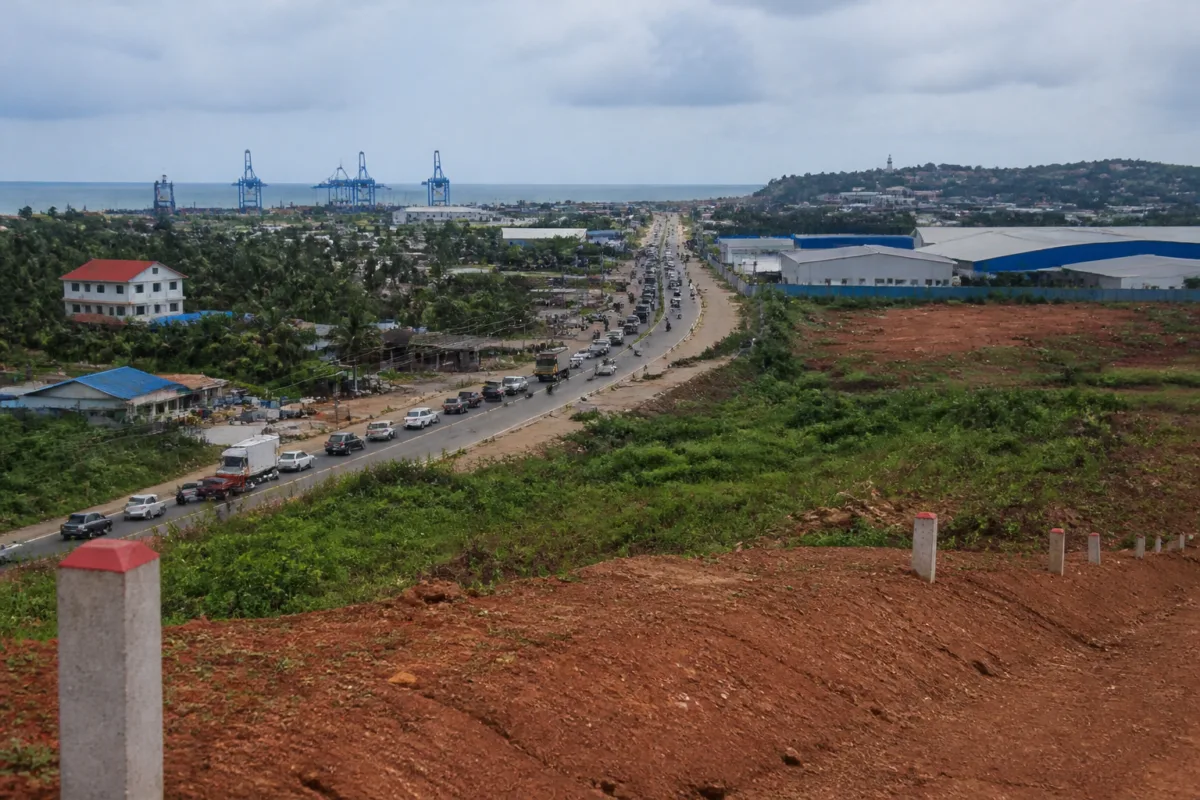
Kerala’s decision to place the long-pending Vizhinjam growth corridor under the ports department is more than an administrative reshuffle. It is an attempt to align a major regional land-use programme with the port, the proposed Thiruvananthapuram outer ring road and the industrial activity expected to develop around both. But the move also exposes the institutional and land-acquisition problems that have slowed the project for years.
The Outer Area Growth Corridor, or OAGC, was previously handled by the local self-government department. The state government has now decided to bring it under the direct administrative control of the ports department, while the industries department convenes a high-level meeting to coordinate implementation. Additional chief secretary for industries A P M Mohammed Hanish told the Times of India that the objective was to accelerate the corridor and ensure that industrial clusters develop in coordination with the Vizhinjam port ecosystem.
That stated objective matters because the OAGC is not a standalone road or industrial estate. It is planned as a master development corridor extending 2.5 km on either side of the proposed outer ring road. The programme is intended to organise industrial, logistics and economic activity across a large section of the capital region rather than allowing development to emerge without a common framework.
The corridor is planned to include eight clusters at Vizhinjam, Kovalam, Kattakada, Nedumangad, Vembayam, Mangalapuram, Kilimanoor and Kallambalam. The two clusters closest to the port will come under the ports department, while the remaining six will be handled by the industries department. The proposed activity mix includes logistics and industrial facilities, health tourism, green and smart industries, pharmaceuticals, food processing, life sciences and information technology-related activities.
This distribution of responsibility indicates the state’s attempt to separate the port-facing functions of the corridor from the wider industrial development programme. It also creates a coordination challenge. The corridor’s purpose depends on the port, the ring road, land availability, industrial planning and local administration working as one system. Moving the project between departments may reduce procedural delays, but it does not by itself resolve the need for a shared development plan or a clear implementation structure.
The project’s history shows why that distinction is important. Under the local self-government department for several years, the OAGC faced repeated delays involving approval of its master development plan, land pooling arrangements and coordination between departments. An empowered committee headed by the chief secretary reviewed the second phase of the Capital Region Development Programme in September and discussed measures to revive it. The administrative shift is therefore a response to an existing implementation problem, not the beginning of a new regional planning exercise.
The proposed outer ring road is central to the corridor’s viability. The state expects the Centre to approve the road, connecting Vizhinjam with Navaikulam, within a month. However, landowners affected by the alignment are planning protests over the continued delay. Their action council has said that it is not convinced by the latest assurance because similar promises have been made repeatedly without a final decision.
This creates a gap between the corridor’s planning ambition and its current institutional certainty. The OAGC is designed around a road whose central approval remains pending in the supplied account. Until that decision is taken, the spatial and economic logic of the corridor remains tied to an infrastructure project that has not crossed its final approval hurdle.
The land dimension is already visible beyond the ring-road alignment. About 230 acres in Neyyattinkara and Kattakada taluks have been identified for port-related requirements. The two taluks also account for a significant share of the land bank being examined, according to Mohammed Hanish. These figures show that port-led development will involve more than activity within the port boundary. It will require land for supporting functions, logistics and related economic uses across the region.
They also underline why land pooling and local coordination have been persistent issues. A corridor extending 2.5 km on either side of a proposed road will pass through multiple settlements, administrative jurisdictions and land interests. The source report does not establish the final land acquisition or pooling mechanism, the total project cost, the implementation timetable or the compensation framework for affected owners. Those details will be important in assessing whether the institutional change can translate into physical development.
The state’s immediate sequencing appears to be to build the supporting ecosystem for Vizhinjam before taking up the larger industrial programme. That approach links the port’s operational requirements with the future clusters, rather than treating industrialisation as a separate phase. The planned clusters could eventually cover logistics, manufacturing, services and specialised sectors, but the source material does not confirm which projects have been committed, how much land each cluster will require or whether any private investment agreements have been signed.
The governance model is consequently the key issue to watch. The ports department will have direct responsibility for the two port-adjacent clusters, while the industries department will oversee the other six. The industries department is also coordinating the high-level meeting, and the chief secretary-led empowered committee has already reviewed the wider capital region programme. The arrangement brings several layers of authority into the same project: the Centre for the ring-road approval, the state departments for corridor and cluster planning, and local institutions for land and implementation matters.
The proposed corridor therefore represents a test of whether Kerala can coordinate port-led regional growth across departmental boundaries. The decision to shift administrative control may give the project a clearer lead department, but it does not remove the dependencies that caused delays in the first place. The master development plan still needs approval, land arrangements still need to be settled, and the road’s central approval remains awaited.
For residents and landowners, the immediate consequence is uncertainty around the alignment, land requirements and development timeline. For the state, the challenge is to connect the economic promise of Vizhinjam with a transparent and workable spatial plan. The next significant milestones are the high-level coordination meeting, the Centre’s decision on the outer ring road and further clarity on the land bank and cluster implementation. Until those steps are completed, the Vizhinjam growth corridor remains a strong planning framework awaiting execution.

