


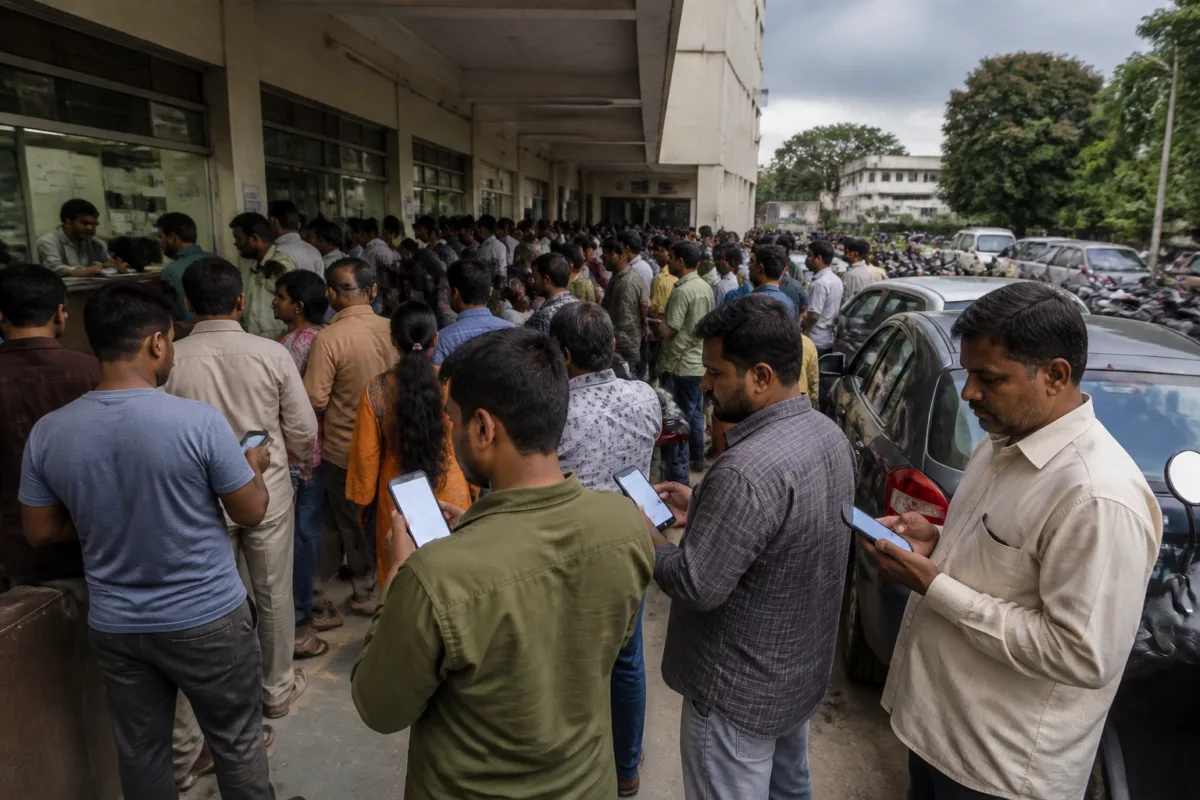
Vehicle registration alerts warning owners that records may be placed in a “permanent archive” have triggered confusion across Maharashtra, with transport officials saying they have not received an official procedure for restoring registrations affected by long-pending insurance and pollution under control certificate renewals.
The messages have been reaching vehicle owners on mobile numbers linked to their registration records for the past four days, according to a report by Sakal – Pune. The alerts refer to vehicles whose insurance and pollution under control, or PUC, certificates have not been renewed for a prolonged period.
The messages state that the vehicle will be placed in a “permanent archive” from a specified date because of the failure to renew the required documents. They also say that continuing to use a vehicle that does not comply with the Motor Vehicles Act is a legal offence and ask owners to contact their regional transport office, or RTO, for further procedure.
The wording has led several owners to approach RTO offices seeking clarification. However, the administration has said that no official procedure or guideline has been received from the Union Ministry of Road Transport and Highways, commonly known as the Ministry of Road Transport and Highways or MoRTH, on the matter.
Rajesh Narvekar, the transport commissioner, said vehicle owners had been advised to contact their RTOs regarding the messages, but confirmed that official guidelines or a standard operating procedure had not been received. The absence of instructions has also left officials unclear about how registrations can be reactivated, according to the report.
Vehicle owners are seeking answers on whether insurance and PUC certificates can still be renewed after receiving the alert, what steps are required to reactivate a registration and whether any penalty or fee will apply. The immediate uncertainty is not only about compliance but also about where owners must complete the process and which authority will handle it.
One vehicle owner, Ramesh Salvi, said he visited an RTO after receiving the mobile message but was told that no official process for reactivating the vehicle had been communicated. He sought clarity on what vehicle owners should do and where they should go to restore an active registration.
The issue places RTO offices at the centre of a process they currently appear unable to explain uniformly. Vehicle owners are being directed to the offices for information, while the offices themselves are awaiting instructions from the central ministry. The report does not specify how many vehicles or owners have received the alerts, nor does it set out a confirmed fee, penalty or reactivation timeline.
Until an official procedure is issued, owners who receive such messages will need to seek clarification from their respective RTOs and avoid treating the message alone as an explanation of the reactivation process. The next formal step is the release of guidance by the transport authorities on the status of the archived records and the process, if any, for restoring vehicle registrations.

