


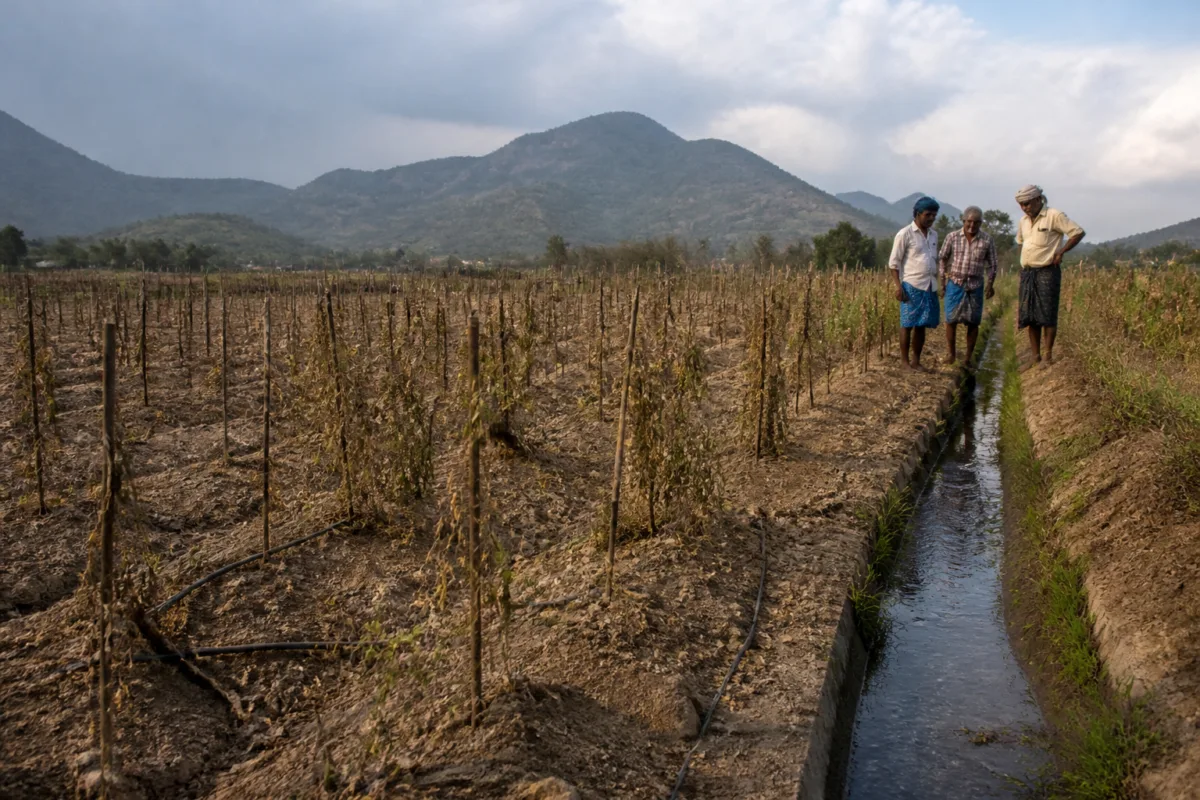
Vattavada’s vegetable crisis is no longer only a farming story. The area under cultivation has fallen from 2,000 hectares to less than 800 hectares in five years, according to farmers cited by the Times of India, while production has dropped to nearly one-fifth. The decline exposes how a high-value agricultural region can become vulnerable when water storage, public support and market protection fail to keep pace with climate and cost pressures.
Vattavada, in Kerala’s Idukki district, is a major source of winter vegetables. Its farms produce garlic, carrots, cabbage, potatoes, butter beans, green peas and coriander. The region’s importance extends beyond the farms themselves: a sustained reduction in output can affect the availability and price of vegetables in markets, while the loss of cultivation threatens the incomes of hundreds of farmer families in the high-range region.
The immediate problem described by farmers is water insecurity. In the absence of adequate rain and dependable irrigation, crops have withered before harvest. Large stretches of land that previously produced vegetables now lie barren. This is not simply a question of whether rainfall arrived in a particular season. It is also a question of whether the local water system can capture, store and distribute water across the full cultivation cycle.
The report says Vattavada has natural water sources but lacks adequate infrastructure to store monsoon runoff and make it available during dry spells. Farmers have sought check dams and scientific irrigation systems. Their demand points to a gap between the presence of water in a landscape and the availability of usable water on a farm when crops need it. Without storage and distribution, seasonal rainfall cannot reliably support production during periods of scarcity.
## Irrigation infrastructure and the cost of cultivation
The financial risk of water failure is amplified by the cost of cultivation. Farmers told the Times of India that growing garlic and potato on one hectare costs about Rs 3-3.5 lakh and Rs 2 lakh, respectively. Carrot and cabbage cultivation costs more than Rs 1.5 lakh per hectare. These figures represent substantial exposure for farmers operating in a region where one failed crop can affect both household income and loan repayment.
When crops fail before harvest, the expenditure on seed, fertiliser, labour and other inputs cannot be recovered through sales. Farmers cited in the report are struggling to repay even the interest on loans taken from private lenders and intermediaries. The resulting debt is therefore not separate from the irrigation crisis. It is one of its direct economic consequences: unreliable water turns each cultivation cycle into a high-cost gamble.
The contraction from 2,000 hectares to under 800 hectares suggests that this risk is influencing land-use decisions. Farmers who cannot depend on water or recover their costs may leave fields uncultivated rather than commit more capital to another uncertain season. The report does not establish how many families have already exited farming, but it records farmers’ warning that more could abandon cultivation without timely assistance.
This distinction matters. A decline in cultivated area is not only a fall in agricultural output. It can also indicate a weakening of the local production system, including the knowledge, labour arrangements, input networks and trading relationships that support farming. Once land is repeatedly left barren and households shift away from cultivation, restoring production may require more than a single season of subsidies or rainfall.
## What the subsidy dispute reveals
Farmers also attribute their vulnerability to the withdrawal of financial assistance. They say that between 2010 and 2017 they received subsidies of up to Rs 22,500 per hectare, but that this support is no longer available from the agriculture department or local self-government institutions. The claim is presented in the report as the farmers’ account; the supplied material does not include a government document detailing when or why the subsidy was withdrawn.
Even without resolving that policy question, the dispute illustrates the importance of public support in a high-cost, climate-sensitive farming region. The reported cultivation expenses are incurred before revenue is realised. Subsidies, subsidised seeds and fertilisers, or other forms of risk-sharing can reduce the amount of private capital farmers must put at stake. When such support is absent, crop failure can push farmers towards informal or expensive credit.
The issue is also institutional. Agriculture support in the report involves the state agriculture department and local self-government institutions, while irrigation projects may require coordination across local administration and water-related agencies. Farmers’ demands for check dams and scientific irrigation therefore cannot be addressed only through farm-level assistance. The physical infrastructure and the financial support system have to work together.
The lack of price support and the role of intermediaries add another pressure. Farmers say the marketing chain has reduced their returns. This means that even a successful harvest may not provide sufficient protection if producers have weak bargaining power or limited access to storage and direct markets. The report does not provide farm-gate prices, wholesale prices or a detailed breakdown of intermediary margins, so the scale of this loss cannot be quantified from the available evidence. It does, however, identify market access as part of the problem rather than treating water alone as the cause.
## A regional food-supply question
Vattavada’s decline has implications beyond the farmers who cultivate its fields. The area is described as one of Kerala’s key winter vegetable-growing regions, alongside Kanthalloor. Farmers and the report warn that a further fall in production could affect market availability and put upward pressure on prices. The supplied material does not establish the share of Kerala’s vegetable supply that comes from Vattavada, so the precise market impact remains uncertain.
The direction of the risk is nevertheless clear. If local production falls, markets may become more dependent on vegetables brought from elsewhere. That can expose consumers to changes in transport costs, supply interruptions and price movements outside the control of local authorities. It can also weaken the connection between regional demand and regional production, even when suitable farmland and farming knowledge remain available.
This is where the story becomes an urban systems issue. Cities and towns experience food insecurity through prices and availability, but the infrastructure decisions that shape those outcomes are often located in rural and high-range areas. A check dam, irrigation network or agricultural subsidy may appear to be a local intervention, yet its effects can extend through wholesale markets and household food budgets.
The Vattavada case also shows why climate resilience cannot be measured only through large urban infrastructure. Resilience includes the smaller water-storage and distribution systems that allow productive landscapes to withstand dry spells. It includes institutional support that prevents one failed crop from becoming a debt spiral. It also includes market arrangements that allow producers to retain enough value from a harvest to continue farming.
## The administrative test ahead
Agriculture minister T Siddique has promised to address concerns in Vattavada and Kanthalloor. According to the report, he said he would visit Vattavada after the assembly session and convene a state-level meeting on the problems faced by farmers. He also said special attention would be given to strengthening agricultural production in the area.
Those steps create an official process, but the supplied report does not yet establish the details of any approved irrigation project, funding allocation, subsidy restoration or implementation timetable. That distinction is important. A meeting can identify problems, but the production decline described by farmers reflects infrastructure and financial gaps that require decisions beyond acknowledgement.
The evidence currently supports four clear conclusions. First, cultivation has contracted sharply, from 2,000 hectares to below 800 hectares in five years, according to farmers. Second, farmers associate the decline with inadequate rainfall, unreliable irrigation, high input costs, reduced subsidy support, weak returns and debt. Third, the absence of water-storage infrastructure has made seasonal rainfall less useful during dry periods. Fourth, the state government has promised further engagement, but the next administrative and financial steps are not yet established in the supplied material.
The developments to monitor are therefore practical: whether the minister’s visit takes place, whether a state-level meeting produces a documented plan, whether check dams or irrigation systems receive approval and funding, and whether the subsidy and input-support claims are addressed. Vattavada’s experience demonstrates that the survival of a food-producing region depends not on one intervention but on the link between water infrastructure, public finance, farm economics and market access.

