


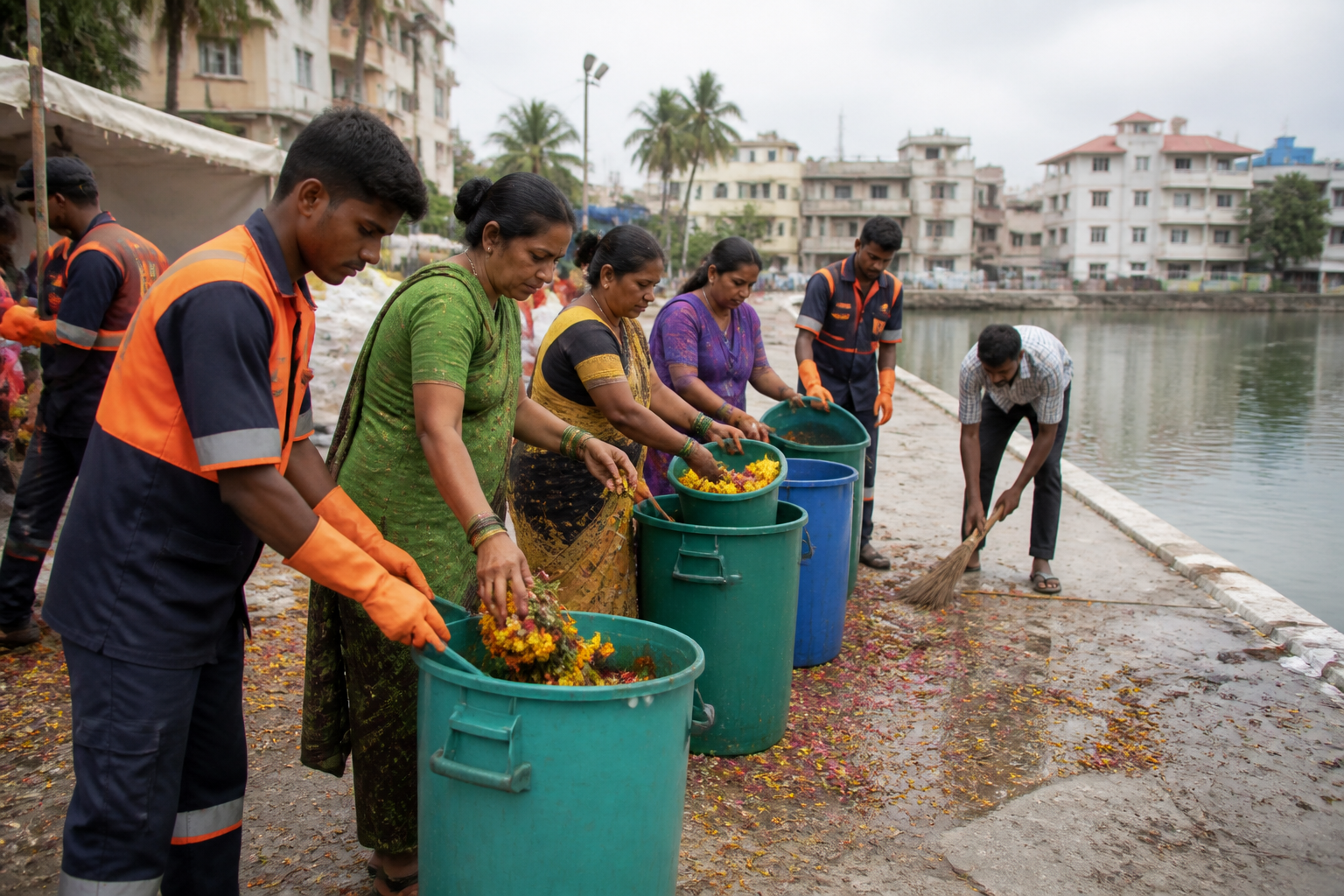
Vasai-Virar Municipal Corporation will collect floral and other devotional waste generated during Ganeshotsav and process it into compost this year, continuing an initiative that the civic body says has been successful for the past three years. Nirmalya collection urns will be placed at 128 artificial immersion ponds across the city.
The collected material will be processed with the cooperation of women’s self-help groups. After collection, the waste will be sorted into flowers, strings and other puja material, while plastic bags and other non-organic material will be separated before further processing.
The civic body said the initiative is part of its effort to promote an environmentally responsible Ganeshotsav in Vasai-Virar. The municipal corporation has also promoted artificial immersion ponds and idol donation as part of its festival-related environmental measures.
During the immersion period, large quantities of garlands, flowers, banana stems and other material are generated. Such waste is often discarded in ponds, the sea, rivers and creeks. When the organic material decomposes in water, it can contribute to water pollution and affect biodiversity, according to the report.
The corporation’s collection plan is intended to ensure that this material is gathered centrally instead of being disposed of in water bodies. The sorting process will remove plastic and other unsuitable material from the organic waste before it is sent for composting.
The use of women’s self-help groups adds a community-based component to the municipal operation, with the groups expected to assist in classification and processing. The report does not specify the quantity of compost expected to be produced, the processing locations or the timeline for completing the conversion of the collected nirmalya.
The corporation’s immediate festival-season measures will therefore include placing collection urns at 128 artificial ponds, gathering the nirmalya generated during immersion and separating organic material from plastic and other waste for scientific disposal and compost production.
