


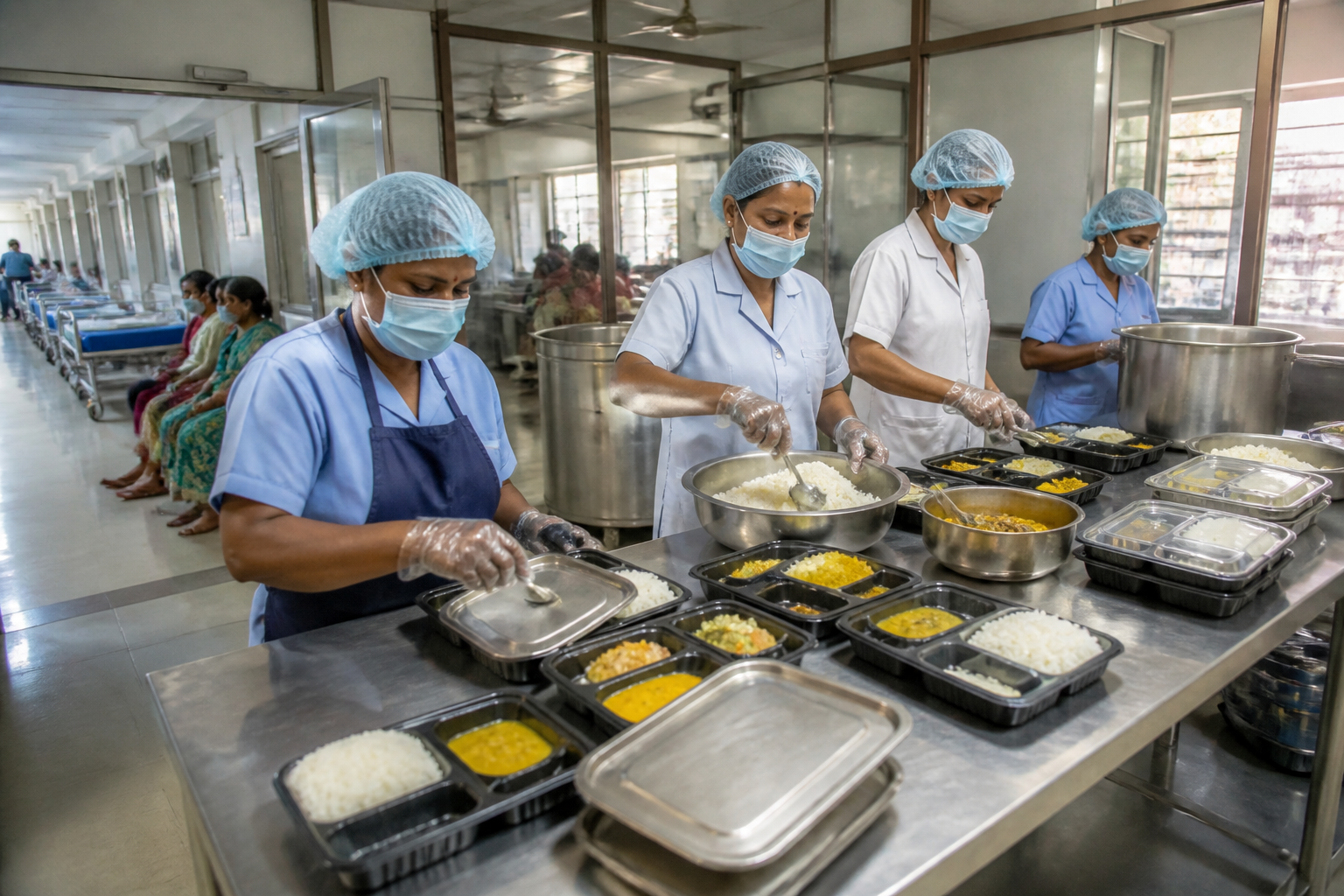
Vasai-Virar City Municipal Corporation has approved a proposal worth Rs 3.20 crore to provide free nutritious meals, breakfast and tea to patients admitted under the Mahatma Jyotiba Phule Jan Arogya Yojana at seven of its major hospitals. The decision was cleared at the civic body’s general meeting held on Wednesday.
The facility is intended for patients who receive treatment under the state health insurance scheme and are admitted to municipal hospitals. According to the report by Loksatta, providing free food to eligible patients is mandatory under government rules, but most of the municipal hospitals do not have canteen facilities.
The absence of canteens has created difficulties for patients and their relatives, particularly those who cannot afford regular meals or do not have anyone available to bring food from outside. The municipal proposal was presented against this backdrop, with the civic administration seeking to provide meals and refreshments through the scheme.
Vasai-Virar currently has seven hospitals, two mother-and-child care centres, 21 urban primary health centres, 15 Hinduhridaysamrat Balasaheb Thackeray Aapla Dawakhana clinics and 45 Ayushman Arogya Mandirs, according to the report. The decision, however, covers seven of the corporation’s nine main hospitals rather than all health facilities in the municipal network.
The scale of the network means that the food provision will operate within a large public healthcare system serving residents across the Vasai-Virar area. The report states that a substantial number of patients visit or are admitted to these facilities every day, although it does not provide a daily patient count or a detailed estimate of the number of beneficiaries covered by the Rs 3.20-crore proposal.
Health committee chairperson Nilesh Deshmukh said the corporation’s hospitals receive patients from economically weaker sections and that arranging food from outside can be difficult for them. He described the decision as important because patients may struggle to obtain meals on time while undergoing treatment.
The issue is not limited to the availability of food inside a hospital. For patients admitted under a publicly funded treatment scheme, nutrition is part of the practical support required to complete care without imposing additional costs on families. Where hospitals lack canteens, the responsibility for arranging meals can shift to relatives, many of whom may themselves face financial and logistical constraints.
The municipal approval therefore connects scheme compliance with the everyday functioning of public hospitals. It also places the focus on implementation: the supplied report does not specify the agency that will prepare and distribute the meals, the menu and nutritional standards, the start date, or the monitoring mechanism for expenditure and service quality.
The approved proposal covers free meals, snacks and tea for eligible admitted patients. Further details on the rollout and the arrangements for implementing the Rs 3.20-crore programme were not provided in the report.
