


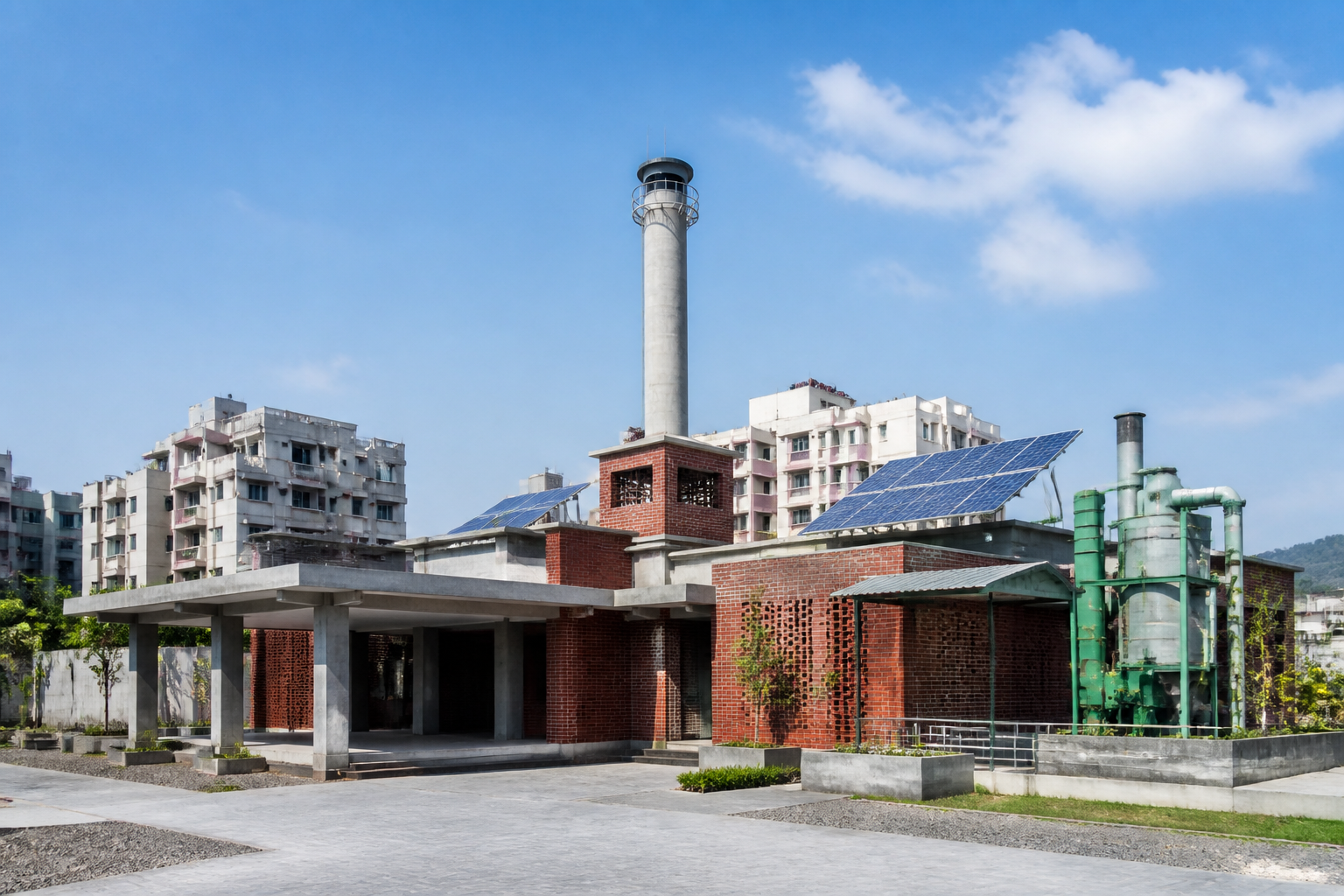
Vasai-Virar crematorium infrastructure is entering a new phase, with the municipal corporation approving a ₹10.47 crore plan to install eco-friendly cremation systems at six crematoriums. The proposal is intended to reduce smoke and wood consumption, but the project also exposes a wider challenge for Indian cities: environmental infrastructure is effective only when it is usable, maintained and accepted by the communities it serves.
The Vasai-Virar City Municipal Corporation has selected crematoriums at Diwanman, Navghar, Tulinj, Achole, Phulpada and Viratnagar for the new systems. The proposal, placed by the administration before the general body on Monday, received approval, according to a report by Loksatta. The report does not specify a construction or commissioning schedule, so the decision represents an approved municipal project rather than an operational network.
The immediate problem identified by the corporation is the condition of several cremation facilities across the city. Vasai-Virar has more than 100 crematoriums, but some reportedly lack chimneys to carry smoke away from the site. In such locations, smoke generated during cremation can spread into surrounding areas and residential neighbourhoods. The report also points to poor maintenance and inadequate amenities at some crematoriums, issues that residents have repeatedly raised with the civic body.
This makes the project more than a technology purchase. It is also a response to a basic municipal-service failure: the absence of infrastructure that can manage emissions at a location where residents, families and workers must all share the same environment. A chimney alone may move smoke away from ground level, but the proposed system is described as combining gasification, filtration and a taller exhaust structure. Whether that combination delivers its intended result will depend on installation, operation and maintenance after the capital project is completed.
According to the municipal administration’s claims reported by Loksatta, the new system is expected to reduce wood consumption from about 450 kilograms per cremation to 125 kilograms. The stated cremation time is expected to fall from four to five hours to approximately 90 minutes. These are significant operational claims because fuel use and duration affect the cost, throughput and environmental footprint of crematorium services. However, the supplied report does not provide a baseline study, technical specification, testing methodology or independent assessment supporting the estimates.
The proposed technology is based on a natural-draft system. Its scrubber unit is described as operating on solar energy, while smoke is to pass through a four-stage filtration process before being released through a 100-foot chimney. The administration has also claimed that the system will reduce greenhouse-gas emissions by 60 per cent and leave only 2 per cent residue. The source does not define the emissions baseline, identify the gases measured or explain how the residual figure was calculated. Those details will matter when the corporation evaluates performance after installation.
The project is also presented as compatible with Hindu cremation rites and traditions. That assurance is important because the success of a crematorium system cannot be measured only through engineering performance. Families must be willing to use it during a sensitive religious and social process. The source indicates that the corporation has already faced difficulty in encouraging residents to use gas cremators installed at several other locations.
The report states that gas cremators had been started at seven crematoriums, including sites at Navghar, Pachubandar, Virat Nagar, Achole and Samel Pada, among others. Civic representatives reportedly expressed dissatisfaction with the lack of public awareness surrounding those facilities and attributed the weak response partly to insufficient communication by the administration. The reported experience suggests that the adoption problem is not necessarily limited to the technology itself. It may also involve public information, trust, availability, user experience and the way facilities are integrated into established cremation practices.
Mayor Ajiv Patil was reported as saying that collective efforts were needed to increase the use of the existing gas cremators. The report also states that he proposed an additional charge for residents who choose wood-based cremation, with the intention of encouraging the use of gas cremators. That proposal introduces a governance question alongside the environmental one. If a cleaner municipal option is to become the default, the corporation must establish how users will be informed, how charges will be applied and whether the alternative is reliably available at the time families need it.
The six-site project therefore sits within a fragmented crematorium network. The city has more than 100 cremation grounds, while the new investment covers only six locations. The supplied material does not explain how those six sites were prioritised, whether they serve the city’s largest populations, or whether other crematoriums will receive chimneys, repairs or similar systems later. It also does not state whether the ₹10.47 crore allocation includes construction, equipment, operations, maintenance, staff training or public-awareness activity.
That distinction is important for municipal infrastructure. Capital approval can create visible assets, but environmental performance is usually determined over the life of the facility. A gasification unit that is not maintained, a filtration system that is not monitored or a crematorium that residents avoid will not deliver the outcomes projected in the approval note. The report provides no information on maintenance contracts, monitoring arrangements, breakdown protocols or responsibility for inspecting emissions. These remain open questions before the project can be judged on results rather than intent.
The proposal also highlights the difficulty of measuring pollution from essential but dispersed civic services. Crematoriums are often located close to homes because cities have expanded around older facilities. As residential development increases, the distance between cremation grounds and neighbourhoods can narrow, making smoke, odour, access and maintenance more visible as urban concerns. In Vasai-Virar, the reported absence of chimneys at some sites and complaints from nearby residents show how a service intended for public use can become a source of local environmental conflict when infrastructure does not keep pace with urbanisation.
The corporation’s stated targets offer a framework for future accountability. Wood use would need to be measured against the claimed reduction from 450 kilograms to 125 kilograms. Processing time would need to be recorded against the current four-to-five-hour estimate. The claimed 60 per cent reduction in greenhouse-gas emissions would require a transparent baseline and a defined monitoring method. The reported 2 per cent residue figure would likewise need technical documentation. None of these verification details is included in the source material, and the project’s eventual performance cannot be inferred from the approval alone.
Public adoption is an equally important indicator. The corporation’s earlier gas-cremator experience, as described in the report, suggests that installing equipment does not automatically change user behaviour. Awareness campaigns, clear information about religious compatibility, predictable operating hours and visible cleanliness may influence whether families choose the facilities. The source specifically records criticism that the administration had not created adequate awareness. This gives the new project a second deliverable beyond construction: a civic communication plan that explains how the systems work and what families can expect.
For Vasai-Virar, the larger urban question is how to provide essential services in a city where settlement patterns, public health concerns and civic infrastructure overlap. The crematorium plan combines an environmental objective with questions of municipal capacity, public choice and equity. Six upgraded sites may improve conditions at those locations, but the wider network will remain relevant because the city has more than 100 cremation grounds and because existing facilities reportedly face different levels of maintenance and equipment provision.
The evidence currently confirms that the municipal general body has approved a ₹10.47 crore project for six crematoriums and that the administration expects lower wood consumption, shorter cremation times and reduced emissions through gasification and filtration. It does not yet establish when the systems will become operational, whether the technical claims have been independently tested, how the facilities will be maintained or whether residents will use them at scale. Those are the milestones that will determine whether Vasai-Virar’s green crematorium plan becomes a functioning public-health intervention or remains another underused civic asset.

