


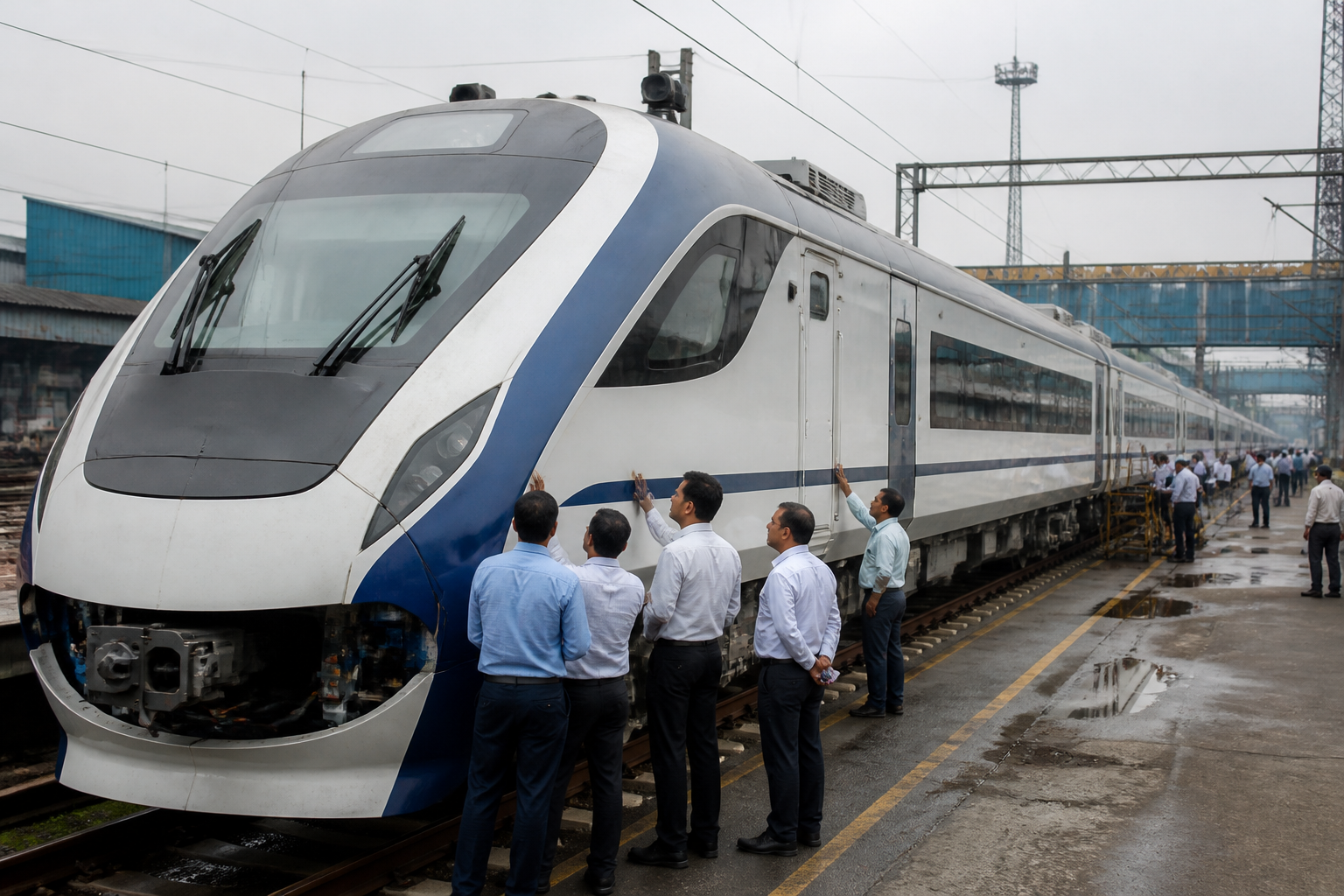
The first Vande Bharat sleeper train using Russian technology is now likely to roll out only in March 2027, marking another delay in a project intended to expand India’s next-generation long-distance rail capacity. Indian Railways had earlier expected the prototype in June, before shifting the deadline to September.
The latest delay concerns Kinet Railway Solutions, the company responsible for developing the prototype for a planned fleet of 120 trainsets. According to a report cited by Economic Times, the company has yet to resolve issues involving several components and complete the conditions required for final approval.
Kinet is a joint venture between Russian rolling stock manufacturer TMH and Rail Vikas Nigam Ltd (RVNL). The company holds a contract valued at Rs 14,400 crore for the 120 trainsets. The prototype must meet the required technical and approval conditions before the wider rollout can proceed.
The report, citing sources, said Kinet could face a penalty if the unresolved issues are not addressed. The nature of the penalty and the specific components involved were not detailed in the available report. The delay therefore leaves the March 2027 target dependent on the company resolving the pending technical matters and securing the necessary approvals.
Sleeper versions of the Vande Bharat platform are intended for longer-distance services, where passengers travel overnight rather than on shorter daytime routes. The train’s delayed prototype is consequently significant for Indian Railways’ plans to introduce a new sleeper-train variant under the Vande Bharat programme.
The project’s timeline has already moved twice, from June to September and now to March 2027. Each shift postpones the point at which the prototype can be tested, assessed and cleared for production or wider deployment. For the railway system, the approval process remains the immediate milestone before the 120-trainset programme can advance.
Indian Railways has not, in the material available, announced a further revised schedule beyond the March 2027 target or publicly specified the outstanding component-level issues. Kinet’s progress and the completion of the required approvals will determine whether the latest timeline is met.
