


The Mumbai Metropolitan Region Development Authority (MMRDA) has replaced its proposed 55.12-km Uttan–Virar sea link with a 35.075-km coastal road, reducing the estimated project cost from ₹55,000 crore to ₹38,000 crore, according to officials cited by Loksatta. Chief Minister Devendra Fadnavis has given the revised proposal in-principle approval, but final approvals and a detailed project plan are still required.
The revised corridor is intended to extend the wider coastal connectivity network from Mumbai towards Virar and Palghar. It will connect with the Brihanmumbai Municipal Corporation’s Versova–Bhayandar coastal road extension and is planned to improve access between South Mumbai, Bhayandar, Virar and the Delhi–Mumbai Expressway.
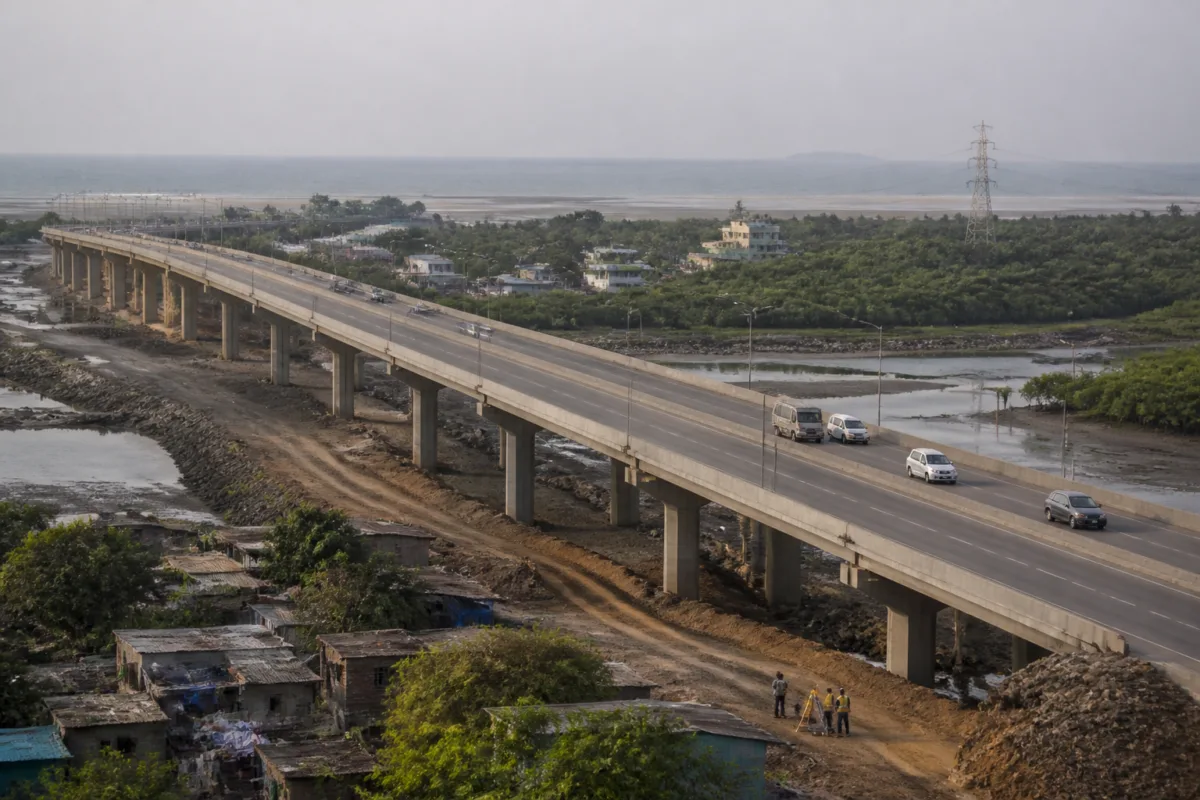
Under the revised proposal, 28.275 km of the 35.075-km route will be elevated. The project will also include a 2.05-km tunnel between Vasai and Kolapur village, a 2.25-km creek bridge and 2.5 km of embankment road, the report said. The six-lane corridor will have three lanes in each direction and a planned width of 45 metres.
The road is being designed for operating speeds of 80 to 100 kmph. MMRDA officials told Loksatta that the corridor could reduce the journey between Bhayandar and Khardi, near the Delhi–Mumbai Expressway, to about 35 minutes. They also estimated that the journey from Nariman Point to Virar could take between 75 and 90 minutes once the route is operational.
The project was initially proposed as a 55.12-km sea bridge after being transferred from the Maharashtra State Road Development Corporation to MMRDA. Its estimated cost was then reported at ₹88,000 crore. MMRDA subsequently reduced the proposed structure from eight lanes to six and made other structural changes, bringing the estimate to ₹55,000 crore.
The latest revision moves most of the alignment from the sea to land, which officials said would reduce construction costs further. The change also replaces the earlier sea-bridge concept with a combination of elevated road, tunnel, creek bridge and embankment sections.
MMRDA is expected to prepare a detailed plan and seek final approval before the project can proceed. Until those steps are completed, the route, cost and travel-time projections remain part of the revised proposal rather than an operational transport commitment.

