


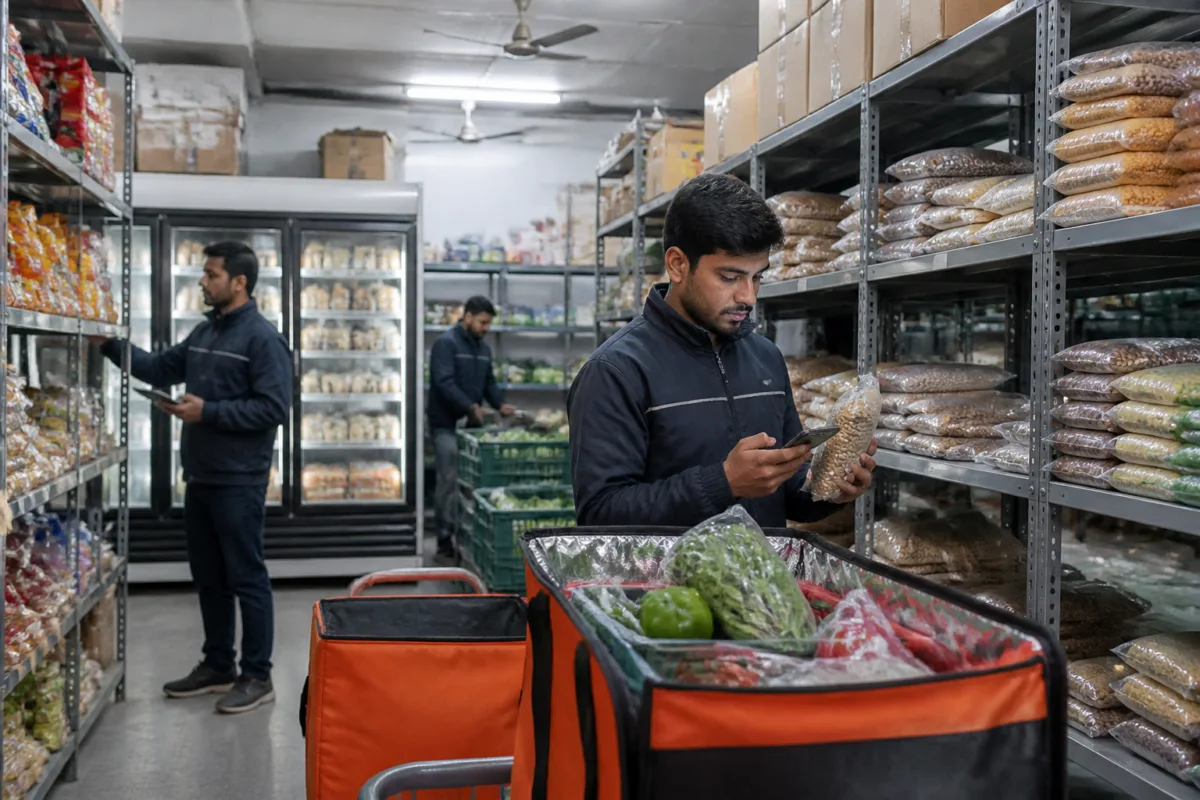
Uttar Pradesh’s new food-delivery rules seek to make the rapidly expanding online food and quick-commerce supply chain more transparent, from licensed sellers and dark stores to the final delivery received by consumers. The 24-point directions were issued by the Uttar Pradesh Food Safety and Drug Administration, according to a report by Live Hindustan.
The directions cover online food-delivery platforms, food sellers, brands, restaurants, warehouses, fulfilment centres, pickup points and cloud kitchens. Dr Roshan Jacob, secretary and commissioner of the state food safety and drug administration, said the initiative was intended to improve transparency and accountability across the delivery process.
Under the reported rules, a food seller, brand or restaurant cannot be listed on a platform without verification of a valid 14-digit Food Safety and Standards Authority of India licence or registration. Product pages must display the relevant licence number and, where available, the establishment’s hygiene rating. Digital bills, e-invoices and receipts must include the seller’s details as well as the platform’s FSSAI number.
The requirements place online platforms at the centre of compliance, rather than limiting responsibility to restaurants or manufacturers. They also bring the less visible parts of the urban delivery network into the regulatory frame. Dark stores, warehouses, fulfilment centres, pickup points and cloud kitchens must be mapped on the official portal and hold the licences required under applicable rules, the report said.
Storage conditions are another major component. Platforms and their associated facilities cannot stock expired, damaged, open, unlabelled or broken-seal food products. Dairy, meat, fish and frozen products must be kept within a cold chain. Vegetarian and non-vegetarian foods, as well as food and non-food products, must be stored separately. Records covering product sources, batch numbers and inventory are also required.
These provisions are particularly relevant to quick-commerce operations, where products are held in small local facilities before being dispatched to nearby customers. The source report does not provide details of the number of facilities covered in Uttar Pradesh or explain how frequently they will be inspected. It does, however, indicate that the state intends to bring these distributed storage points within a formal licensing and monitoring system.
The rules also require digital product information to match the physical packaging. Online listings for pre-packaged food must provide ingredients, nutritional values, calories and vegetarian or non-vegetarian identification. Allergen information covering gluten, soy, nuts and milk must be shown, along with the name, address and customer-care details of the manufacturer, packer or importer.
Central licence holders and restaurants with 10 or more outlets must display per-serving calorie information on their menus, according to the report. The directions further prohibit unsubstantiated or misleading claims involving terms such as “natural”, “fresh”, “authentic”, “no added sugar”, “sugar free”, “low sugar” and “100%”. Claims related to the treatment or prevention of disease must not be used without support.
Organic, fortified and vegan products may be listed only after verification of valid certification. Products identified by the authority because of non-compliance, adulteration or misleading claims must be removed from platforms immediately, with their sale and advertising stopped.
The directions also prescribe a shelf-life condition for pre-packaged food delivered to consumers. At the time of delivery, at least 30% of the product’s total shelf life or a minimum of 45 days before expiry must remain, with the report stating that whichever condition applies earlier must be followed. Batch numbers, manufacturing dates and expiry dates must be recorded for verification.
For consumers, the proposed framework could improve access to basic information before an order is placed and create clearer accountability when products are unsafe, misleadingly advertised or poorly stored. For platforms and operators, it extends compliance obligations beyond the visible restaurant or delivery interface to the warehouses, inventory systems and supply-chain records that support fast urban delivery.
The report does not specify an implementation deadline, inspection schedule, penalty structure or the mechanism through which consumers can report violations. Those details will be important in determining whether the 24-point directions operate mainly as listing requirements or become an enforceable oversight system for Uttar Pradesh’s growing digital food network.

