


The return of Merchant Discount Rate (MDR) on selected high-value Unified Payments Interface transactions is being presented by the government as a way to make India’s digital-payment ecosystem financially sustainable. But the policy also creates a new test for how payment costs are distributed between banks, payment aggregators, merchants and customers.
The government said it would closely monitor the rollout from October 15 to ensure that merchants do not pass the charges on to customers. Officials said the charge was necessary to help the fintech ecosystem sustain and grow, while also maintaining that small merchants would remain protected because UPI transactions up to ₹2,000 would continue to be exempt from MDR.
The policy therefore does not amount to a universal charge on UPI payments. It establishes a differentiated structure: transactions above ₹2,000 may attract MDR, while smaller UPI payments and all RuPay debit card transactions remain exempt from direct or indirect charges by banks or system providers, according to the government notification cited in the report.
That distinction matters because UPI operates across very different types of economic activity. A small-value payment at a neighbourhood shop, food stall or service outlet is not equivalent to a high-value merchant transaction. The exemption threshold is intended to shield the smaller end of the merchant economy, while allowing payment companies to earn revenue from larger transactions.
Under the structure announced by the National Payments Corporation of India, person-to-merchant UPI transactions above ₹2,000 will attract MDR of 0.4%. For transactions of ₹75,000 and above, the charge will be capped at ₹300 per transaction. The supplied report does not establish how many transactions will fall into each band or how the costs will be divided among banks, payment aggregators and merchants.
That missing distributional detail is central to the policy’s practical impact. MDR is not simply a charge attached to a payment interface. It is part of the commercial arrangement that supports the systems through which a transaction is authorised, processed and settled. The government’s argument is that without a sustainable revenue model, smaller companies may struggle to compete with dominant firms in the UPI ecosystem.
The policy is also linked to an earlier market-share concern. NPCI had mandated a 30% market-share limitation for third-party application providers in November 2020, but the mandate could not be implemented because companies other than market leaders were unable to compete without a self-sustaining revenue model, according to the finance ministry statement cited by Economic Times.
The government now argues that MDR on selected high-value transactions can provide that revenue model. In this account, the charge is not only a payment-processing cost. It is also an attempt to address concentration in the digital-payments market by giving smaller domestic companies a commercial basis to expand their operations and compete for a larger share of UPI activity.
This makes the policy’s success dependent on two outcomes that may pull in different directions. Payment companies need sufficient revenue to maintain and expand their services. Merchants, meanwhile, need predictable transaction costs and may resist any arrangement that reduces their margins. The government’s monitoring commitment is aimed at preventing merchants from transferring the charge directly to customers, but the report does not specify the enforcement mechanism or penalties for doing so.
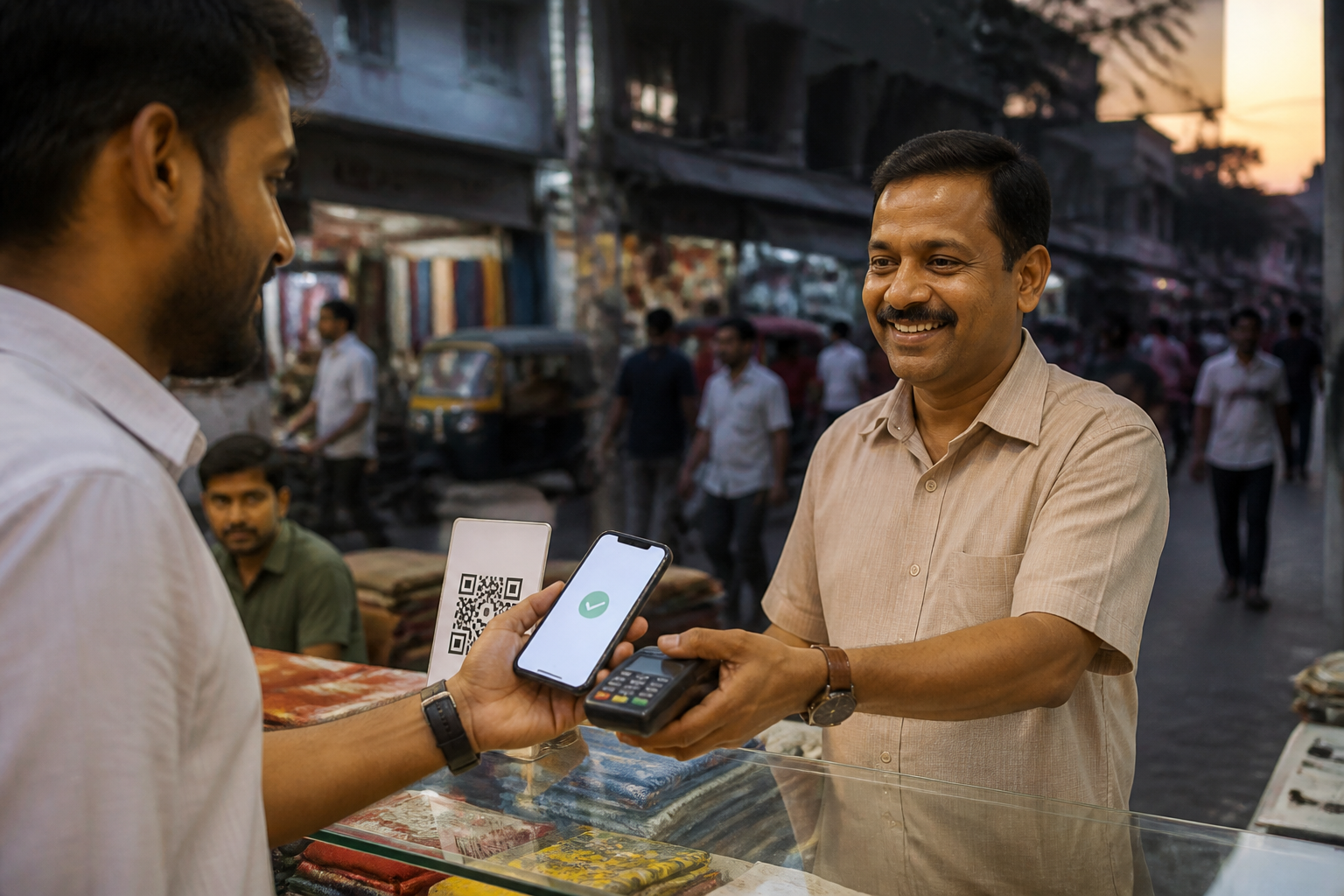
The issue is particularly relevant to India’s urban economy, where digital payments are embedded in everyday transactions between residents and merchants. The policy will be experienced not only by financial technology companies but also by retailers, restaurants, service providers, delivery businesses and other establishments that use UPI for customer payments. The exemption for payments up to ₹2,000 is designed to preserve the low-friction character of routine transactions, but higher-value purchases will enter a different cost regime.
The GST treatment adds another layer. Officials said any issue concerning the levy of goods and services tax on MDR could be taken up by the GST Council. They also said merchants could use input tax credit to offset their tax liability. The report does not indicate whether the GST Council has taken a decision on the matter, so the final tax treatment remains a separate policy question from the MDR rate itself.
The government has also framed the decision as part of a broader effort to strengthen domestic control over electronic payments. A finance ministry statement rejected claims that MDR had been introduced because of external pressure. It said the policy of allowing RuPay credit cards on UPI was intended to help RuPay become a preferred credit-card choice in India, while foreign cards were not being allowed to use UPI under the same arrangement.
The same statement pointed to the continued exemption of RuPay debit card transactions from MDR. The government said this demonstrated a preference for maintaining a domestic alternative in the card and digital-payment ecosystem. The supplied material records the government’s position, but does not independently assess the competing claims about external influence or the likely market effects of the policy.
What is clear is that the policy changes the financial logic of a payment system that has generally been associated with free or low-cost merchant acceptance. The government is attempting to preserve free access for small-value UPI payments while introducing a revenue stream for selected higher-value transactions. Whether that balance holds will depend on how consistently the exemption is applied and whether costs are absorbed, redistributed or passed through the merchant chain.
The implementation timetable will provide the first operational test. Officials have said the rollout will be monitored from October 15, with payment aggregators already in discussion with the government. The monitoring will need to establish whether merchants are charging customers separately, whether payment companies receive a sufficient revenue benefit, and whether the new structure enables smaller providers to compete as intended. The supplied report does not provide targets or public metrics for measuring these outcomes.
The policy therefore raises a structural question about India’s digital public infrastructure: can a payment network remain broadly affordable for users while generating enough commercial revenue to support innovation and competition? The government’s answer is a targeted MDR rather than a universal charge, combined with exemptions for small UPI payments and RuPay debit transactions.
For merchants and users, the practical consequences will depend less on the announcement of a 0.4% rate than on how the system behaves at the point of payment. The key facts to monitor are whether the ₹2,000 exemption remains intact, how the ₹300 cap is applied to transactions of ₹75,000 and above, how GST is treated, and whether merchant-facing charges appear in customer bills.
The current evidence establishes the policy framework but not its eventual market impact. The next stage is the monitored rollout from October 15, alongside any GST Council consideration and further implementation guidance from payment-system authorities.
