


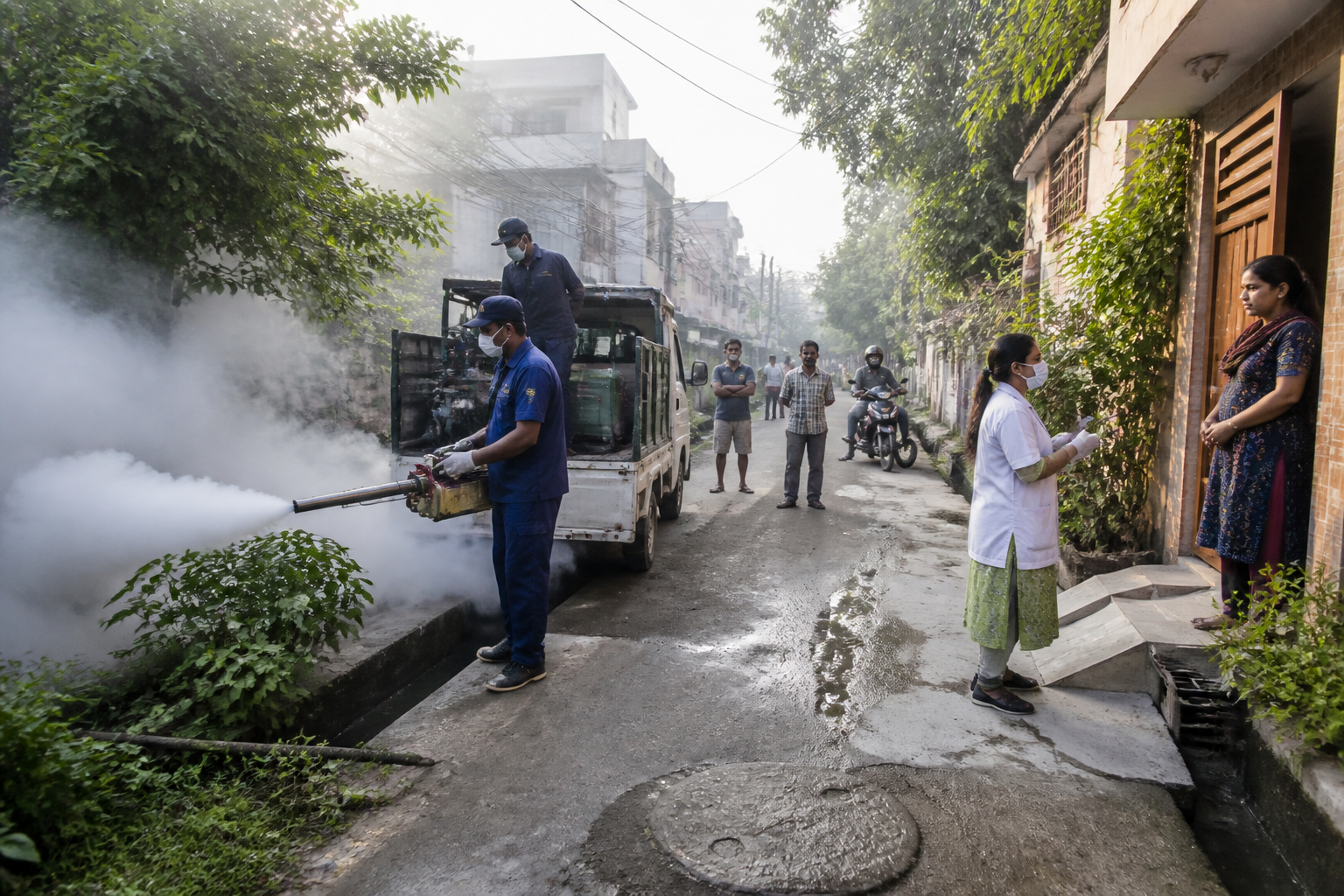
Uttar Pradesh has launched a month-long communicable disease control campaign focused on sanitation, mosquito-breeding prevention, public awareness and early detection, with health teams set to visit households across the state from October 12 to October 31.
Deputy chief minister Brajesh Pathak launched the campaign at Ram Manohar Lohia Institute of Medical Sciences in Lucknow and called for coordinated action by the health department, other government departments and the public. He also took part in an awareness rally and flagged off sanitation and fogging vehicles.
The main campaign will run from October 1 to October 31. Its door-to-door component, known as the Dastak campaign, will be conducted between October 12 and October 31. Health teams will visit households to spread information on disease prevention, identify health risks and encourage early detection.
Pathak said cleanliness, public awareness and timely detection were central to limiting disease transmission. He urged residents to keep their homes and workplaces clean, prevent water stagnation and take steps to stop mosquito breeding. He also advised people to use safe drinking water and seek medical attention promptly when required.
“Healthy practices are our first line of defence against communicable diseases. We must work together to prevent their spread,” Pathak said.
The campaign places household-level prevention alongside public sanitation and fogging operations. The measures are aimed at reducing conditions that support the spread of communicable diseases, particularly stagnant water and inadequate cleanliness around residential and workplace areas.
Pathak said the state government had been implementing coordinated, campaign-based interventions to control communicable diseases since 2017. He described the health department as the nodal department and said it was working with other departments to strengthen prevention and response measures.
Referring to Japanese encephalitis in eastern Uttar Pradesh, Pathak said the disease had severely affected children in the past but had been brought largely under control through coordinated government interventions. The statement did not provide figures on current disease levels, the number of households to be covered or the deployment details for the campaign.
The Dastak visits will give health teams a direct channel to communicate prevention measures and identify health risks at household level. The approach also makes local conditions such as water stagnation, sanitation gaps and delayed access to medical attention part of the disease-control response.
Principal secretary V Hekali Zhimomi, Director General of Family Welfare Dr Pawan Kumar Arun and other senior officials and dignitaries attended the launch. The campaign will continue through October 31, while the household visits are scheduled to begin on October 12.

