


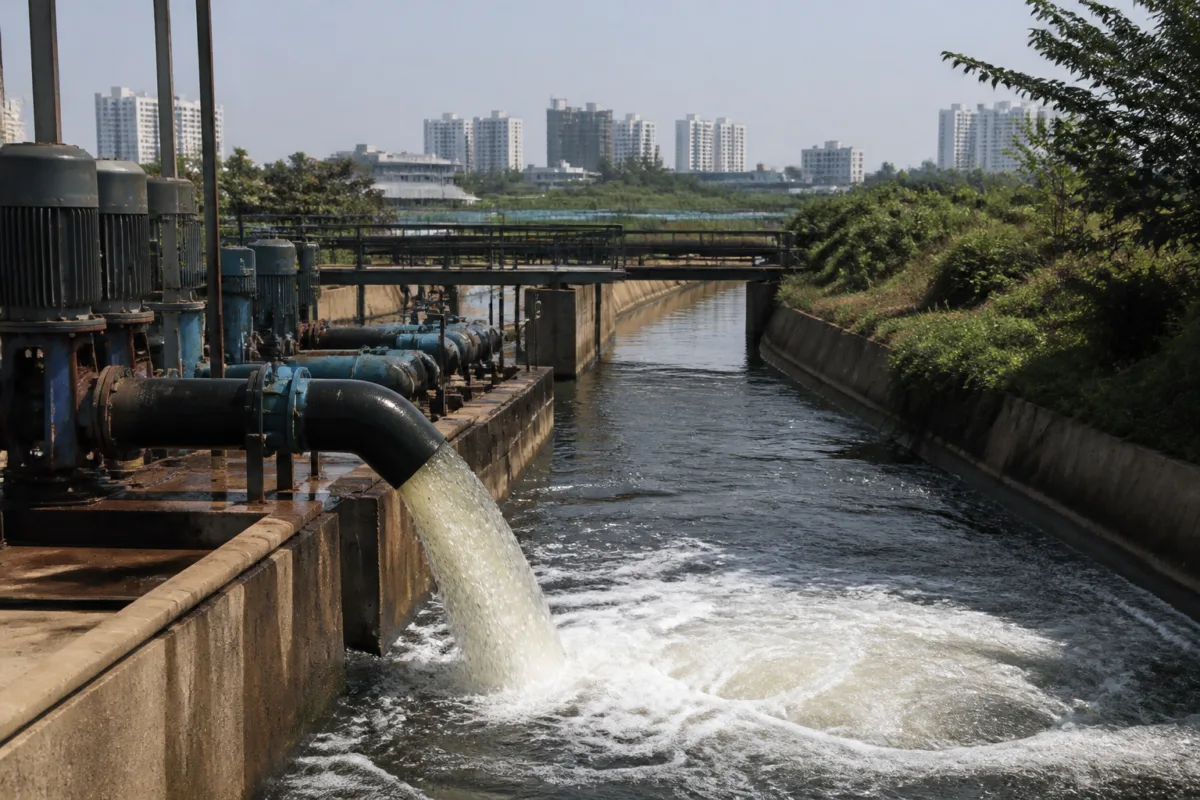
Pune’s Mundhwa Jackwell is now operating five of its six pumps around the clock, sending up to 45 crore litres of treated wastewater a day through the Baby Canal for agricultural use, according to a report by Lokmat-Pune. The increase follows criticism over the limited lifting of treated sewage from the system in recent weeks.
The Mundhwa Jackwell was built by the Pune Municipal Corporation to treat the city’s sewage and make the water available for farming through the Baby Canal, which carries it towards Daund. The project was funded with Rs 100 crore from taxpayers’ money and was designed to provide 65 crore litres of treated wastewater per day for agricultural use.
However, between September 25 and October 14, the Water Resources Department was reportedly lifting only 1.5 crore litres of treated wastewater for onward release to farms. Lokmat reported that the six-pump facility was being operated with only one pump for about four and a half hours, citing allegations made by civic activist Vivek Velankar.
The department’s subsequent decision to operate five pumps continuously has raised the volume being transferred for agriculture to 45 crore litres per day, the report said. Velankar has also expressed the expectation that the sixth pump will be made operational soon, which could increase the quantity supplied further.
The dispute highlights the administrative link between Pune’s sewage-treatment infrastructure and the city’s water-resources management. The Jackwell’s intended role is not only to process urban wastewater but also to reduce the need to release stored reservoir water for farming. Its performance therefore depends on coordination between the municipal corporation, which operates the treatment and pumping infrastructure, and the Water Resources Department, which lifts and distributes the treated water through the canal network.
According to the report, Velankar argued that if the treated wastewater had been lifted at full capacity for the previous three weeks, at least one TMC of reservoir water might not have been required for agriculture. He said that quantity could have been used to meet Pune’s drinking-water needs. These are his claims as reported by Lokmat and have not been independently established in the material supplied for this report.
Velankar also alleged that the department’s earlier failure to use the Jackwell fully was linked to discussions about reducing Pune’s drinking-water allocation. The increased pumping has come after Lokmat reported the earlier shortfall, according to the publication.
The operational change places attention on whether the Jackwell can consistently deliver its planned capacity and whether the sixth pump will be brought into service. The immediate next step identified in the report is the expected activation of the remaining pump, which would further raise the treated wastewater available for agriculture.

