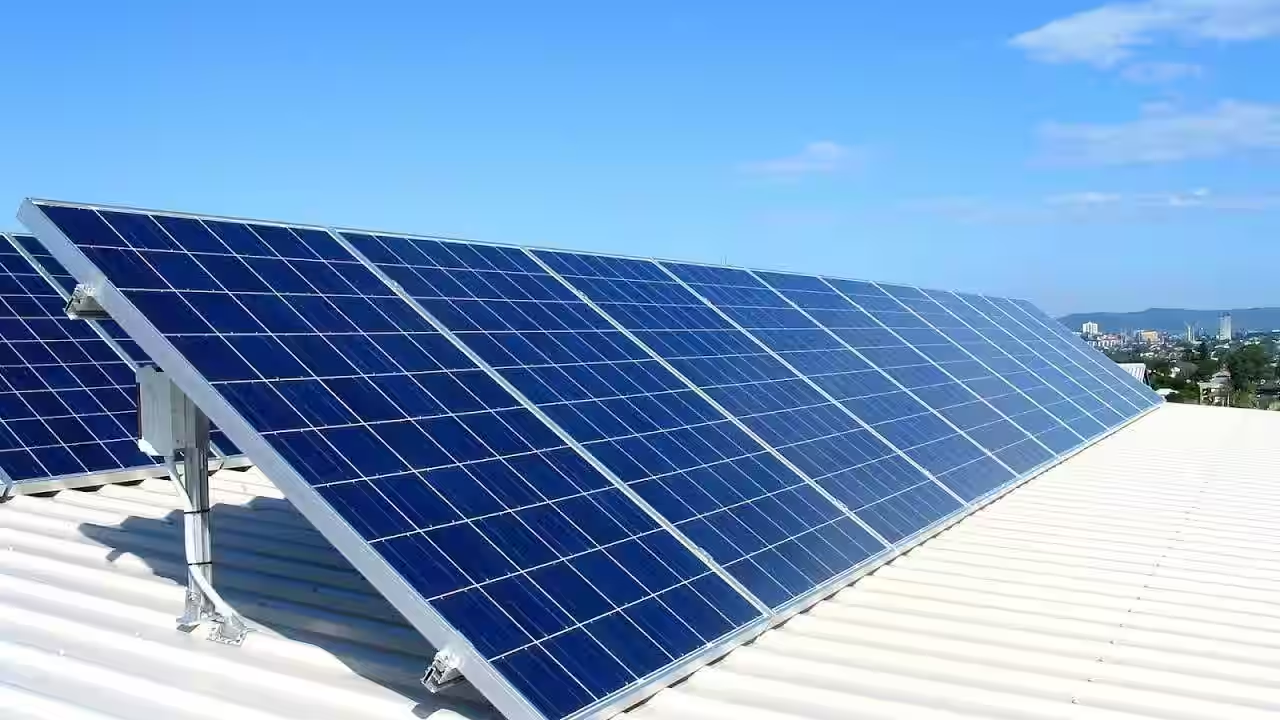
The state of Tripura has embarked on an ambitious solarisation drive, targeting all government buildings for rooftop solar installations under a phased deployment plan.
The initiative marks a critical turning point in the region’s energy strategy, aligning with national climate goals while addressing regional power reliability challenges.The project, backed by the Prime Minister’s Surya Ghar Muft Bijli Yojana, has already garnered significant public interest, with more than 13,500 families enrolling within weeks. The government’s proactive approach is not only reflective of the growing public consciousness around renewable energy but also of a strong administrative will to transition away from conventional grid dependence.Tripura Power Minister Ratan Lal Nath, while briefing the media, described the initiative as a strategic effort to enhance energy resilience across government institutions, including administrative buildings, public hospitals, and educational institutions. He confirmed that installations would begin with high energy-consuming facilities and expand through a network of verified contractors and pre-approved sites, all identified through extensive feasibility surveys.
Each solar unit will be linked to a net metering system, enabling energy-positive buildings to feed surplus electricity into the grid, effectively reducing operational costs while supporting local energy distribution. According to officials, the model encourages decentralised energy production and is instrumental in helping the state meet its emissions targets for 2030.The government has also mandated energy audits across departments to map power usage and identify solar potential, ensuring a data-driven approach to infrastructure transformation. In urban areas, the Agartala Municipal Corporation is collaborating with vendors to extend the benefits of rooftop solar to private homes and businesses, incentivised through subsidies covering up to 60% of installation costs.
In rural Tripura, where power outages remain a critical barrier to development, the state aims to deploy solar mini-grids and standalone units to energise essential services such as water supply, education, and primary healthcare. Partnerships with rural bodies and civil society organisations are being explored to implement these decentralised energy solutions with community participation at the core.Chief Minister Dr. Manik Saha has personally reviewed the progress of the solar rollout, appreciating the public’s enthusiastic response and urging departments to fast-track implementation. He reinforced that Tripura’s model should set a precedent for other Northeastern states and small economies looking to integrate clean technology with governance.
By transforming public infrastructure into renewable energy hubs, Tripura is not merely reducing its carbon footprint but also building a template for sustainable urban and rural development. The government’s coordinated strategy, which ties together policy reform, financial inclusion, citizen participation, and technical innovation, is positioning the state as a regional frontrunner in India’s clean energy transition.As climate resilience becomes a policy imperative, Tripura’s solar drive is a timely reminder of how targeted local action can meaningfully contribute to the global sustainability narrative.
Also Read : Pune-Nashik Rail Corridor Realignment Nears Approval