


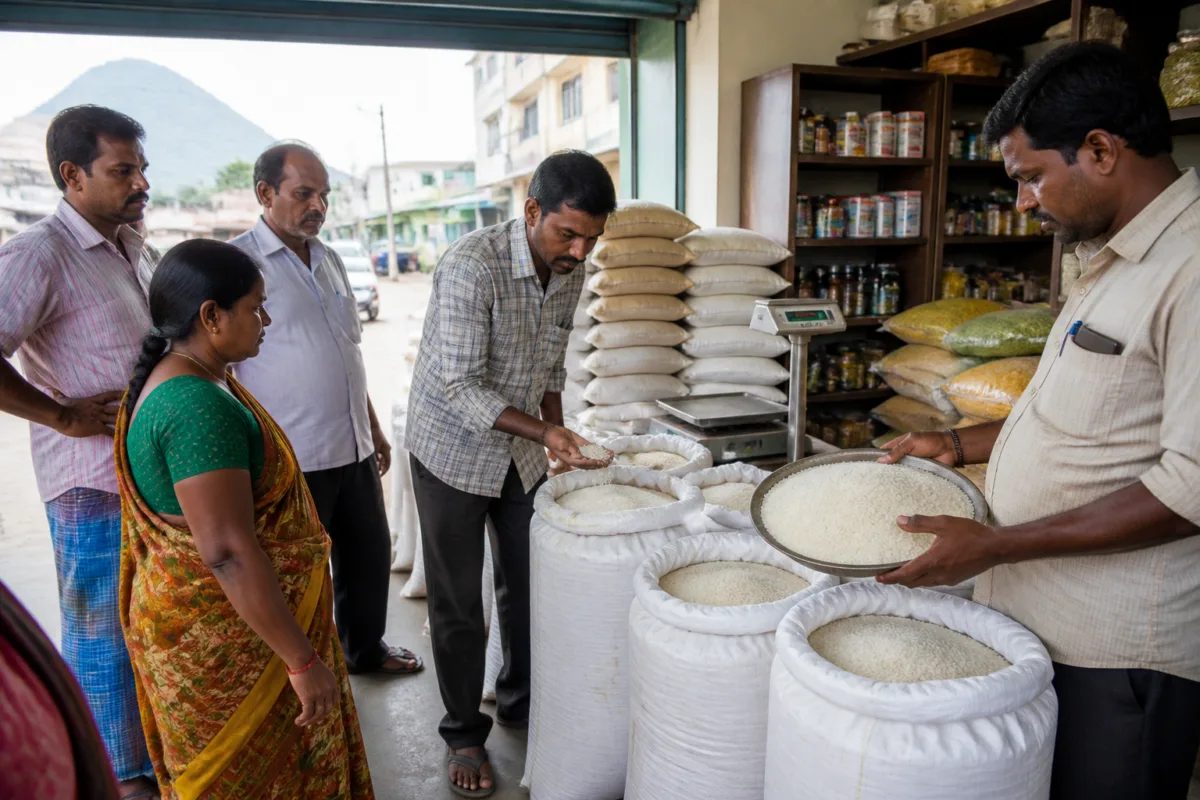
Tiruvannamalai authorities have stopped the sale of a batch of fine-quality rice after consumers complained that rice sold through a cooperative outlet looked like the free rice distributed through the public ration system. A replacement stock was brought in and sales resumed the following day, according to a report by Dinamalar.
The issue arose at the Karpagam Cooperative Self-Service Speciality Store in the Vengikkal area of Tiruvannamalai. The Tamil Nadu government had introduced a programme to sell fine-quality rice through consumer cooperative wholesale stores at Rs 30 a kilogram, with the stated aim of helping control the impact of rising rice prices.
Consumers who visited the outlet reportedly complained that the rice being sold as fine-quality rice resembled the rice distributed free of cost through ration shops. The concern related particularly to the appearance of the stock, which was described as brown in colour.
Parthiban, the joint registrar of the district cooperative department, inspected the ration outlet two days before the report was published. During the inspection, he found that the fine-quality rice stock had a brown appearance similar to the free rice supplied through ration shops, the report said. He instructed staff to stop sales and return the rice.
Tiruvannamalai district had been allocated 20 tonnes of fine-quality rice under the programme. Of this, 15 tonnes were brought in from Thanjavur district. After the stock was found to have the disputed appearance, it was sent back to Thanjavur, according to the report.
The incident highlights the operational role of cooperative outlets in implementing state-backed food retail programmes. The programme was intended to make a specified variety of rice available to consumers at a controlled price, but the complaints led the district cooperative administration to intervene before the original stock continued to be sold.
The replacement rice was sourced from Arani and Kalambur areas, with 12 tonnes brought into the district. Sales of the replacement stock resumed the day before the report was published.
The report does not provide details of laboratory testing, the specific reason for the original rice’s brown colour, or whether any consumers were financially compensated. It also does not state whether the authorities have ordered a wider inspection of rice supplied under the programme. The immediate administrative action reported was the stoppage of sales, return of the 15-tonne stock and procurement of replacement rice from other locations.

