


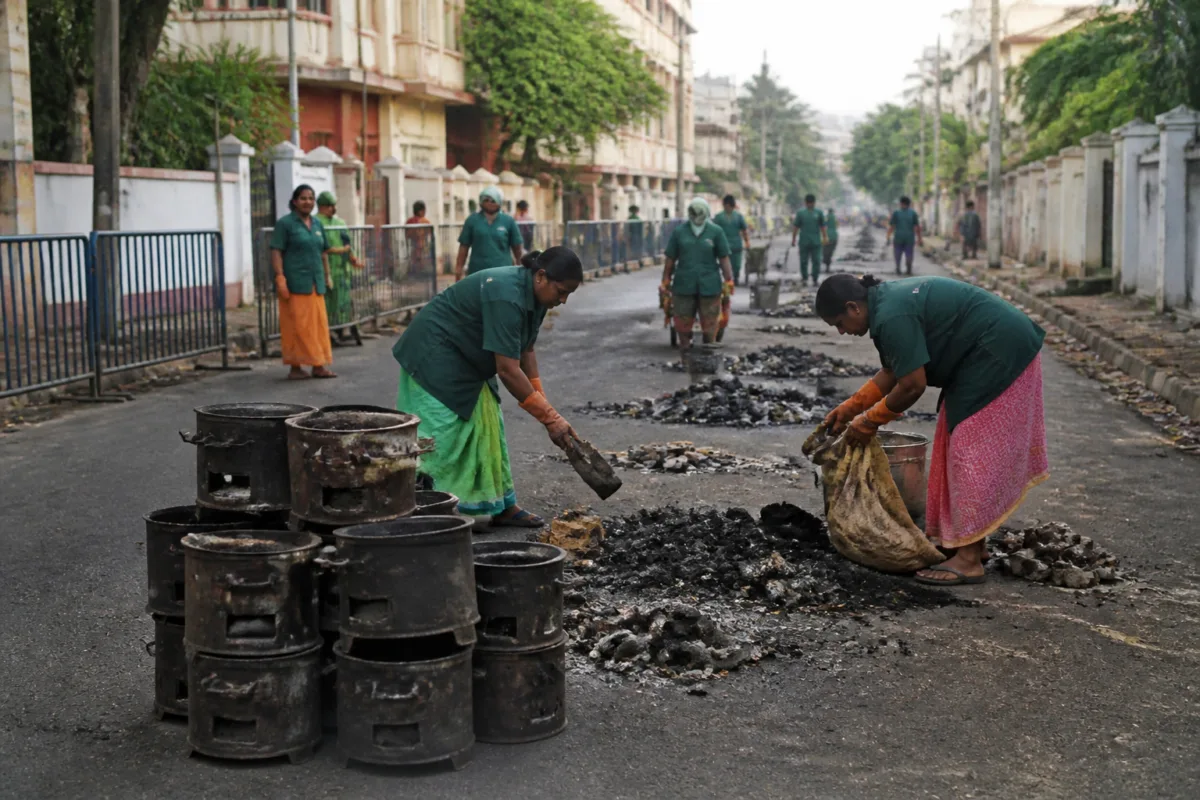
Thiruvananthapuram Mayor V.V. Rajesh has proposed replacing the traditional firewood-brick stoves used during Attukal Pongala with reusable iron stoves, arguing that the change could reduce post-event waste, cleanup costs and dust in the city.
Actor Mallika Sukumaran has reportedly offered to donate 2,000 iron stoves for the upcoming Pongala, according to the mayor. The proposal was also welcomed by a representative of the Suchitwa Mission at a review meeting for the festival, the report said.
The proposal, however, has met opposition from the Attukal Bhagavathy Temple Trust. The trust said that preparing Pongala using firewood bricks and an earthen pot was part of the ritual and that it could not promote the mayor’s recommendation.
The debate centres on the large volume of material used for the festival and the municipal work required after devotees complete the offering. Typically, three firewood bricks are used to make one stove. The corporation collects the bricks after the festival and distributes them free of cost to beneficiaries building houses under the LIFE housing scheme.
The distribution programme began during the tenure of former mayor V.K. Prasanth. The report said firewood bricks had been distributed to around 100 LIFE beneficiaries. Rajesh said the corporation spent Rs 12 lakh last time on removing the bricks and transporting them to housing beneficiaries, while collection took more than two days.
The mayor has argued that iron stoves could reduce the labour and expense involved in removing the bricks, as well as the dust generated when the material breaks down. He has also suggested that residents’ associations or the corporation could collect and store the iron stoves after use for the next festival.
The proposal is expected to be discussed by the municipal council. Rajesh said the intention was to collect as many stoves as possible through donations and begin the transition. The reported estimate for making an iron stove is Rs 100 to Rs 150, while firewood bricks sold for Rs 10 in the days before the previous Pongala. On the day before and the day of the festival, three bricks reportedly cost up to Rs 100.
The principal implementation question is scale. Attukal Pongala draws a very large number of participants, and the report noted that providing iron stoves for all devotees would be difficult. It also said there was no settled arrangement for storing the stoves after use.
That gap is significant for a municipal programme based on reuse. A transition would require decisions on procurement, distribution, collection, storage and responsibility between the corporation, residents’ associations and festival stakeholders. It would also need to address the temple trust’s position that the existing materials are tied to the ritual.
For now, the proposal remains a recommendation rather than an approved citywide replacement system. The council discussion and the response of the temple trust will determine whether the iron-stove plan becomes a limited donation-backed initiative or a broader change in the festival’s waste-management arrangements.

