


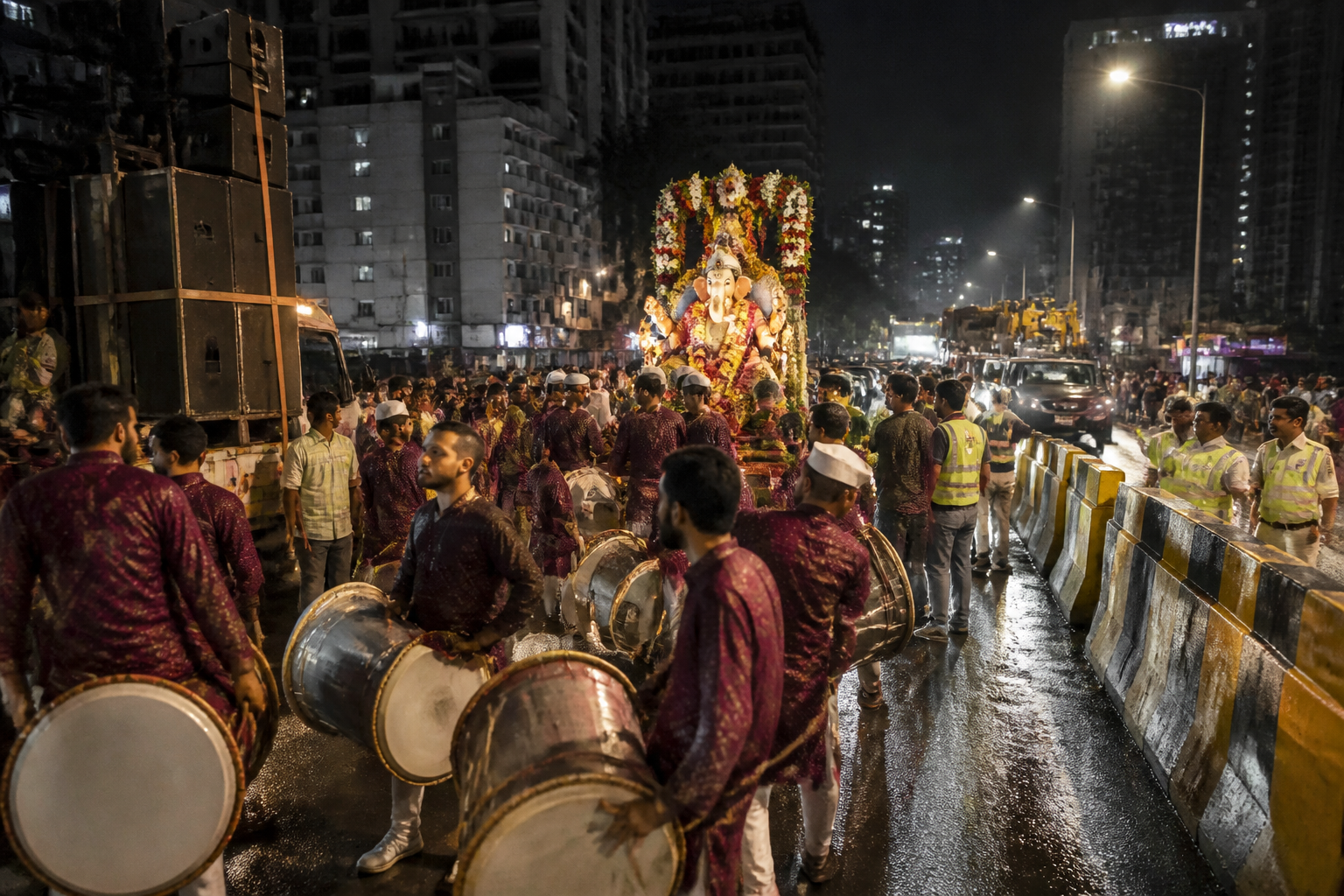
Thane Ganpati immersion processions recorded noise levels of up to 100 decibels at a key immersion point on the festival’s first day, even as the use of DJs and Dolby systems reportedly fell by about 20% compared with previous years. More than 20,700 idols were immersed across the city, placing noise control and immersion-site management under scrutiny.
Anti-noise activist Mahesh Bedekar, who monitored sound levels at several locations in Thane, said readings of 95 to 100 dB were recorded around 11pm near the immersion site on Ram Maruti Road. He attributed the spike to the combined use of sound amplifiers, DJs and drums during processions.
Bedekar said the use of DJs and Dolby systems between 8.30pm and 11pm had declined compared with previous years. However, he said sound amplifiers, banjos and multiple drums continued to produce high noise levels. He also said police presence and traffic arrangements had not deterred noise violations during the monitoring period.
The district administration has appealed to residents and procession organisers to avoid Dolby DJ sound systems and comply with prescribed noise limits. The report did not specify the number of notices, seizures or prosecutions issued during the monitoring period.
The scale of the operation was reflected in the number of idols immersed across Thane city. A total of 20,703 idols were immersed, including nearly 9,600 clay idols, according to Thane Municipal Corporation. The civic body said the number of clay idols and the adoption of eco-friendly celebrations had increased from last year.
That claim was disputed by environmental activists Prashant Sinkar and Vijay Katti. They pointed to what they described as poor turnout at the artificial immersion ponds in Kopri and questioned the expenditure on those facilities if devotees continued to favour natural water bodies. The report did not provide a civic breakdown of idol immersions by artificial ponds and natural water bodies.
The competing accounts highlight two separate management challenges for the city: controlling sound from processions in dense residential areas and ensuring that designated immersion infrastructure is used. While the administration’s appeal focused on sound systems and compliance with noise norms, the civic body’s account focused on the material composition of idols and eco-friendly practices.
The next stages of Thane’s immersion management will depend on enforcement at procession routes, monitoring at immersion points and the use of artificial ponds during subsequent festival days. Authorities have not announced further enforcement figures or a revised assessment of the Kopri facilities in the supplied report.
