


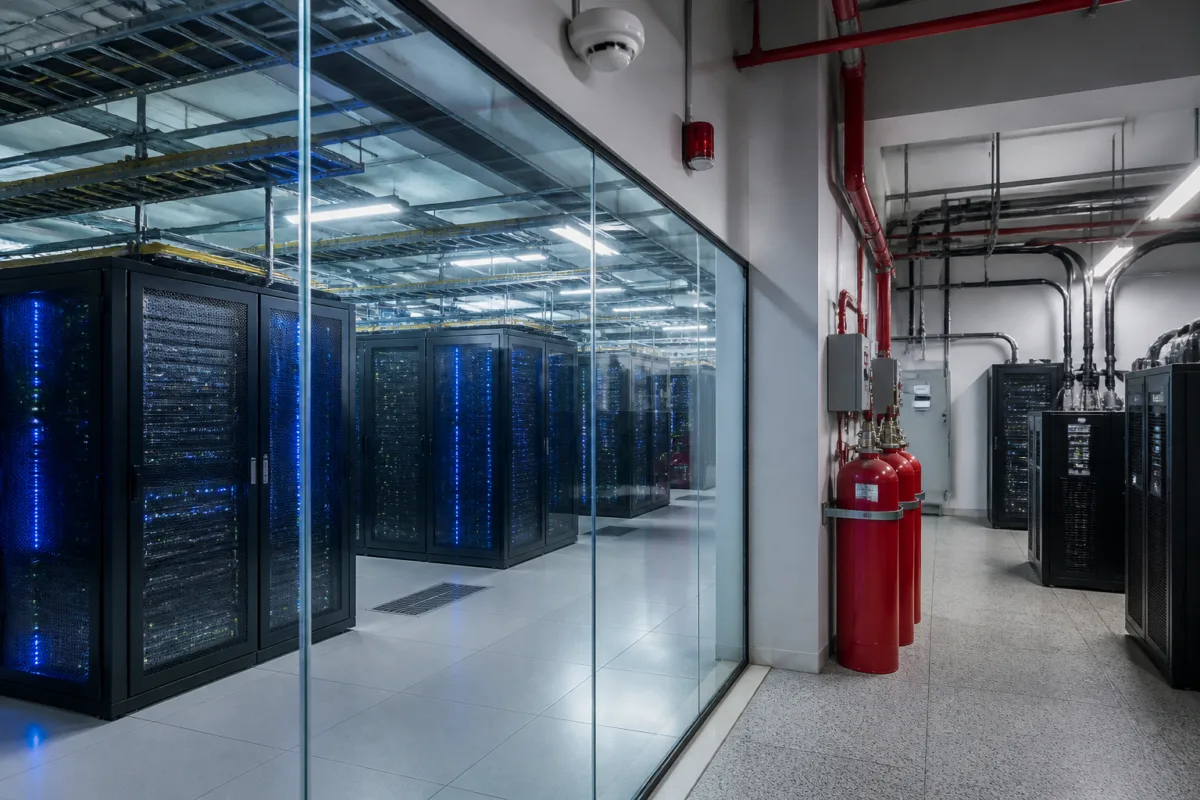
Telangana’s Fire Department has issued specialised fire and life safety guidelines for data centres, setting out requirements for fire-NOC applications, emergency systems and protection of high-risk electrical infrastructure across the state.
Director General of Telangana Fire, Disaster Response, Emergency and Civil Defence Vikram Singh Mann issued the guidelines through a circular on October 28, officials said in an official release. The rules will apply to applications for provisional Fire No Objection Certificates submitted on or after November 6.
The department said the guidelines were framed to support the state government’s priority of establishing data centres while enabling faster processing of fire-NOC applications. The requirements are intended to account for the operational characteristics of data centres and their specific fire-safety risks, rather than applying requirements designed for conventional business buildings without modification.
Data centres contain servers, data-storage systems, networking equipment and other critical infrastructure that depend on uninterrupted electricity, cooling and communications. Their electrical and support systems can include uninterruptible power supply units, batteries, transformers, generators, fuel storage and extensive cable networks, all of which require specialised preventive and protective measures, officials said.
The guidelines prescribe fire detection and alarm systems, suitable fire-suppression systems, fire compartmentation, firefighting shafts, wet risers, refuge areas and adequate firefighting water storage and pumping facilities. Automatic sprinklers are required in administrative areas, while technical areas must have suitable water-mist or clean-agent gas suppression systems.
The department has also placed specific emphasis on battery, UPS, transformer and switchgear rooms and other critical electrical installations. The prescribed measures include comprehensive fire-risk assessments, adequate ventilation, fire-rated separation, emergency shutdown arrangements and protection for fuel-storage areas and other high-risk locations.
The rules also require data-centre operators to integrate fire detection and suppression systems with relevant building-management and emergency systems. The circular directs operators to prevent the accumulation of combustible materials, including cardboard, packaging, wooden pallets and waste, in data halls and other critical areas.
Specific conditions have been included for basement levels and the protection of critical infrastructure. The department said the guidelines take into account that data centres generally have fewer people present than conventional business buildings, while still recognising the importance of protecting equipment and maintaining emergency response capability.
The new framework therefore addresses two separate aspects of data-centre safety: the protection of occupants and responders, and the continuity and safeguarding of infrastructure that supports digital services. Equipment failure or fire in battery rooms, electrical rooms or cable-heavy areas can create risks that differ from those in ordinary commercial premises.
The Director General has instructed scrutinising officers to verify compliance with the approved fire-safety design and the conditions prescribed in the circular while processing applications. The new requirements will be applied to provisional fire-NOC applications submitted from November 6, according to the department’s release.

