


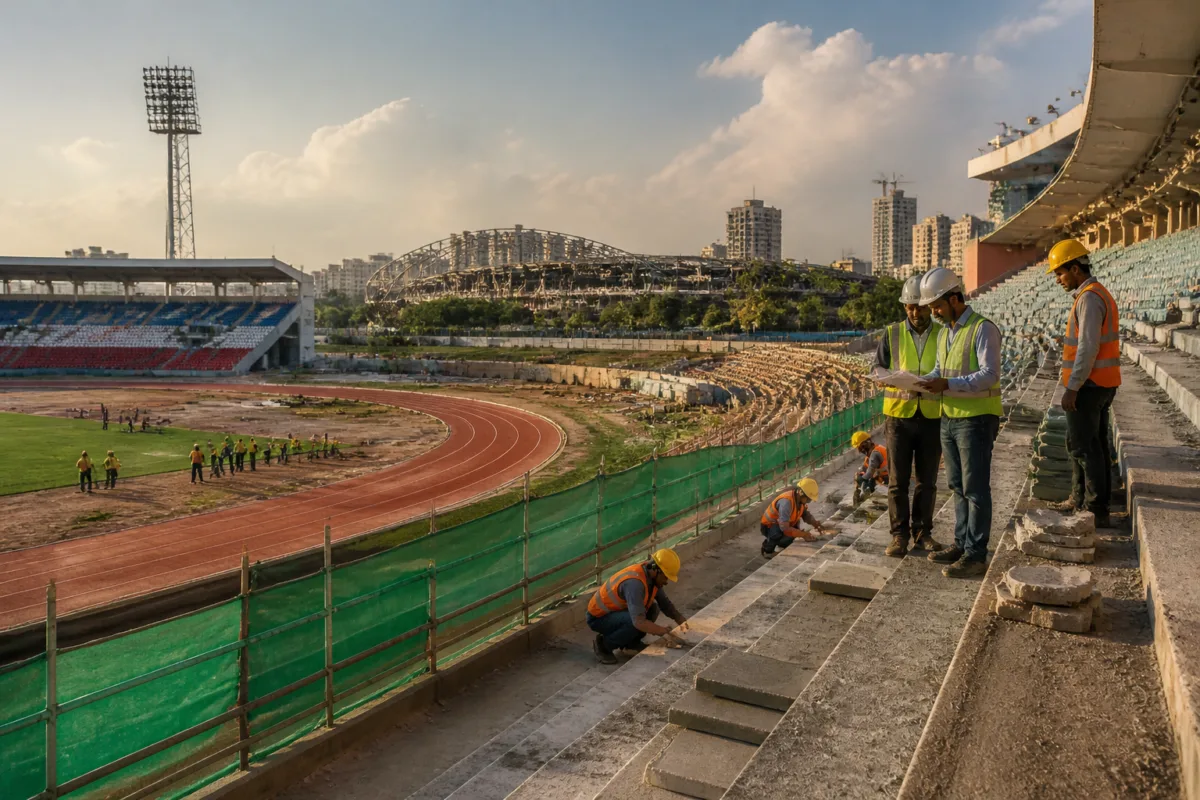
Telangana is preparing to host the Khelo India games from December 11 to 22, with the state government positioning the event as a test of permanent sports infrastructure rather than a temporary competition venue programme. Chief Minister A Revanth Reddy reviewed preparations at a meeting attended by Sports Minister Vakiti Srihari and officials, according to a Deccan Chronicle report published on November 25.
The state government has earmarked Rs 203 crore for hosting the games, including a Rs 21 crore contribution from the central government, the report said. Of the state allocation, Rs 120 crore is being used for sports development projects and the procurement of sports equipment. The government has said it intends to create permanent facilities instead of relying only on temporary infrastructure developed for the event.
The preparations cover stadium renovation and facilities for 27 sports disciplines. Officials briefed the Chief Minister that stadium development works and the required equipment would be ready by the end of November. Work had been completed at 14 stadiums, while six more were expected to be completed by the end of the month, according to the report. Daily progress reports are to be collected from nodal officers assigned to individual sports venues.
The venues will be spread across several regions of Telangana. The opening ceremony is planned at L.B. Stadium and the closing ceremony at Gachibowli Stadium. Ministers have been assigned oversight responsibilities for arrangements in Hyderabad, Ranga Reddy, Mahabubnagar, Warangal, Karimnagar, Khammam and Nizamabad. District Collectors are expected to supervise sports camps and stadiums in their jurisdictions, while police and municipal officials have been instructed to coordinate.
The administrative structure gives the preparations a broader public-works dimension. The Chief Minister directed officials to assign clear responsibility for departments and ceremonies, and asked ministers, MPs, MLAs and MLCs to supervise different parts of the event. The report also said that officials would monitor venue-level progress, creating a chain of responsibility between the state government, district administration and individual facilities.
Water management is another element of the preparations. Reddy directed that treated water from sewage treatment plants be used for operational requirements, including restrooms at competition venues. The instruction links the event’s temporary demand for water and sanitation services with existing urban utility infrastructure, although the report does not provide details about the treatment plants, distribution systems or monitoring arrangements.
The state is also organising training camps for 1,334 Telangana athletes across 27 disciplines. Sports kits are being distributed to 861 athletes and coaches from the state who will participate in the competitions. Each kit includes tracksuits, T-shirts, shorts, sports shoes, socks, undergarments and training T-shirts.
More than 9,000 participants from across the states are expected to attend this edition of Khelo India, the report said. Telangana last hosted a major national-level sporting event in the region when the National Games were held in 2002 in undivided Andhra Pradesh. The government has presented the current preparations as part of a longer-term ambition to develop Telangana as an international sports hub and encourage sport as a career for young people.
The main public-interest question will be whether the facilities remain accessible and adequately maintained after the games. The reported plan provides for permanent infrastructure, but the source does not specify the future operating model, maintenance budgets, public access arrangements or performance standards for the venues. Those factors will determine whether the spending creates a lasting sports network or primarily supports a time-bound event.
For now, the preparations combine event management with stadium redevelopment, equipment procurement, district-level administration and proposed wastewater reuse. The November completion target and daily progress reporting will be the immediate tests of whether the state can deliver the promised facilities before the December 11 opening.

