


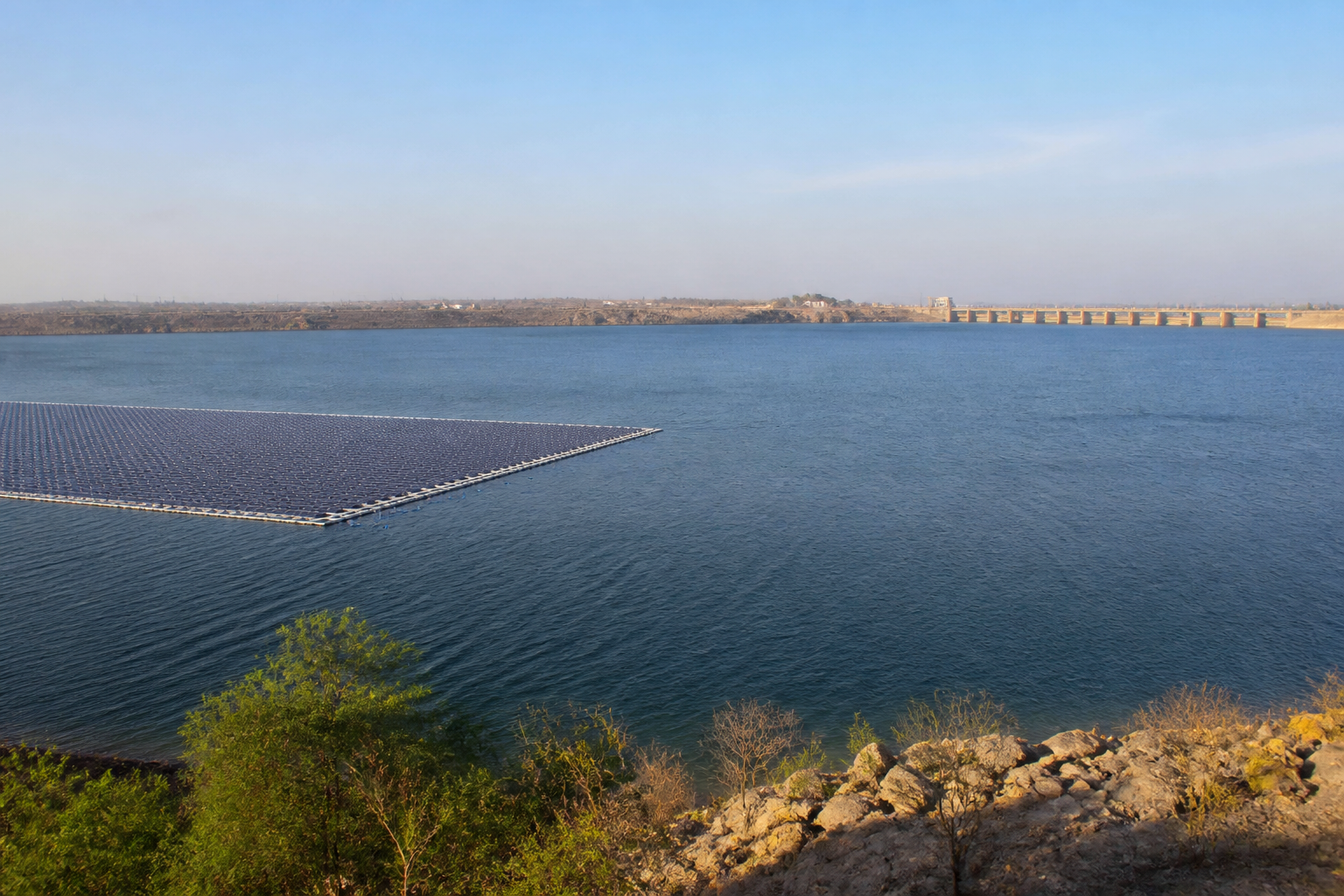
Telangana is examining floating solar projects on major and medium irrigation reservoirs as the state’s peak power demand approaches 20,000 MW, Deputy Chief Minister Bhatti Vikramarka told the Assembly on Thursday. The proposal is intended to expand renewable power capacity while helping the government manage rising electricity demand and its large subsidy commitments.
The energy and irrigation departments are jointly studying the feasibility of installing floating solar plants on reservoirs across the state, Bhatti said during question hour. He added that the government would make a clear announcement on the initiative soon, but did not provide a project-wise capacity, investment estimate or construction timeline.
The reservoirs under consideration include Nagarjuna Sagar, Srisailam, Pulichintala, Sri Ram Sagar, Sripada Yellampalli, Devadula, Palair, Wyra, Mallanna Sagar, Lower Manair Dam, Mid-Manair and Pocharam. The government has not yet identified which sites could move first or disclosed the technical criteria that will determine their suitability.
Bhatti said floating solar projects cost significantly more than conventional ground-mounted solar plants. He cited the Centre’s viability gap funding scheme, which provides support of up to Rs 1 crore per MW, but said conditions attached to the programme were creating difficulties for project development.
One of the conditions requires the use of domestically manufactured equipment. According to Bhatti, this requirement raises project costs by nearly Rs 1.30 crore per MW. He said relaxing the norms could encourage greater investor participation in floating solar projects. Despite the higher costs, the state government remained committed to promoting the sector and attracting investment, he told the House.
The proposal comes as Telangana’s electricity demand has risen sharply. Bhatti said peak power demand stood at around 15,000 MW when the Congress government assumed office in December 2023. It had reached 19,543 MW as of September 9, an increase of more than 4,500 MW in less than three years, according to his statement.
He attributed the increase to industrial expansion and rising purchasing power among residents. The higher demand has also increased the need to strengthen power generation and distribution infrastructure, Bhatti said, while describing the consumption growth as an indication of economic expansion.
The government is simultaneously carrying a substantial electricity subsidy burden. It spends nearly Rs 14,000 crore annually on free power supplied to agricultural pump sets, Bhatti said. A separate scheme providing up to 200 units of free electricity benefits around 55 lakh families and costs the exchequer another Rs 5,000 crore each year.
Together, the two commitments amount to nearly Rs 19,000 crore in annual electricity subsidies, according to the deputy chief minister. The government is examining solar power and pumped storage projects as possible alternatives while seeking to continue the free-power benefits and reduce the financial burden over time.
The energy and irrigation departments’ feasibility study is the next formal step. The state government’s proposed announcement is expected to clarify the reservoirs selected, the capacity planned, the funding structure and whether changes to the central programme’s equipment-related conditions will be sought.
