


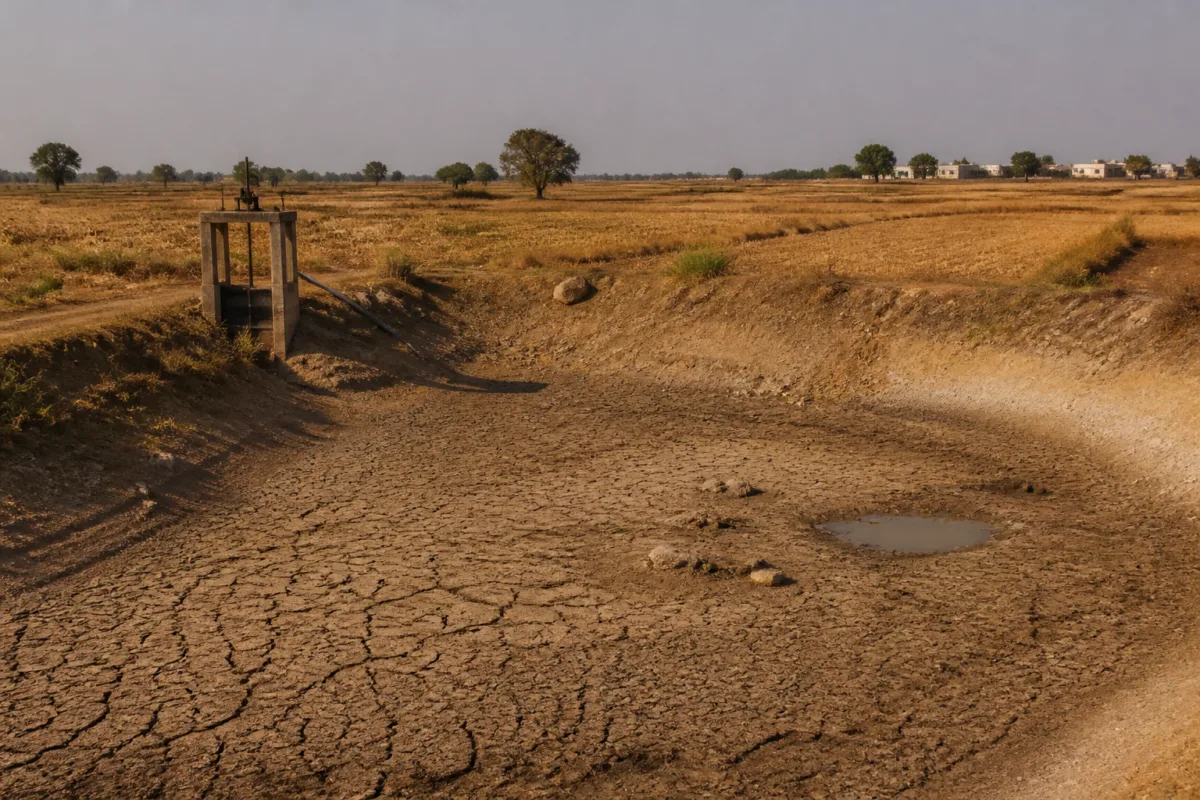
BRS MLC Dasoju Sravan Kumar’s demand for a Rs 20,000-crore emergency package places Telangana’s drought response inside a larger governance question: can a state manage a fast-moving water, power and farm crisis through committees without fixed deadlines, dedicated funding and public data? His open letter to Chief Minister A Revanth Reddy and members of a Cabinet sub-committee has brought together concerns that are usually handled through separate departments—rainfall, irrigation, drinking water, electricity, farm relief and public finance.
Sravan has asked the government to convene special sessions of the Assembly and Legislative Council and approve an emergency supplementary budget. The demand is political, but the administrative issues cited in the letter are concrete. He has questioned the mandate of the drought sub-committee constituted through Government Order Ms No. 1523 on October 19, arguing that it has no stated deadline, dedicated funds or representation from the Municipal Administration Department.
That criticism points to a central weakness in drought governance: the institutional response can be fragmented even when the effects are interconnected. A shortage of rainfall can reduce irrigation storage, increase dependence on groundwater and raise demand for drinking water. At the same time, farmers may require power for pumping, while thermal generation faces its own fuel and operational constraints. If the response is divided between irrigation, energy, agriculture, municipal administration and finance departments, a committee may coordinate discussion without necessarily creating an accountable implementation chain.
The letter also raises the question of whether Telangana’s drought response is being organised around administrative procedures or measurable outcomes. Sravan has sought a 15-day deadline for the sub-committee and emergency funds through an amendment to GO Ms No. 1523. He has further demanded a white paper on drought spending, downstream water releases and power purchases. These requests would, if accepted, shift the public debate from announcements to records: how much money has been released, where water has moved, how electricity has been procured and which groups have received relief.
The most significant water-management claim in the report concerns more than 1,000 TMCft of Pranahita floodwater flowing downstream because pumps at Kannepalli were not operated, according to Sravan. The allegation directly links operational decisions at irrigation infrastructure with the distress being reported by farmers in North Telangana. The supplied report does not include the government’s response or independent confirmation of the volume, timing or reasons for the alleged non-operation. Those details will be important in assessing whether the issue resulted from a missed operational opportunity, technical limitations, storage constraints or another factor.
The claim nevertheless highlights why drought cannot be assessed only through rainfall totals. Water availability also depends on when flows occur, whether pumping infrastructure is operational, how reservoirs and minor irrigation tanks are managed, and whether water can be moved to areas of need. A river basin may receive flows while farmers outside the immediate reach of the infrastructure remain exposed. Conversely, a rainfall deficit can become a drinking-water emergency when local storage is low and contingency arrangements are underfunded.
Sravan has cited rainfall deficits in the Krishna and Godavari river basins and low storage levels in minor irrigation tanks. The report does not provide the percentage deficit or storage figures, so the scale of the shortfall cannot be independently quantified from the available material. But the distinction between major river systems and minor tanks is administratively important. Farmers and households often experience water stress through local sources, even when state-level assessments refer to basin-wide conditions. A drought plan therefore needs to connect basin information with district-level and village-level delivery.
The letter’s reference to a proposed allocation of Rs 1 crore per district for drinking-water contingencies raises a second institutional question: whether emergency funding is proportionate to the geographical spread and intensity of the crisis. Sravan has questioned the adequacy of that allocation and sought clarity on drought-mitigation spending. The report does not state the number of districts covered, the basis for the allocation or whether additional funds are available through other budgets. Without those details, the amount cannot be judged as sufficient or insufficient in operational terms. Its significance lies in the demand for transparency about how the contingency figure was calculated and what it is expected to cover.
Electricity forms another link in the drought chain. Sravan has alleged power shortages, costly open-market purchases and dwindling coal stocks at the Yadadri thermal power station. These claims are attributed to the BRS MLC, and the report does not carry a response from the power utility or the state government. If confirmed, they would show how water stress and energy security can reinforce each other: reduced or unreliable supply can affect irrigation pumping, while increased agricultural and drinking-water demand can place further pressure on the power system.
The mention of open-market purchases also brings fiscal management into the drought response. Emergency procurement can help maintain supply, but it can increase costs compared with planned purchases. That is why Sravan’s demand for a white paper is relevant beyond party politics. A public account of procurement volumes, prices, coal availability and supply interruptions would allow the legislature and residents to distinguish between an unavoidable emergency expense and a cost arising from delayed planning. The supplied report does not provide these figures, leaving the financial scale of the alleged pressure unresolved.
The proposed Rs 20,000-crore package is similarly a political demand rather than an approved budget. Its components are not detailed in the report. Sravan has, however, identified the intended areas of intervention: relief for affected farmers, input subsidies, drinking water, power and drought mitigation. He has specifically sought support for tenant cultivators and farm hands, groups that may not have the same formal documentation or landholding status as landowners. Whether such support can reach them would depend on the eligibility rules, identification systems and delivery mechanisms eventually adopted by the government.
This is where the demand for special legislative sessions becomes more than a procedural request. A supplementary budget would require the state to state its priorities and identify the administrative departments responsible for spending. Legislative scrutiny could also clarify whether the package is new funding, a reallocation of existing provisions or a combination of both. The report does not say whether the government has accepted the demand, fixed a session or announced a financial response.
The sub-committee’s design will be central to what happens next. A deadline can create pressure to act, but it does not by itself establish who will execute decisions or publish results. The concerns raised in the letter suggest that the committee’s effectiveness will depend on its access to department-level data, its authority to recommend expenditure, its coordination with irrigation and power agencies, and its ability to address municipal drinking-water needs. The reported absence of the Municipal Administration Department is significant because drinking-water contingencies are not only an agricultural or irrigation matter.
The letter also seeks written, data-backed replies to all 23 questions before the sub-committee’s first meeting. That demand identifies a basic accountability test: whether the committee begins with a common evidence base. Questions about downstream releases, pumping, power purchases, coal stocks, tank storage and relief spending cannot be resolved through general assurances. They require dates, quantities, locations and responsible agencies. The report does not reproduce all 23 questions, so the full scope of the requested information remains unavailable.
The evidence currently available confirms a serious political challenge to the government’s drought response, but it does not establish every operational claim made in the letter. The alleged loss of more than 1,000 TMCft of Pranahita water, the scale of rainfall deficits, the level of tank storage, the extent of power shortages and the adequacy of district drinking-water funds require documentary responses from the relevant authorities. The government’s position is also not included in the supplied report.
What deserves monitoring is therefore clear: whether GO Ms No. 1523 is amended; whether a 15-day deadline and dedicated funds are introduced; whether special legislative sessions are convened; how any emergency package is financed; and whether the government publishes data on water releases, drought expenditure and power procurement. The next stage of Telangana’s drought response will show whether the state treats the crisis as a collection of departmental shortages or as one connected urban-rural governance problem requiring a common, publicly verifiable plan.

