


Telangana’s bureaucracy is facing reported anxiety over political pressure, future inquiries and the risk of being held accountable for decisions taken under influence, according to a report by Telangana Today. The report says some senior IAS and IPS officers are considering extended leave, central deputation, corporate employment or voluntary retirement, while others are delaying file clearances and adhering strictly to rules.
The central concern described in the report is a conflict between administrative responsibility and political direction. Officers are said to fear that approving a proposal under pressure could expose them to inquiries after a change in government, while refusing to approve it could invite the displeasure of the political leadership in office. The report also attributes the situation to resource constraints, including inadequate financial support for government programmes and pressure to deliver results.
These claims have not been independently confirmed in the material supplied for this article. Telangana Today cites the decisions of Principal Secretary S A M Rizvi, who opted for voluntary retirement last year, and Special Chief Secretary Jayesh Ranjan’s reported plans to seek VRS as developments that have brought the issue into focus. The report does not provide direct statements from either officer explaining the reasons for those decisions.
The reported tension is unfolding against a wider backdrop of investigations into decisions taken during the previous Bharat Rashtra Samithi administration. Telangana Today lists inquiries connected with the Kaleshwaram project, power purchase agreements, the Formula E race, the Outer Ring Road lease and the Dharani land portal. The report also refers to a committee of four IAS officers constituted to investigate land holdings linked to BRS leaders, their family members and associates.
According to the report, a senior officer has gone on leave after expressing an inability to work with the committee, which the officer allegedly viewed as politically motivated. That claim is also not supported by a named statement or publicly identified document in the supplied material. The distinction matters because administrative inquiries can involve both legitimate accountability mechanisms and concerns about retrospective decision-making. Establishing which of those applies in individual cases requires access to official orders, committee terms of reference and statements from the officers concerned.
The report describes similar pressure in departments handling land transactions, contractor payments, surveys and regulatory approvals. It says officers are allegedly being asked to clear land deals, release payments or advance proposals despite concerns that established procedures or applicable norms have not been met. It also refers to pressure from elected representatives, political associates and relatives of political leaders.
No specific file, order, project approval or payment instruction is identified in the supplied report as evidence of these alleged interventions. As a result, the account establishes the existence of reported concern within official circles, but it does not establish the individual allegations as verified facts. The reported claims would require corroboration through government records, court filings, audit findings, official correspondence or on-record responses from the departments and officers involved.
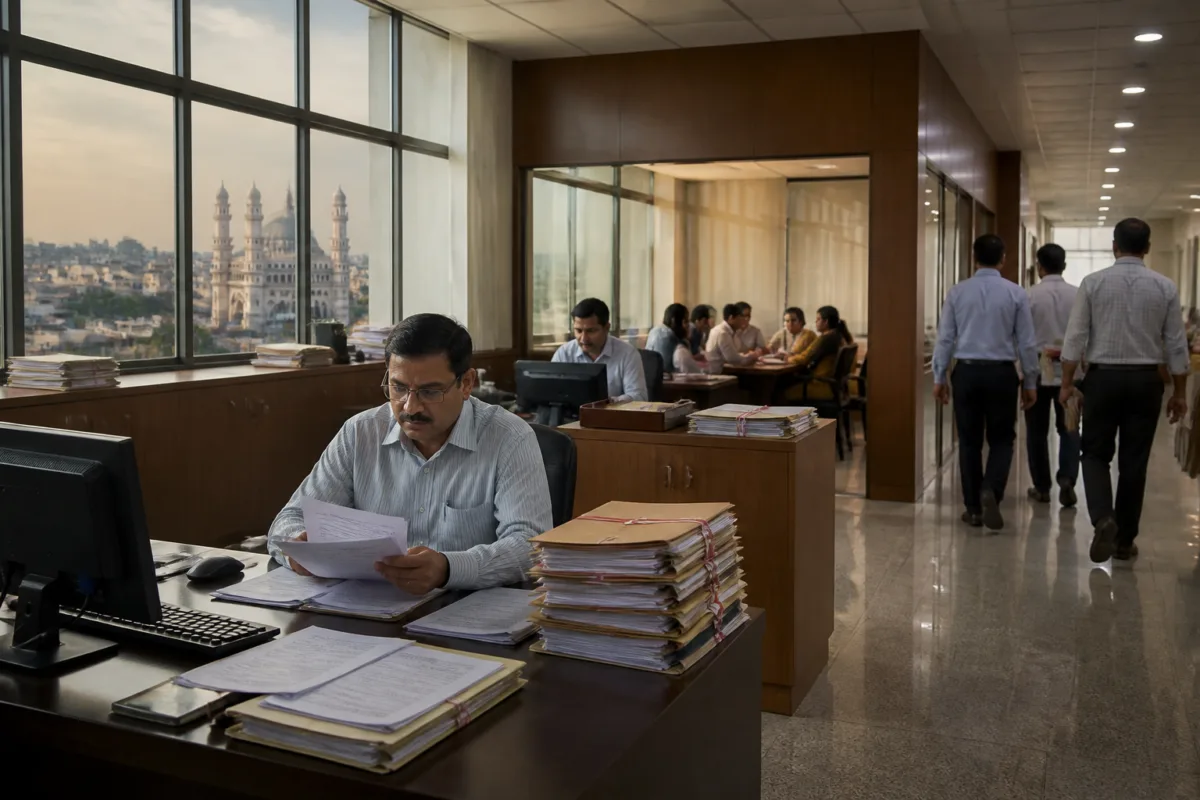
One reported response among some bureaucrats is an unofficial “pen-down” approach. Telangana Today says some officers have chosen to follow rules and regulations strictly, avoid direct confrontation with senior political leaders and use delays to buy time. The report says a few officials believe that waiting for the next year or year and a half could allow the political situation to change and provide greater administrative autonomy.
That reported behaviour has direct implications for how the state functions. File movement is a central part of public administration, affecting land approvals, infrastructure payments, project clearances, procurement and delivery of government services. If files are delayed because officers fear future action, decisions can remain pending even when the delay itself affects contractors, citizens, local bodies and public agencies. If files are cleared without adequate documentation, the administrative record may later become the basis for disciplinary or investigative proceedings.
The supplied material does not provide figures on the number of delayed files, the duration of pending decisions, the number of officers seeking deputation or the financial impact of any administrative slowdown. It also does not identify the specific central services or posts for which officers have applied. Telangana Today reports that several IAS and IPS officers are exploring transfers to central services and that three senior IPS officers are actively seeking such transfers. It further says three senior IAS officers have proceeded on extended leave without prior notice, but no names or official leave records are provided.
Central deputation and inter-cadre movement are established administrative routes available to eligible officers, but the report’s account concerns the reasons allegedly motivating those choices. Telangana Today says some Telangana-cadre officers are using contacts in New Delhi to seek inter-cadre deputations to their home states. This claim, like the reported applications and leave decisions, remains unverified in the supplied material.
The institutional issue raised by the report is broader than the career decisions of individual officials. Telangana’s government depends on its senior administrative machinery to translate political decisions into rules, tenders, payments, land records, infrastructure projects and public services. That machinery also acts as a procedural check: officers record advice, raise queries, seek clarifications and certify compliance with rules. Those functions can slow decisions, but they also create an audit trail for public expenditure and regulatory action.
The report says Chief Minister A Revanth Reddy has publicly criticised senior officials for holding up files by raising various queries. The government has simultaneously initiated inquiries into decisions associated with the previous administration. Together, these developments have created what the report portrays as a difficult operating environment for officers: current pressure to move files quickly alongside concern that past decisions may later be examined by a new political leadership.
Whether that environment has produced a measurable administrative slowdown cannot be established from the supplied account. The article provides no comparative data on file clearances, project approvals, leave applications, deputation requests or officer vacancies before and after the change of government. It also does not include responses from the Telangana government, the state’s chief secretary, the departments named in the report or the officers whose decisions are discussed.
For urban governance, the issue is significant because several matters mentioned in the report are connected to the physical and financial systems of the state. The Outer Ring Road lease, land administration through the Dharani portal, major irrigation infrastructure, power procurement and contractor payments involve decisions that affect land markets, public assets, infrastructure delivery and government finances. Administrative uncertainty in these areas can have consequences beyond the Secretariat, but the scale and nature of those consequences require evidence from official records.
The report therefore points to a potentially important governance problem while leaving critical questions unresolved. It is not clear how many officers are considering exit routes, whether the reported applications have been formally submitted, why individual officers took leave or VRS, and whether delays in file clearances have measurably affected public projects. Confirming those details would require official deputation and leave records, retirement notifications, government responses, inquiry documents and on-record testimony.
What is established from the supplied material is that Telangana’s political transition has been accompanied by investigations into several decisions of the previous administration and by reported concern among some senior officials about future accountability. What remains unestablished is whether the state is experiencing a wider bureaucratic exit wave or systematic administrative paralysis. Those are the facts that require verification before the reported claims can be treated as a confirmed account of Telangana’s governance machinery.

