


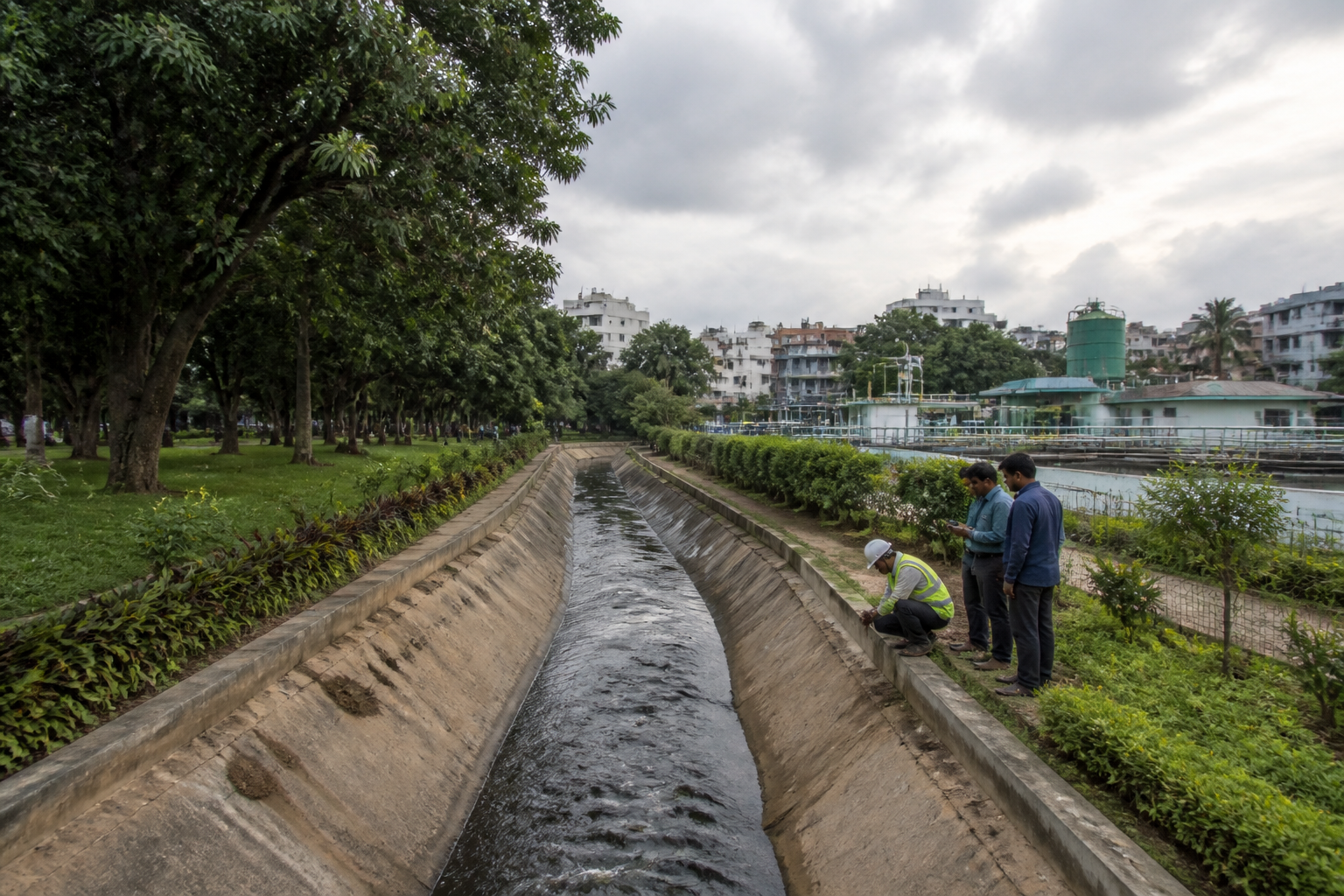
The Bengaluru Water Supply and Sewerage Board has proposed a sewage treatment plant with a capacity of 10 lakh litres a day near Tavarekere Park after residents and park users complained that sewage was flowing into a nearby stormwater drain.
The complaints reportedly highlighted foul odour, fly infestations and unsanitary conditions around the drain. The board said the proposed project is intended to provide a long-term solution by intercepting the sewage before it enters the stormwater channel and treating it to the standards prescribed by the Karnataka State Pollution Control Board.
According to the board’s announcement, the treated water would be used for maintaining the park’s plants and green areas. At present, drinking water is being used for this purpose, creating a demand that the proposed sewage treatment plant is intended to reduce.
The project also envisages the reuse of surplus treated water for construction work, gardening, cleaning roads and washing premises. The proposed uses place the project within Bengaluru’s broader effort to reduce the use of potable water for activities that do not require drinking-quality supplies.
The board said the project could allow Tavarekere Park to develop as a self-sufficient environmental model combining sewage treatment, water conservation, ecological restoration and the reuse of treated wastewater. The announcement, however, describes this as a proposed outcome rather than an existing operating arrangement.
The immediate issue is the movement of sewage through a stormwater drain beside a public park. Such drains are designed to carry rainwater, and the board’s proposal is based on separating and treating the wastewater entering the channel near the park. The supplied announcement does not specify the volume of sewage currently entering the drain, the precise location of the proposed plant, the project cost or the expected completion date.
The board said the tender process is currently under review and evaluation. Further details on the selected contractor, construction schedule, treatment technology and operating arrangements are expected to emerge as the tender process advances.
