


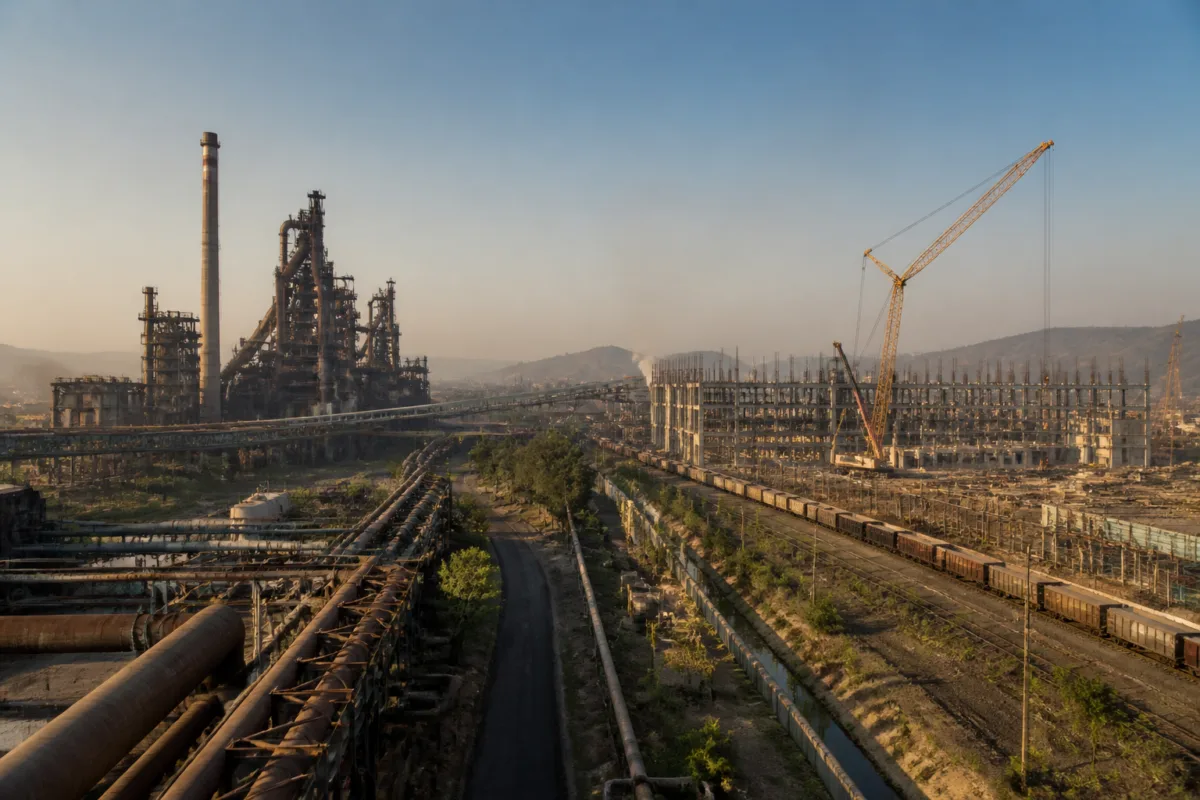
Tata Steel is targeting 50 million tonnes of annual steelmaking capacity in India over the next decade and is exploring a 15-million-tonne greenfield plant in Maharashtra, Managing Director and CEO T V Narendran said in an interview reported by Business Standard.
The company currently has annual steelmaking capacity of about 27 million tonnes. Narendran said Tata Steel already had a roadmap to reach 40 million tonnes and that its existing facilities could eventually support capacity of up to 50 million tonnes. The company will decide how quickly to pursue the expansion based on its financial strength, project sequencing and market conditions.
Maharashtra could become a major destination for the next phase of growth once discussions with the state government are concluded and the required land is secured. Gadchiroli has emerged as a potential location for a large-scale project as the state encourages steel companies to establish manufacturing facilities.
Narendran said Tata Steel was not dependent on a single greenfield site to achieve its capacity objectives. Existing facilities at Jamshedpur, Kalinganagar, Meramandali and Neelachal Ispat Nigam provide additional avenues for expansion. The company is also evaluating different production technologies, including electric arc furnaces and recycling-based steelmaking.
Tata Steel plans to spend about Rs 18,000-20,000 crore on capital expenditure this year, with approximately 75 per cent directed towards India. The company spends around Rs 15,000-16,000 crore annually on capital expenditure in the country. Narendran said sustained profitability, cash flows and balance-sheet strength would be necessary to support the move from 27 million tonnes to 50 million tonnes.
A greenfield steel plant with capacity of around five million tonnes typically takes three to four years to build. The proposed Maharashtra project would therefore require land acquisition, state-level approvals and significant infrastructure planning before construction can begin. The company has not announced a final site or construction timeline.
Tata Steel’s India-focused strategy reflects the growing importance of the domestic market to the company. India accounted for about 30 per cent of its revenues 15 years ago, compared with 70 per cent today, according to Narendran. Steel consumption in Europe, meanwhile, has remained largely stagnant.
Alongside capacity growth, the company plans to increase the share of higher-value products such as pipes, wires and tinplate. It is also strengthening supplies to automotive, oil and gas, infrastructure and consumer markets. Narendran said the company was seeking better realisations through specialised products, customer approvals and closer relationships with buyers.
The company is continuing to assess lower-carbon production options. Narendran said hydrogen-based steelmaking would become more economically viable if hydrogen were available at around USD 2 per kg. Until then, Tata Steel plans to improve the carbon efficiency of existing plants while gradually adopting alternative technologies where the business case supports them.
The immediate next steps are the conclusion of discussions with the Maharashtra government, identification of suitable land and decisions on the pace and mix of expansion across Tata Steel’s existing facilities and any future greenfield project.

