


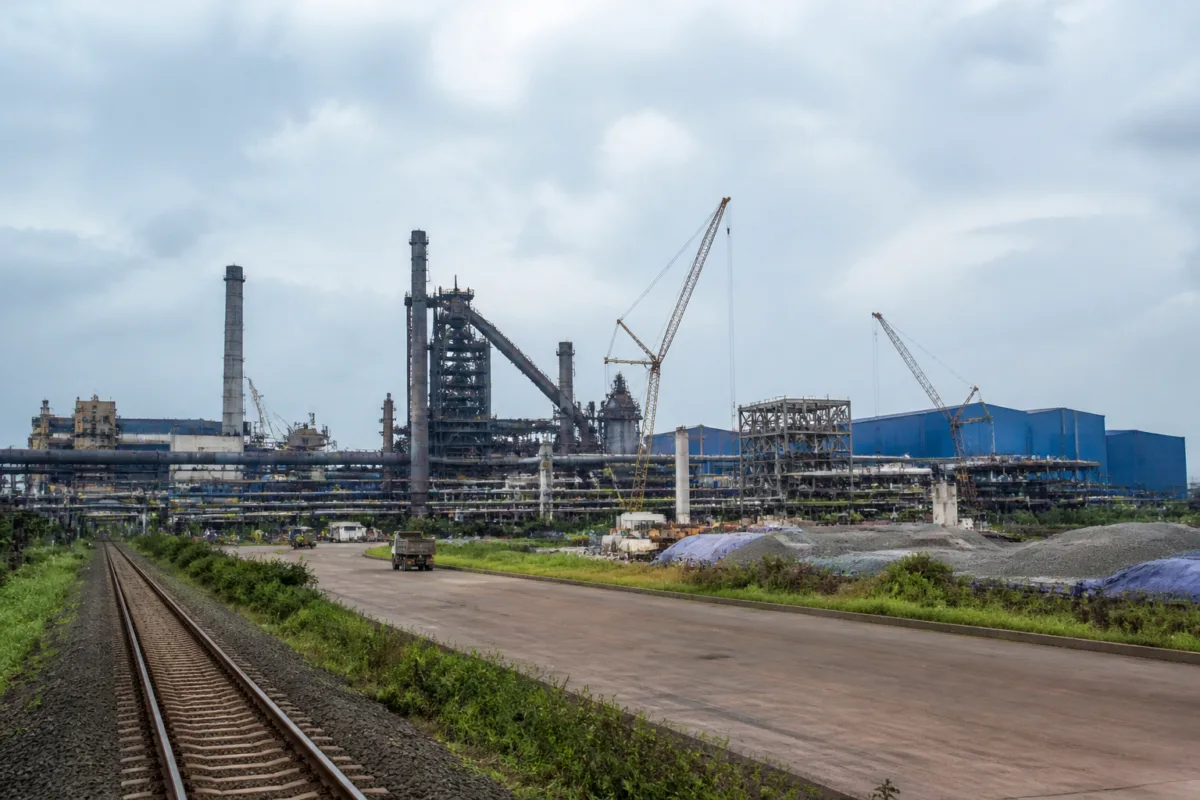
Tata Steel plans to raise its overall steelmaking capacity to 40 million tonnes over the next few years, while examining new scrap-based plants in southern and western India, its chief executive and managing director TV Narendran said. The company also expects operations at its Kalinganagar and Meramandali plants in Odisha to stabilise in the second half of the current fiscal.
Narendran said steel demand remained strong and that performance in key customer segments, including automobiles and construction, had been encouraging. He made the comments during an interaction with the press on the sidelines of the inauguration of the five-day Samvaad tribal conclave in Jamshedpur, according to a Press Trust of India report published by Business Standard.
The company had a reasonably good performance in the first six months of the fiscal, but faced operational challenges at Kalinganagar and Meramandali. Narendran said Tata Steel expected to perform significantly better in the second half as production and operations stabilised at the two Odisha facilities.
Tata Steel has already announced a 5-million-tonne capacity addition at Neelachal Ispat Nigam Ltd. Narendran said the company had about 6,000 acres of land at Kalinganagar and Neelachal available for expansion, with several projects already initiated to support the long-term capacity target.
The proposed scrap-based plants would each require around 100-150 acres of land and could be established within one to two years, according to Narendran. A plant with capacity of 0.8 million tonnes would require an investment of about Rs 3,000 crore. He said such facilities were more expensive than iron ore-based steel plants, but could be located closer to scrap-generation centres.
Tata Steel is considering setting up the plants on the lines of its existing facility in Ludhiana. The company is also examining the possibility of establishing a plant at Chiroli in Maharashtra, with discussions underway with the state government. The proposed locations would bring steelmaking closer to large industrial and urban markets in western and southern India, although the company has not announced final sites or construction schedules.
At Jamshedpur, Narendran said there was limited scope for further expansion of primary steelmaking capacity. The company’s focus at the site would instead remain on downstream facilities such as Tinplate and Combimills, along with the adoption of technologies including Hisarna Steelmaking and EASyMelt to reduce carbon emissions.
The capacity plans come as Tata Steel faces higher costs linked to geopolitical disruption. Narendran said the conflict in West Asia had affected the company by around Rs 1,000 crore per quarter and had an impact of about Rs 1,400 crore globally. He described the geopolitical situation as a major challenge beyond the company’s control, while identifying cost and productivity as areas where Tata Steel was focusing internally.
The company has not provided a consolidated completion date for the 40-million-tonne target. Its next stated milestones are the expansion projects already initiated at Kalinganagar and Neelachal, the proposed 5-million-tonne addition at Neelachal Ispat Nigam, and further discussions on the potential Chiroli facility and other scrap-based plants.

