


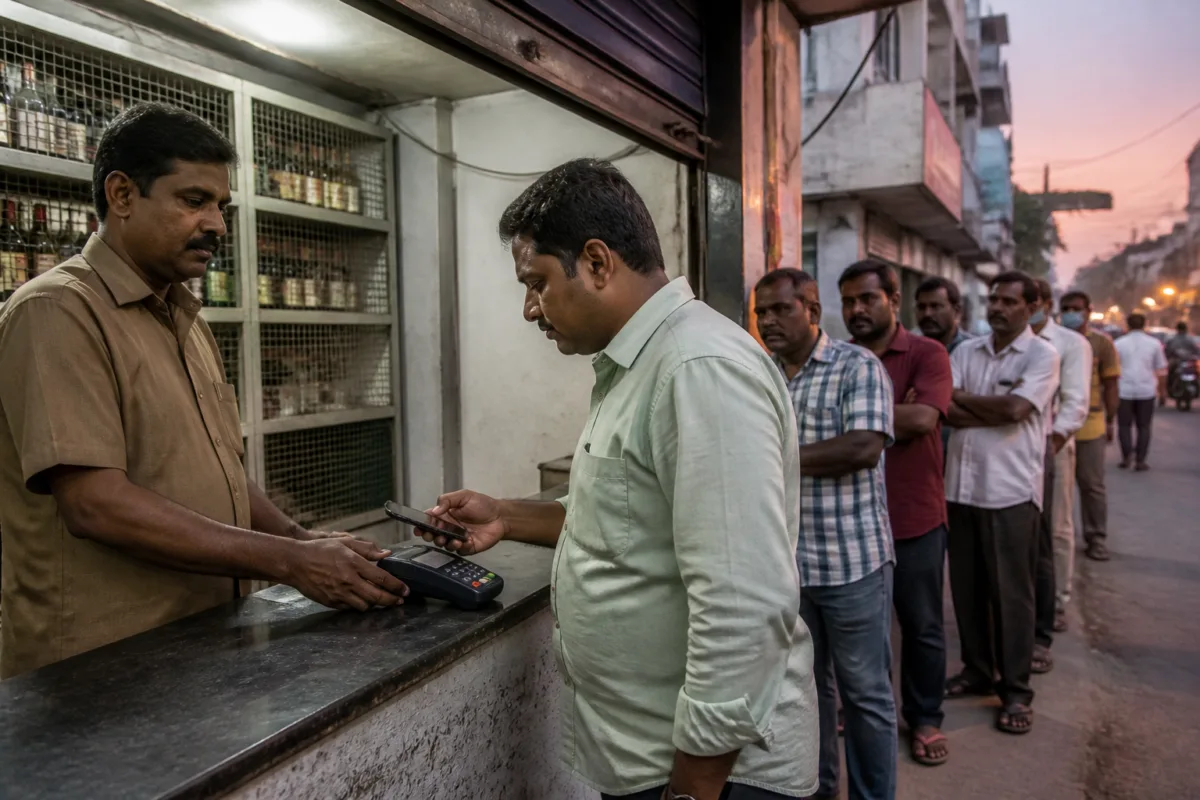
TASMAC will restrict cash payments for higher-value liquor purchases across Tamil Nadu, requiring customers to use UPI, credit cards or debit cards for transactions above Rs 1,000 from November 1, according to a report by Dinamalar. The cash limit will fall further to Rs 500 from January 1, 2027.
The state-run Tamil Nadu State Marketing Corporation operates 4,048 liquor retail outlets across the state. Customers currently pay through cash, UPI, credit cards and debit cards, but more than 80 per cent of the corporation’s total collections are reported to come through cash transactions.
Under the new instruction, a customer purchasing liquor worth more than Rs 1,000 in a single transaction will have to make the payment electronically from November 1. From January 1, 2027, the same requirement will apply to single transactions above Rs 500. Purchases at or below the applicable limit can continue to be paid for either in cash or through electronic methods.
The move is intended to increase digital payments and reduce the handling of large volumes of cash at TASMAC outlets. According to the report, the corporation cited problems including the collection of amounts above the government-set price of liquor bottles, as well as the difficulty employees face in storing cash safely at stores and depositing it in banks.
The instruction also requires every TASMAC outlet to have a functioning point-of-sale terminal linked to the corporation’s official bank account. The terminals are expected to support the electronic payment process and provide a formal channel for recording higher-value sales.
The cash restriction also places operational responsibility on individual outlets. TASMAC has instructed officials to ensure that the payment terminals remain functional and available at every store. The order does not remove cash payments altogether, since customers may continue to use cash for transactions within the prescribed limits.
The reported instruction links the payment change to enforcement against overcharging. TASMAC has directed that disciplinary action be taken against employees if violations, including collection of amounts above the maximum retail price, are detected. The report does not specify the nature of the disciplinary process or the penalties that may apply.
The phased structure gives outlets and customers a transition period before the lower Rs 500 threshold takes effect. The immediate implementation milestone is November 1, when electronic payment becomes compulsory for single purchases above Rs 1,000. The second threshold will apply from January 1, 2027.

