


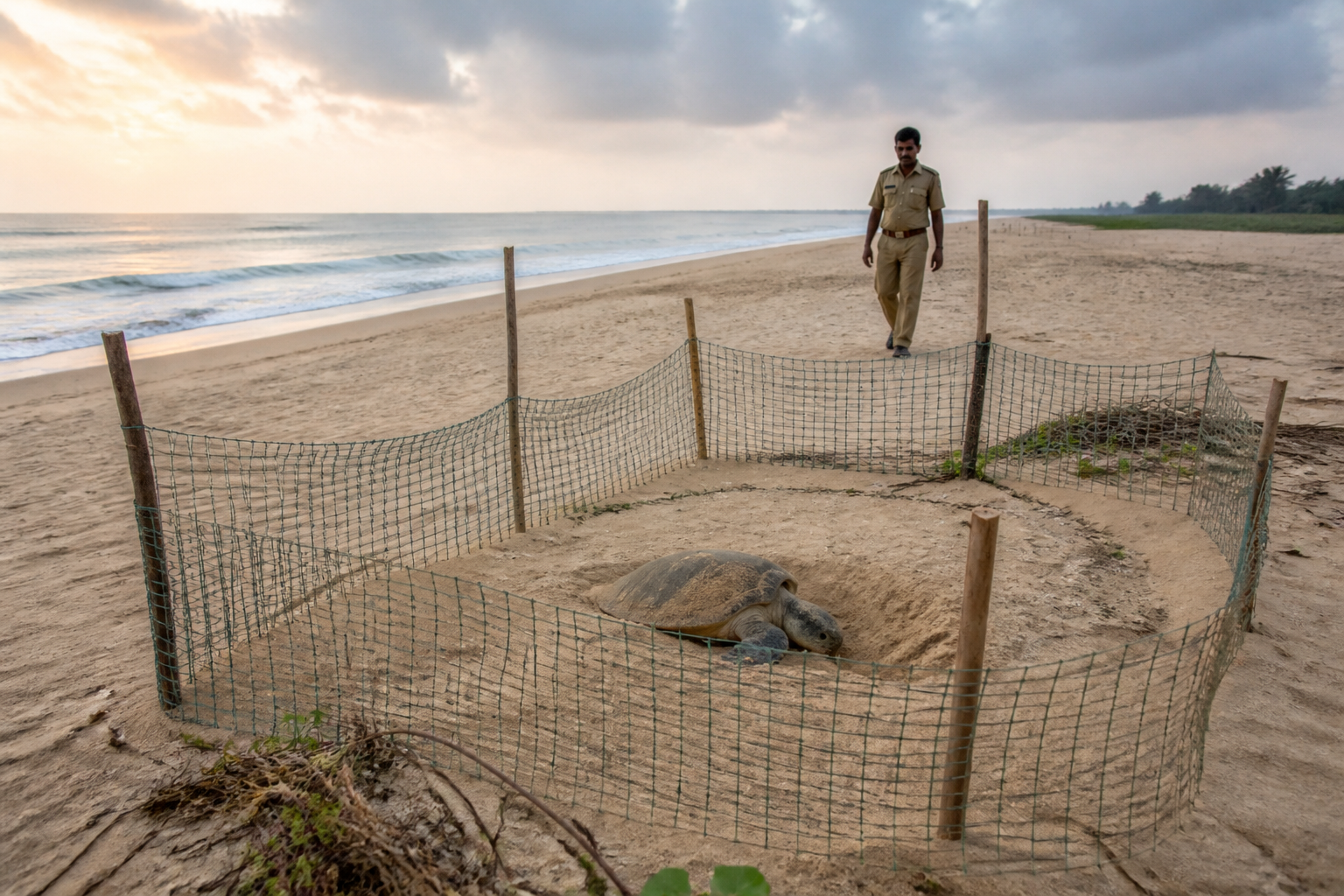
Tamil Nadu’s forest department has issued a standard operating procedure for marine turtle conservation, restricting night events, vehicle movement and bonfires near nesting sites while introducing buffer zones, fishing curbs, patrols and public-access rules along the state’s beaches.
The SOP was released by forest minister R V Ranjithkumar at the valedictory function of Wildlife Week. It applies to all marine turtles and expands the state’s existing operating procedures, which had focused on Olive Ridleys. The turtle season in Tamil Nadu runs from October to March, while hatchlings emerge from the end of January.
Under the new guidelines, night events, vehicular movement and bonfires will be restricted within 200 metres of a turtle nesting site. A no-entry buffer zone extending three metres from turtle eggs will also be created. The restrictions are intended to limit disturbance to nesting turtles and hatchlings during the conservation season.
The SOP assigns responsibilities to multiple agencies and groups, including government departments, coastal security groups, non-governmental organisations and the public. The forest department must coordinate the stakeholders, conduct awareness and orientation sessions, organise beach-cleaning drives and establish hatcheries using bamboo poles with mesh or jute.
Forest officials must record and geo-tag nest locations. The department is also required to apply natural repellents before hatching to protect eggs and hatchlings from ant attacks. Coastal security groups have been directed to conduct night patrols during the nesting period to prevent poaching.
The rules also cover fishing activity near nesting beaches. The fisheries department must prevent boats from trawling within five nautical miles of turtle nesting sites. Trawlers are required to use turtle excluder devices, while fishers have been instructed not to use harmful gear, including gillnets and trawl nets.
Public participation in turtle walks will require approval from the forest department. Visitors have been instructed not to photograph hatchlings or use torches and flashlights, which can disturb their movement towards the sea. These measures place beach tourism and conservation activity within a formal approval and monitoring framework.
The SOP divides conservation work into three stages: pre-season activities from October to December, the nesting season from December to March, and post-season work from April to May. This seasonal structure assigns responsibilities beyond the period when turtles are visibly nesting, including preparation, monitoring and post-hatching measures.
Rakesh Kumar Dogra, principal chief conservator of forests and chief wildlife warden, said the guidelines specifically cover these three phases and that forest conservators, officers and wildlife wardens had been instructed to review them periodically. Officers must submit an annual report to the principal chief conservator of forests on the status of implementation.
The announcement also included the flagging off of an animal ambulance. The next operational test for the SOP will be its implementation across beaches, fishing areas and public events during the October-to-March conservation cycle.
