


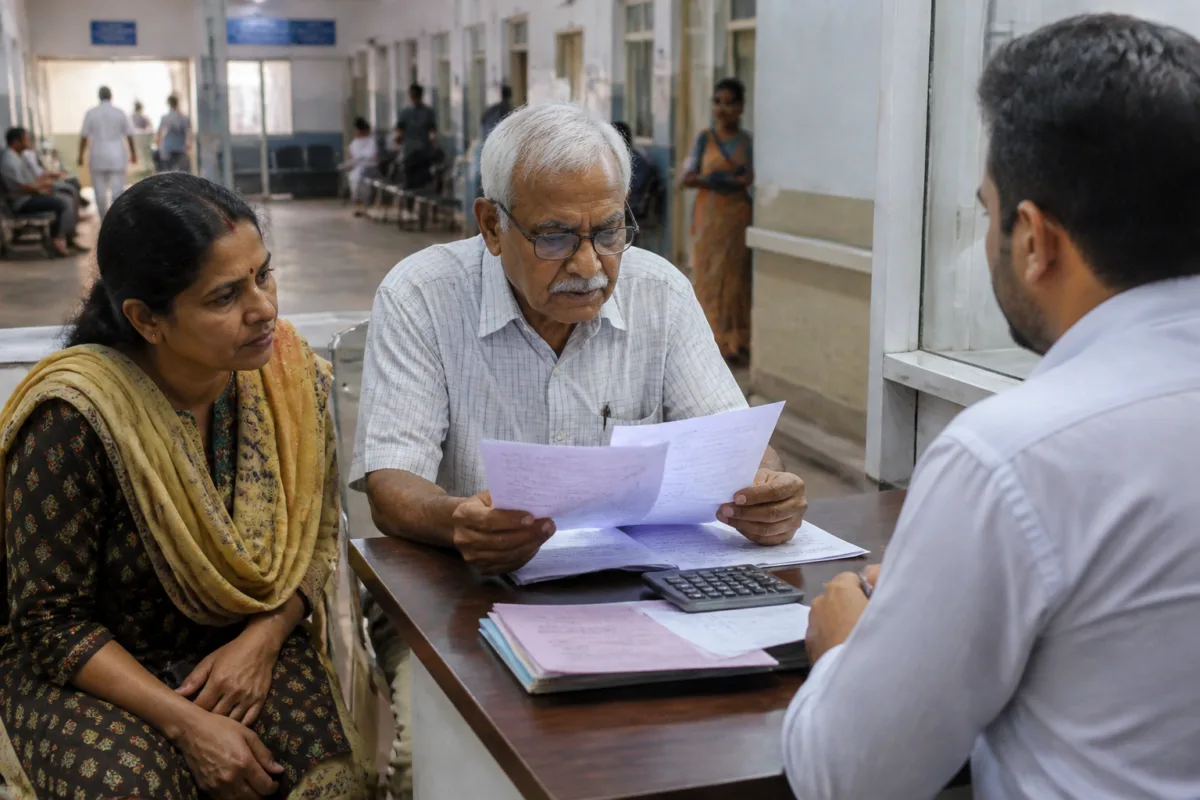
Tamil Nadu pensioners have alleged that hospitals are limiting payments to the general medical insurance ceiling of Rs 12 lakh despite a government order providing higher limits for 46 critical illnesses and specialised treatments under the state’s revised insurance scheme.
The government order for the new scheme was issued on June 24, 2026, covering state government employees, pensioners and their family members. It raised the maximum limit for general treatment to Rs 12 lakh and listed separate, higher limits for specified critical illnesses and procedures in Annexure 1A.
According to the details cited in the report, the approved limit for bone marrow transplantation is Rs 35 lakh when the donor is from abroad and Rs 33 lakh when the donor is from India. The limits for liver and lung transplantation are set at Rs 24 lakh each, while heart transplantation carries a limit of Rs 18 lakh. Heart valve procedures and other related treatments have a limit of Rs 25 lakh. The scheme also provides up to Rs 18.24 lakh for cochlear implant treatment involving the brainstem and spinal hearing system.
However, some pensioners in Coimbatore have alleged that hospitals are being paid only the general treatment limit of Rs 12 lakh even when patients undergo procedures covered under the higher critical-illness limits. The complaints raise questions about how the revised provisions are being communicated and implemented between the government, insurance administrators and empanelled hospitals.
The pensioners also said their monthly insurance contribution increased from Rs 497 to Rs 644 from July, the month after the government order was issued. They alleged that while the contribution was raised, the higher limits for critical illnesses were not being applied in their cases, forcing families to meet part of the treatment cost from their own funds.
The reimbursement process has created a further difficulty, according to the affected pensioners. They said they had been told that general treatment expenses could be reimbursed after submitting bills, but that applications submitted after treatment were being rejected. The reported complaints indicate that patients may be facing uncertainty both at the hospital payment stage and during post-treatment reimbursement.
Shekar, the insurance company coordinator for Coimbatore district, said the scheme had communicated only a maximum treatment amount of Rs 12 lakh to the district-level administration. He said the details concerning the higher limits for specified critical illnesses had been sent to the head office and that a response would be provided.
The immediate issue is therefore not only the value of the coverage listed in the government order, but also whether the revised benefits have reached the operational systems used by hospitals and insurance coordinators. The report does not include a response from the state government or the insurance company’s head office on when the higher limits will be implemented. Further clarification from the authorities is awaited on the applicable limits and reimbursement procedure for the 46 specified illnesses and treatments.

