


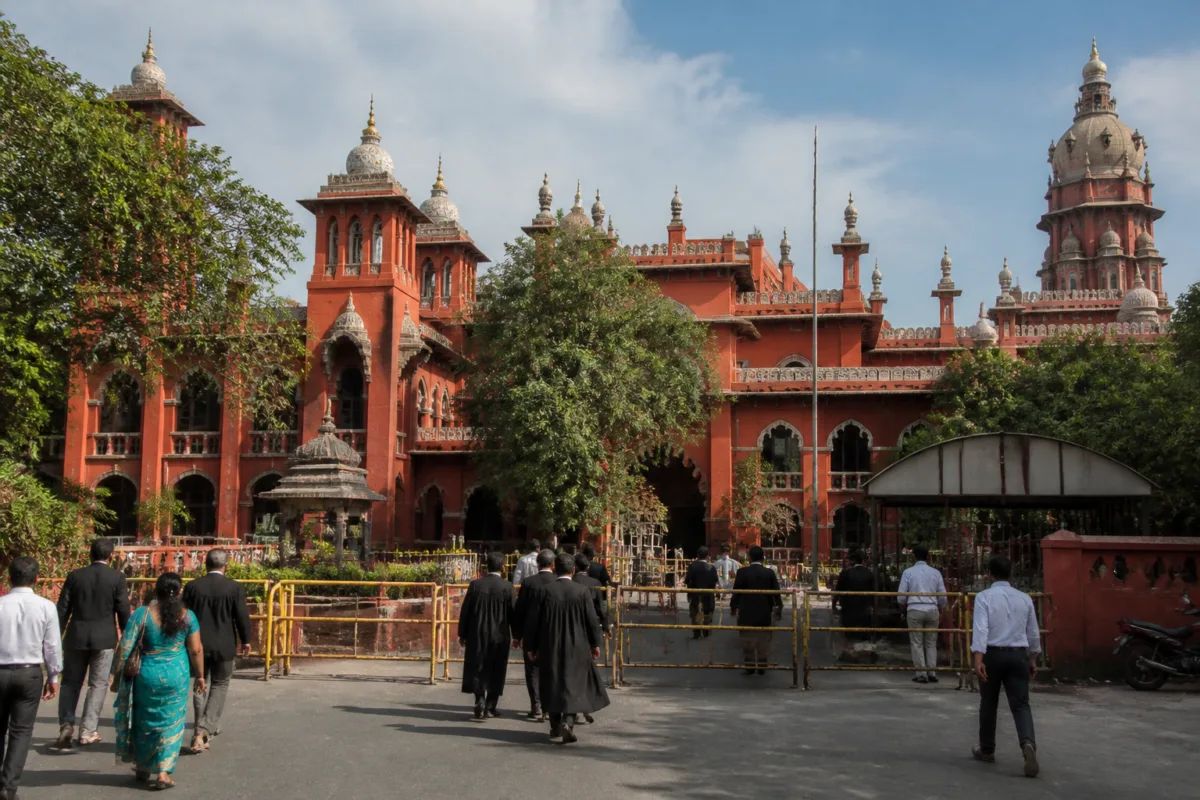
Tamil Nadu’s decision to extend the tenure of special officers administering rural local bodies across the state has come under legal challenge in the Madras High Court, with the petitioner seeking completion of delimitation and reservation procedures followed by elections across all 37 districts.
Advocate R Baskaran filed the plea challenging the state government’s decision to continue special officers in nine districts and extend their tenure in 28 others. The petition is likely to be taken up by the court in the first week of November, according to the report.
The petitioner has argued that the continued administration of rural local bodies by appointed officials violates the constitutional requirement to hold local body elections within the prescribed five-year term. He has asked the court to direct the authorities to complete ward delimitation and reservation procedures within a fixed timeframe and conduct elections to village panchayats, panchayat unions and district panchayats.
The elected representatives of these rural local bodies in 28 districts completed their five-year tenure on January 5, 2025. The state government subsequently appointed officials from the Rural Development and Panchayat Raj Department as special officers. Their tenure was extended at six-month intervals, and the government has now extended it until April 19, 2027.
In nine other districts — Kancheepuram, Chengalpattu, Villupuram, Kallakurichi, Vellore, Ranipet, Tirupattur, Tirunelveli and Tenkasi — the tenure of elected representatives ended on October 19. Special officers were appointed to administer the rural local bodies in these districts for another six months, also until April 19, 2027, the petitioner said.
The government has cited administrative changes as reasons for the delay in holding elections. These include the merger of 46 rural local bodies with urban local bodies, the creation of nine new panchayat unions and 93 new village panchayats, and the need to carry out ward delimitation and reservation exercises in 23 districts.
The petition, however, alleges that the government order did not specify reasons requiring the promulgation of an ordinance. Baskaran also alleged that the State Election Commission was not consulted before the special officers were appointed.
The challenge places the administration of rural local bodies within a wider institutional question: how long elected councils can remain replaced by appointed officials while boundary changes and reservation exercises are completed. The petitioner has cited Supreme Court judgments to argue that ward delimitation cannot be used as a reason to postpone local body elections.
The court’s first response will determine whether the state government and other authorities must explain the extensions, the election preparation schedule and the administrative basis for continuing with special officers until April 2027.

