


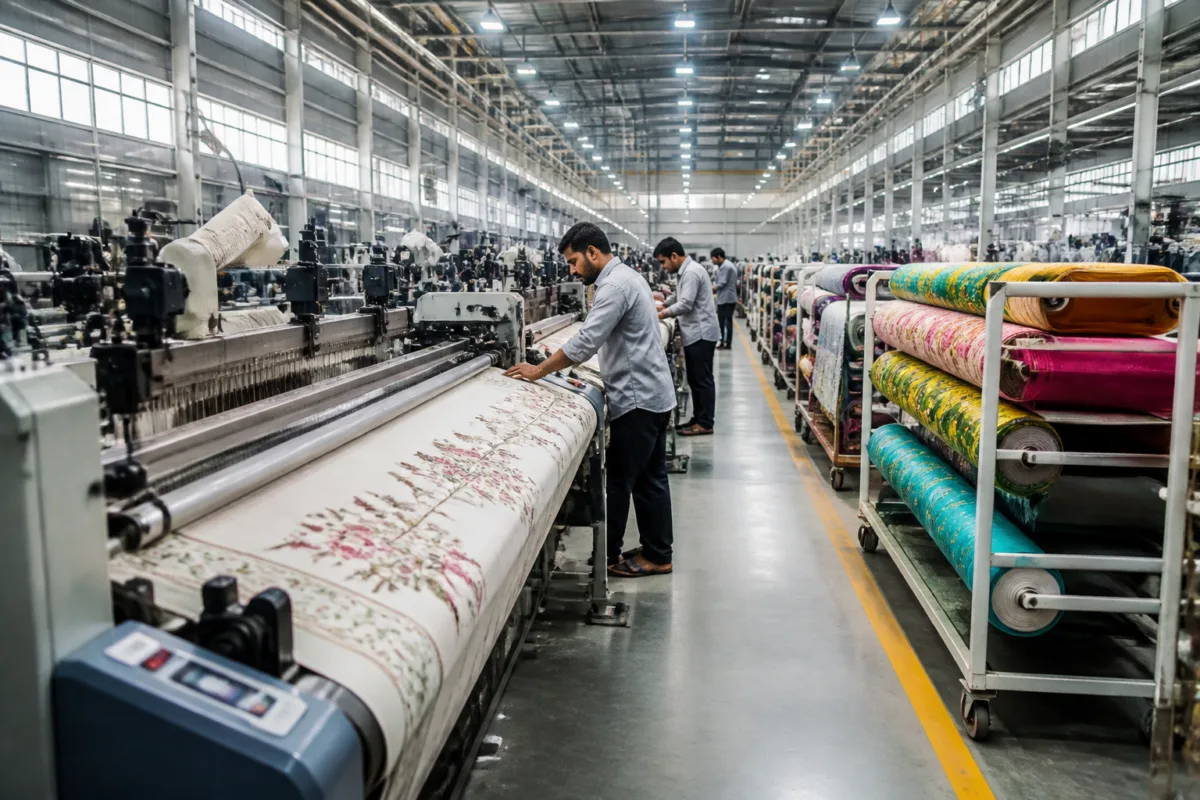
The Surat textile policy has cleared applications from 627 manufacturing units, paving the way for an estimated Rs 1,521 crore in fresh investment and more than 3,500 jobs over the next five years, officials said after a district-level approval meeting.
The applications were approved in Surat district at a meeting chaired by district collector Tejas Parmar. Officials from the District Industries Centre examined and cleared files covering the weaving, technical textile and embroidery sectors.
The approved units are expected to receive around Rs 300 crore in government support over five years. The assistance will be provided through a combination of interest assistance, power tariff subsidy and capital subsidy under the Gujarat government’s Textile Policy 2024.
Officials said the approvals are intended to promote new investment across Surat’s textile ecosystem, expand production capacity and strengthen employment opportunities across the value chain. The projected job creation figure is based on the expected implementation of the approved projects.
The policy came into force on October 1, 2024, and will remain effective until September 30, 2029. It divides eligible activities into two broad categories. Activity 1 covers garments, apparel, made-ups and technical textiles, while Activity 2 includes weaving, knitting, dyeing and processing, texturising, twisting and embroidery.
Capital subsidy rates under the policy vary according to the activity and location. Units covered under Activity 1 are eligible for capital subsidies ranging from 20% to 35%, while the rates for Activity 2 range from 10% to 20%. Interest subsidy provisions range from 5% to 7% for both categories. Eligible units can also receive a power tariff subsidy of Rs 1 per unit for five years.
The policy provides special assistance for activities included under Activity 1, officials said. The classification of locations within Surat district also affects the applicable policy benefits. Umarpada and Mahuva have been placed in Category 1, Mandvi and Bardoli in Category 2, while Surat city and the other talukas fall under Category 3.
The approvals place Surat’s existing textile manufacturing base at the centre of the policy’s implementation in the district. By covering multiple segments, including weaving, technical textiles and embroidery, the approved applications span both established production activities and higher-value textile-related operations.
The government support announced under the policy is linked to the approved units and is expected to be disbursed through the specified subsidy and assistance mechanisms. The latest district-level approvals therefore mark an administrative step towards implementing the projects, rather than a completed investment or employment outcome.
Authorities said the approvals are expected to accelerate investment, increase production capacity and create job opportunities across Surat’s textile value chain. The projects’ progress and the delivery of the projected support will determine how quickly the announced investment and employment benefits materialise.

