


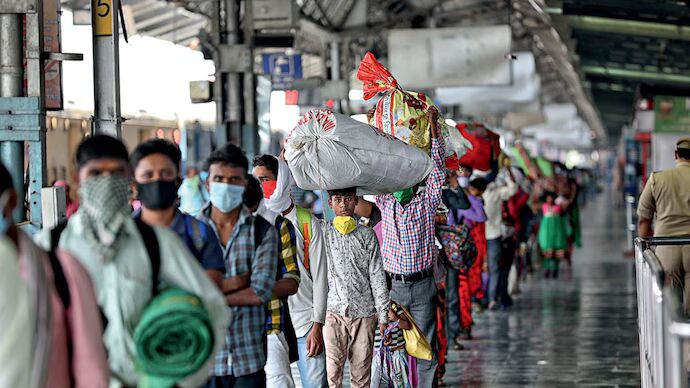
Surat is witnessing signs of a growing urban energy strain, as rising cooking fuel costs and supply disruptions are beginning to affect migrant workers—prompting some to leave the city and exposing vulnerabilities in household energy access systems. The pressure stems from increasing prices of liquefied petroleum gas (LPG) and reported shortages in supply, which have made it difficult for low-income households to sustain daily cooking needs. For a city heavily dependent on migrant labour across sectors such as textiles and construction, the impact is extending beyond households to the wider urban economy.
Many workers rely on subsidised LPG connections under government schemes intended to improve access to clean cooking fuel. However, urban policy observers note that while initial connections expanded coverage, affordability and refill consistency remain persistent challenges. As costs rise, households often revert to informal or less clean energy sources, or in some cases, reduce consumption altogether. The consequences are both social and economic. Migrant workers, who form a significant share of Surat’s workforce, are particularly sensitive to fluctuations in living costs. With fuel expenses forming a substantial part of household budgets, sustained price increases can influence decisions to stay in or leave the city. Early indications of out-migration suggest a ripple effect that could impact labour availability in key industries. Urban economists highlight that such disruptions underscore the importance of energy security in city planning. “Affordable access to cooking fuel is as critical as housing or transport for sustaining urban labour markets,” said an expert in urban development, noting that gaps in basic services can destabilise local economies. The situation also raises environmental concerns. When clean fuel becomes unaffordable or unavailable, households may shift to alternatives such as firewood or other polluting sources, contributing to indoor and outdoor air pollution. This undermines progress toward cleaner urban environments and poses health risks, particularly for women and children. From a governance perspective, the developments point to the need for more resilient and adaptive subsidy frameworks. Ensuring that welfare schemes remain effective in urban contexts requires continuous calibration to account for price volatility, supply chain disruptions, and the unique needs of migrant populations. Surat’s experience reflects a broader challenge faced by rapidly growing cities: balancing economic dynamism with inclusive access to essential services. As urban centres attract labour and investment, maintaining affordability in basic utilities becomes central to sustaining growth.
Going forward, addressing the fuel crisis will likely require coordinated action across supply management, subsidy design, and urban policy. For Surat, the immediate concern is stabilising access to cooking fuel, but the larger lesson lies in recognising energy as a foundational element of urban resilience—one that directly shapes livelihoods, public health, and the long-term sustainability of city systems.
ALSO READ – Nagpur Water Supply Faces Quality And Safety Questions
Surat Fuel Crisis Pushes Migrant Workers To Leave
