


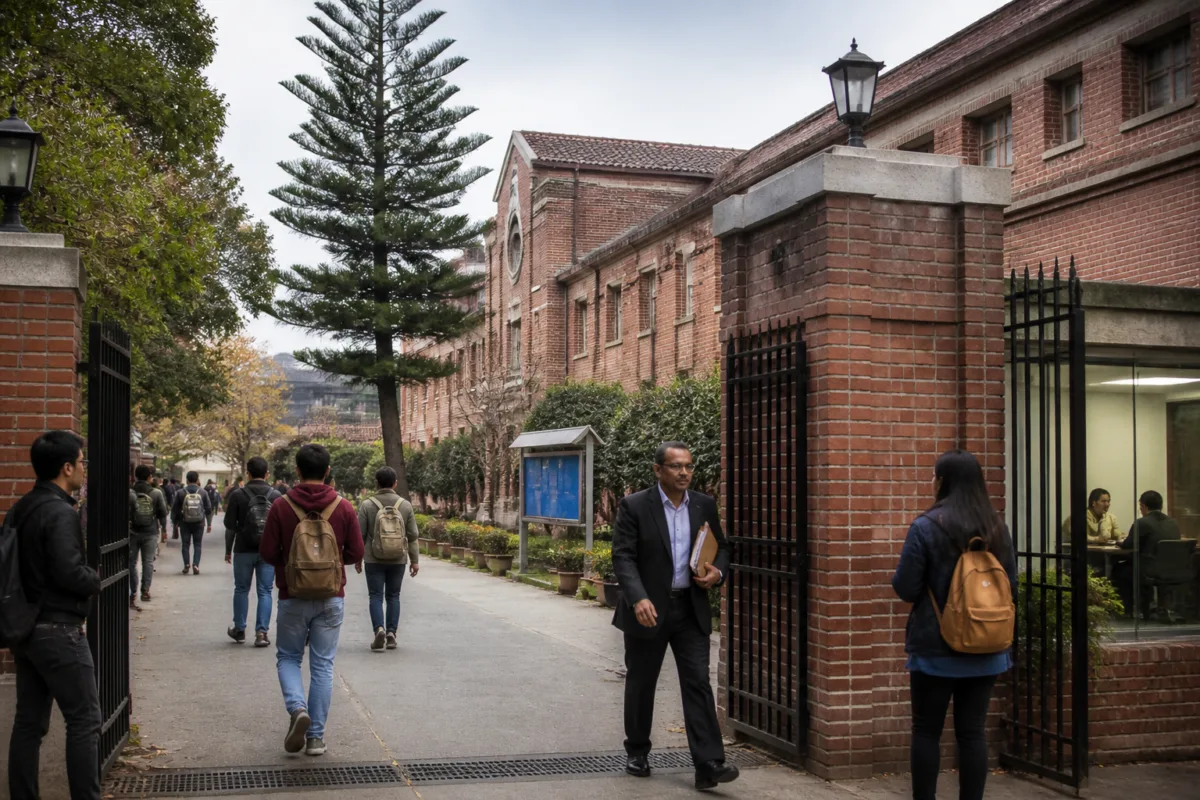
A Delhi University committee’s findings on faculty recruitment at St Stephen’s College have brought a long-standing governance question into sharper focus: how should recruitment rules operate when a minority institution is also a constituent college of a central university? The committee concluded that the college deviated from shortlisting criteria approved by the university’s statutory bodies and recommended adherence to DU’s recruitment rules and regulations.
The dispute is not limited to the eligibility of individual candidates. It concerns who has the final authority to define, apply and supervise recruitment standards in a college that has institutional protections as a minority institution but is also part of Delhi University’s academic and administrative structure. The committee’s report, as described in the supplied account, treats the issue as one of university-wide uniformity and consistency in the appointment of teachers.
The committee was constituted after deliberations at a Delhi University Executive Council meeting on April 29, 2026. It was chaired by Professor Inder Mohan Kapahy and held meetings on May 7 and May 29. The university sought details from St Stephen’s College on the criteria used to shortlist candidates, the list of shortlisted applicants, their Academic Performance Indicator scores and the reasons for not following the university-approved criteria.
According to the report, the college did not provide the requested information despite reminders. St Stephen’s maintained that the university’s shortlisting criteria were advisory and that, as a minority institution, it could determine the mode and manner of selecting teachers. It also cited the University Grants Commission’s 2018 regulations, which state that the number of candidates called for interviews is to be decided by the college.
The committee rejected that interpretation. It reiterated that the shortlisting criteria approved by DU’s statutory bodies were binding on constituent colleges. Its recommendation was based on the position that the Delhi University Act, 1922 vests the power of appointment and recognition of teachers in the university. On that basis, it said St Stephen’s was required to follow the university’s recruitment rules and regulations.
The report’s findings identify several points at which the recruitment process diverged from the university’s prescribed framework. One concern was that the criteria and evaluation methodology for essay writing, presentations and interviews were not disclosed until after the screening process had been completed. For candidates, this raises a basic procedural issue: whether the standards used to decide who advances in a recruitment process were known before applications were assessed.
The committee also examined the number of candidates shortlisted for vacancies in the Philosophy department. The college shortlisted 234 candidates for three unreserved assistant professor posts and 11 candidates for one vacancy reserved for persons with benchmark disabilities. The report said the college later disclosed that 70 candidates would be shortlisted for each unreserved vacancy.
The committee further noted that the departmental cut-off score for Philosophy was 50, while the university-prescribed minimum academic score was 55. It also flagged the use of research publications in screening, stating that the college’s criteria differed from the university’s standard operating procedure on the publications considered for eligibility and screening.
These details matter because shortlisting is not merely an internal administrative step. It determines which applicants receive access to the next stages of a public-facing academic recruitment process. Differences in minimum scores, publication criteria, evaluation methods and the number of candidates called for interviews can materially alter the pool from which appointments are made.
The dispute also became entangled with the timing of appointments. The report said the college declared recruitment results on the night of May 9 and allowed selected candidates to join on May 11, while the committee’s examination was still pending. The university had earlier advised the college, through a letter dated April 29, not to issue appointment letters while the matter was being examined.
On May 13, the Delhi High Court directed that the recommendations of the selection committee under the relevant recruitment advertisement should not be implemented without the court’s leave, according to the report. The committee alleged that the college nevertheless continued the joining process and assigned invigilation duties to selected candidates despite the court’s order. The supplied account does not include the final judicial determination on the broader recruitment dispute.
This sequence places the question of recruitment autonomy within a wider institutional framework. A constituent college operates within the university’s academic system, but St Stephen’s has argued that its minority status gives it authority over the manner in which teachers are selected. The committee’s response is that such status does not remove the college from the university’s approved recruitment rules when the appointments concern recognised teachers within a constituent institution.
The competing positions reveal two different understandings of institutional autonomy. The college’s stated position emphasises the power to determine its own selection process. The committee’s position emphasises the need for common standards across constituent colleges, particularly where the university’s statutory bodies have already approved those standards.
The report therefore frames the dispute as a question of administrative consistency rather than only one of college-level procedure. If every constituent college were able to treat university-approved criteria as advisory, the university would face difficulty maintaining a common system for evaluating academic qualifications and recruitment processes. At the same time, the disagreement shows why the boundaries between minority rights, university authority and regulatory requirements need to be clearly defined before recruitment begins.
The information sought by the committee also indicates what effective oversight requires. It asked for the shortlisting criteria, candidate lists, API scores and reasons for departing from university-approved rules. Without access to those records, a university or court cannot easily assess whether candidates were treated consistently or whether the selection process complied with the applicable framework.
The committee’s concerns about disclosure are especially significant. When evaluation criteria for essays, presentations and interviews are made public only after screening, applicants may not know the basis on which their applications will be assessed at the point when they submit them. The report’s criticism does not by itself establish that any individual appointment was improper, but it identifies a process-design problem that can make recruitment harder to review.
The same applies to the use of research publications. The report said St Stephen’s applied criteria that differed from the university’s standard operating procedure on which publications could be considered for eligibility and screening. In academic recruitment, such differences can change how candidates are ranked before an interview, making the definition of eligible research outputs an important part of the selection framework rather than a technical detail.
The episode also demonstrates how administrative timing can affect institutional oversight. Results were declared and selected candidates were permitted to join while the committee was still examining the process. The subsequent High Court direction added a judicial constraint on implementation. Once appointments proceed before a review is completed, reversing or suspending the consequences becomes more difficult for the institution, the candidates and the university.
For Delhi University, the immediate issue is how to give effect to the committee’s recommendations while the legal and institutional dimensions remain contested. For constituent colleges, the case raises the extent to which university rules are binding when a college invokes a distinct constitutional or statutory identity. For applicants, it highlights the importance of clear, advance disclosure of eligibility, shortlisting and evaluation criteria.
The supplied report confirms that the committee found deviations from DU-approved shortlisting standards and recommended that St Stephen’s follow the university’s recruitment rules. It also records the college’s contrary position, the committee’s concerns about disclosure and research criteria, and the dispute over appointments made during the review. What remains unresolved in the available material is the final legal status of the appointments and the extent to which the competing claims of minority autonomy and university oversight will be settled. Those developments, together with any further court directions or university action, will determine whether the dispute produces a clearer recruitment framework for Delhi University’s constituent colleges.

