


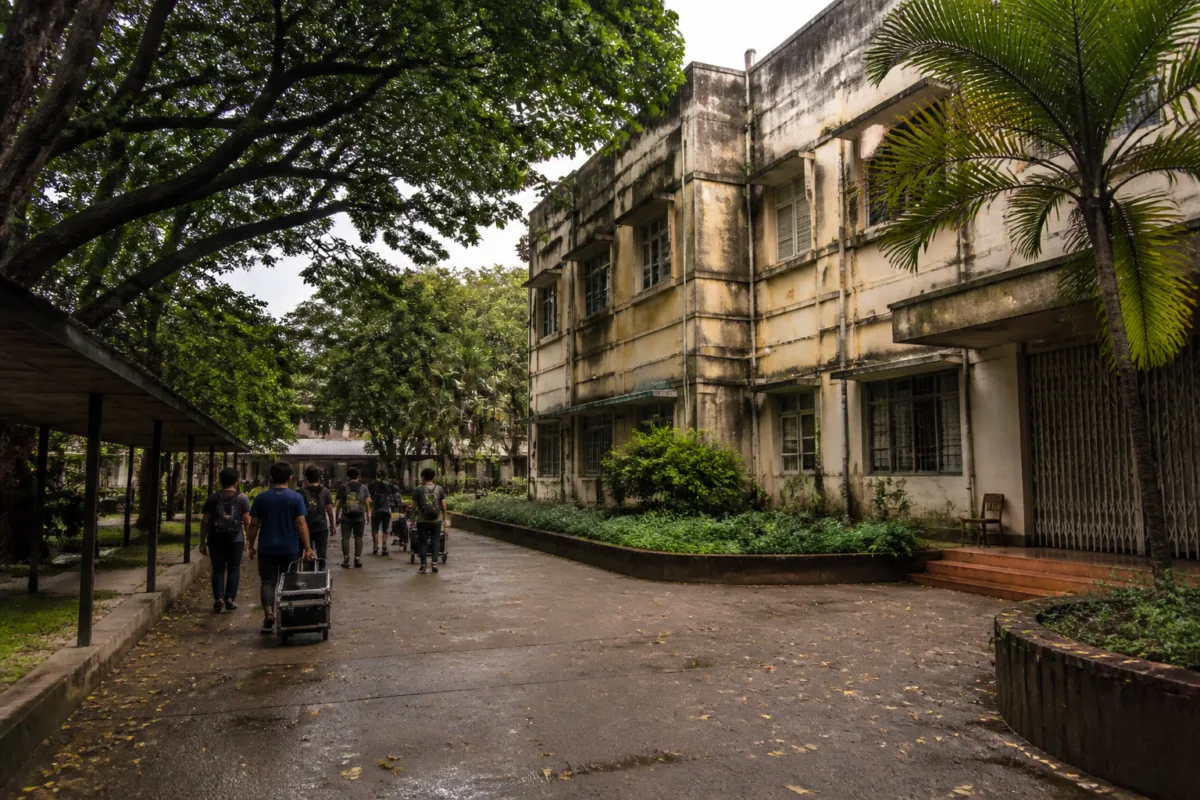
The Satyajit Ray Film and Television Institute in Kolkata has begun reopening parts of its academic process after prolonged delays, but its hostels and messes remain shut until Dec 11, leaving campus facilities and institutional capacity at the centre of concerns over unfinished coursework.
The institute has allowed senior students to restart pending film shoots and location projects. It has also extended the deadline for the delayed 17th and 18th Film Wing batches and the 5th Electronic and Digital Media batch to April 2027. A convocation is planned for May 2027, according to the report.
Regular classes and workshops have not resumed immediately. The continued closure of hostels and messes is significant for students whose film and media courses depend on access to campus-based equipment, collaboration spaces and sustained project work, although the report does not specify the operational reasons for the closures.
SRFTI’s records show the scale of the academic backlog. Of the 64 students in the 2019-2022 Film Wing batch, 62 are still awaiting diplomas, roughly four years after the scheduled completion of the programme. In the 2020-2023 Film Wing batch, 58 of 72 students remain behind schedule. The report also states that 24 of 36 students in the 2021-2023 Electronic and Digital Media batch are yet to complete requirements, around three years after their original finish line.
Chandan Goswami, dean of Electronic and Digital Media in charge, said Covid-19 had disrupted institutions across the country, including SRFTI. He added that programmes that began in 2022 should have been completed by 2024 in Electronic and Digital Media and by 2025 in the Film wings. The six-month Diploma Film component, scheduled for completion in September 2025, also remains pending, he said.
Goswami said students had been directed to complete all requirements by April 2027 and described the vice-chancellor’s efforts to restore academic discipline and ensure timely completion as necessary. He also stressed that adherence to schedules was professionally important.
Former SRFTI editing professor Shyamal Karmakar told the newspaper that the pandemic could not be the sole explanation for the delays. He said the institute’s academic ecosystem, developed over six decades and influenced by the Film and Television Institute of India, required an overhaul. Karmakar also opposed the idea of a “zero year”, arguing that students could not afford another break in the academic cycle.
Former SRFTI dean Abhijit Dasgupta attributed responsibility to both the administration and students. He said students needed clear timelines for location and cast selection, while faculty members needed to ensure that diploma films were completed as scheduled. Dasgupta said the April 2027 deadline was achievable.
The institute has also brought in the Central Public Works Department to support plans to upgrade campus infrastructure and essential amenities. Vice-chancellor Santosh Ajmera said students had been encouraged to submit suggestions and feedback so that improvement priorities could respond to campus needs.
The immediate challenge for SRFTI is therefore twofold: completing delayed academic work while restoring the facilities required for students to study and produce their projects. The institute’s April 2027 deadline will test whether its academic scheduling, campus amenities and administrative coordination can work together after years of delay.

