


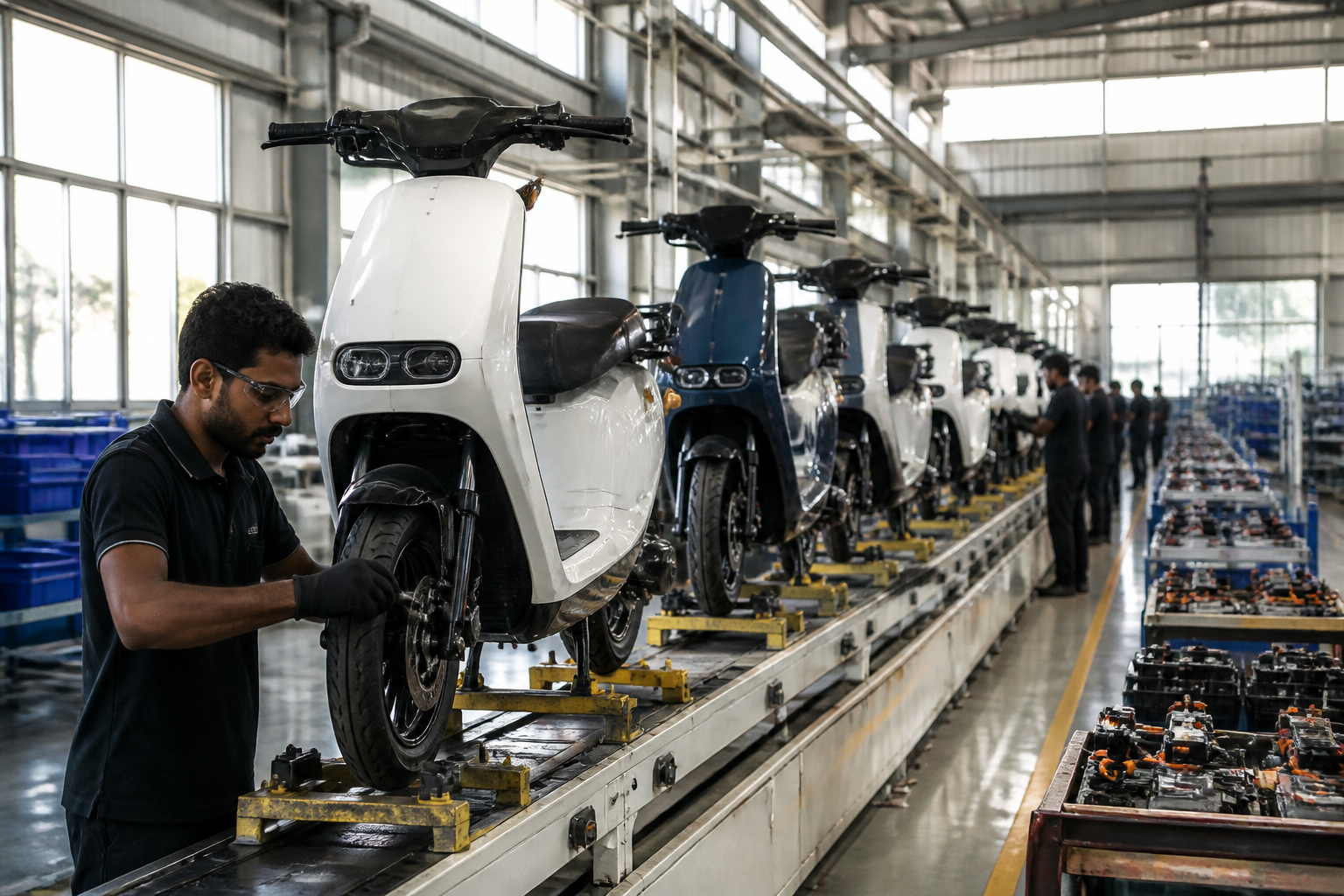
Electric two-wheeler maker Simple Energy has raised Rs 1,750 crore in an all-equity Series C round to expand manufacturing, sales, service and research and development as it prepares to increase production capacity and enter more Indian urban markets.
The Bengaluru-based company said the funding round was led by the family office of Thyrocare founder Arokiaswamy Velumani. Founder and CEO Suhas Rajkumar, co-founder and CFO Ankit Gupta, Bengaluru-based high-net-worth individual Amit Mishra and the Haran Family Office also participated. With the latest round, Simple Energy has raised more than Rs 2,530 crore in total.
The company currently has installed production capacity of 10,000 electric two-wheelers a month, according to its updated release. However, actual production is around 2,500 vehicles a month, while retail sales are approximately 1,800 to 2,000 units a month, co-founder Shreshth Mishra told The Times of India.
Monthly demand is currently estimated at between 4,000 and 4,500 vehicles, Mishra said. “Demand is almost double of what we are able to supply,” he said. Simple Energy plans to eventually increase monthly manufacturing capacity to around 30,000 units and above.
The proposed expansion will also involve a larger sales and service network. Simple Energy has more than 80 outlets across over 60 cities, but southern India still accounts for an estimated 60% to 70% of its sales, according to Mishra. The company plans to expand more aggressively in northern, western, central and northeastern markets, increasing its presence beyond the regional base where it currently has stronger demand and distribution.
The fresh capital will be used for marketing, supply chain expansion, research and development and hiring, the company said. Simple Energy is also preparing for its next product cycle and plans to expand manufacturing along with its distribution and service infrastructure. For electric two-wheeler buyers, that expansion is directly linked to access: a wider service network can influence vehicle availability, maintenance support and confidence in adopting an electric vehicle outside established markets.
Mishra said the company did not actively seek a large private equity fund, global venture capital investor or strategic automaker for the latest round because existing backers were willing to provide the capital. “Existing investors showed a lot of interest and faith in the growth of the organisation, so we never had to go out or discuss with somebody as a strategic investor at this point of time,” he said.
The company expects the electric two-wheeler industry to consolidate as the market matures. Mishra said future survivors would need control over technology as well as adequate capital, distribution and service capabilities. The comments point to the operational demands facing EV manufacturers as they attempt to move from limited regional sales to broader national networks.
Simple Energy is also evaluating a future public listing. Mishra said the immediate focus remains on scaling the business and becoming self-sustainable before the company decides on the timing of an initial public offering. Its next milestones will be the deployment of the new capital, expansion of production and progress in building sales and service coverage across additional Indian cities.
