


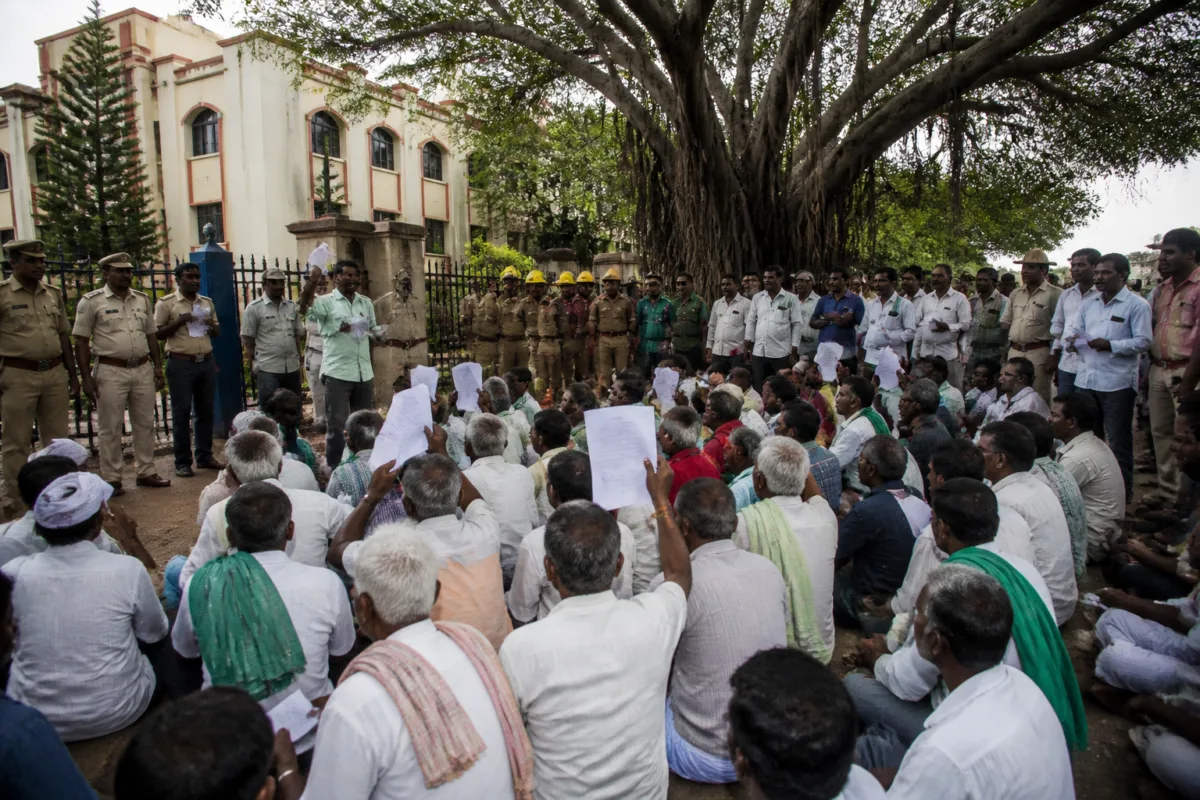
Twelve farmer families from Ramenakoppa in Shivamogga district staged a protest at the deputy commissioner’s office, alleging that a recently transferred tahsildar took ₹25 lakh to change land records but failed to complete the work. The families demanded an investigation, recovery of the alleged amount and action against officials if wrongdoing is established.
According to the report by Prajavani, the families have been cultivating land in Survey No. 17 since 1960. They said they were the original grantees but had been unable to get the land records, including the mutation and pahani entries, changed in their names despite repeated efforts.
The farmers alleged that tahsildar Rajeev told them the money had to be given to the deputy commissioner and additional deputy commissioner before taking ₹25 lakh from them. They said the land-record work was still not completed and described the alleged transaction as a betrayal. The allegation has not been independently established in the supplied report.
During the protest, farmer Nagaraj climbed a banyan tree within the deputy commissioner’s office premises to press for action. Police and fire service personnel reached the location and attempted to bring him down. The protest ended after senior officials assured the farmers that the matter would be investigated and that steps would be taken to provide justice.
The families asked the administration to secure CCTV footage from the tahsildar’s office and examine it as part of the inquiry. They also demanded action against the officials named in their complaint. The farmers said they planned to submit complaints to the Karnataka Lokayukta and the chief minister.
The protesters further alleged that their attempts to secure administrative intervention had not produced a response, even after a minister’s office made a call. They also claimed that their online access had been blocked and that notices were being issued to collect money. These claims were made during the protest and were not independently verified in the report.
The episode highlights how unresolved land-record changes can push citizens into prolonged dealings with revenue offices, where mutation, tenancy and cultivation records determine access to formal recognition of land rights. In this case, the families’ central demand is for the administration to examine the alleged payment, verify the land documents and establish responsibility through a formal investigation. The next steps promised by senior officials are expected to determine whether the CCTV footage, office records and complaints are examined.

